

Best overall: Benjamin Moore Eco Spec. Best for contractor-coordinated wall painting: Sherwin-Williams SuperPaint Interior Acrylic Latex. Best for DIY wall repainting: Behr Premium Plus. Best for commercial specifications: PPG Pure Performance. This 2026 guide compares paint choices and explains what to include in an interior painting estimate; Yourpaintingpro serves homeowners and businesses from its Westminster home base.
- The best low voc interior paint brands depend on the exact product, tint, surface and preparation—not the brand alone.
- Benjamin Moore Eco Spec is the default recommendation when low emissions are your main selection priority.
- Sherwin-Williams SuperPaint suits contractor-led wall projects; Behr Premium Plus suits straightforward DIY repainting.
- PPG Pure Performance belongs on commercial shortlists; cabinet painting requires a separate coating decision.
- Ask for the paint line, primer, preparation, finish coats and ventilation plan in your written estimate.
Why this matters
Low-VOC paint helps you narrow a coating choice, but it does not describe the entire painting job. Repairs, sanding, primers and application conditions still affect the finished surface and how you manage rooms during work.
For a Westminster or Denver-metro home, start with the surfaces being painted. Walls, trim and kitchen cabinets do not have interchangeable coating requirements. A low-VOC wall paint is not automatically a suitable cabinet finish.
Yourpaintingpro is a fit for Westminster homeowners seeking professional interior painting rather than a paint-only purchase. When discussing your 2026 project, describe occupied bedrooms, household sensitivities, damaged surfaces and cabinets separately so the estimate addresses each concern.
What makes the best low-VOC interior paint brands
Use these criteria before choosing a manufacturer. The exact paint line matters more than the name on the can.
- Documented VOC content: Look for grams per liter on the current technical data sheet. Check whether the stated value covers the base, the tinted paint or both.
- Emissions information: VOC content measures formulation; emissions testing addresses substances released into indoor air. These are related but different questions.
- Surface suitability: Specify wall paint for walls and an appropriate trim or cabinet coating for those surfaces. Confirm compatibility with existing finishes.
- Finish and cleaning needs: Match the sheen to the room's use. Ask how the selected finish should be cleaned after curing.
- Preparation requirements: Identify cleaning, patching, sanding and priming before approving the paint system. A finish coat cannot correct an unsound substrate.
- Written product identification: Require the manufacturer, exact line, sheen and color in the estimate. Approve substitutions before application.
For your 2026 comparison, treat broad environmental claims as a starting point, not a specification. A commonly used low-VOC benchmark is 50 grams per liter, while zero-VOC descriptions commonly refer to less than 5 grams per liter. Definitions and testing methods vary, so read the applicable product documentation rather than treating either term as a universal guarantee.
Low-VOC interior paints at a glance
These recommendations assign different jobs to established paint lines. They are not a claim that one manufacturer wins every room or surface.
| Paint option | Best for | Standout consideration | Key limitation |
|---|---|---|---|
| Benjamin Moore Eco Spec | Emissions-focused residential wall projects | Manufacturer identifies the line as zero-VOC interior paint | Wall-paint selection does not settle the primer or cabinet coating |
| Sherwin-Williams SuperPaint Interior Acrylic Latex | Contractor-coordinated wall repainting | A named low-VOC wall-paint option for a written project specification | Do not confuse the conventional line with similarly named specialty variants |
| Behr Premium Plus | Straightforward DIY wall repainting | Manufacturer identifies the interior line as zero-VOC | Paint-and-primer wording does not eliminate surface-specific priming |
| PPG Pure Performance | Commercial interior specifications | Manufacturer identifies the line as zero-VOC interior paint | Commercial projects still need separate surface and access requirements |
Manufacturer descriptions apply to the named interior lines, not every product those companies sell. For a 2026 project, confirm the current technical data sheet for the exact base, sheen and tint before accepting a substitution.
1. Benjamin Moore Eco Spec: best for emissions-focused walls
Benjamin Moore Eco Spec is an interior paint line that the manufacturer identifies as zero-VOC. It is the default pick in this guide for homeowners making low emissions a central part of their wall-paint selection.
Choose the coating system, not just the finish paint. A stain-blocking primer, repaired drywall and previously coated trim can introduce different preparation requirements even when the wall finish is Eco Spec.
Benjamin Moore Eco Spec pros:
- Gives an emissions-focused homeowner a specific line to request.
- Makes the paint discussion more precise than asking for environmentally friendly paint.
- Fits a wall-paint specification that separates finish, primer and repairs.
Benjamin Moore Eco Spec cons:
- Zero-VOC wording does not mean odor-free or risk-free application.
- Selecting Eco Spec does not establish that every necessary primer has the same VOC profile.
- A wall-paint recommendation does not establish suitability for kitchen cabinets.
Best for: Homeowners prioritizing documented low-emission interior wall paint.
Ask the estimator to identify the exact sheen and any required primer. If a room has water stains or recurring moisture damage, resolve the cause and specify the repair before discussing the finish coat. Do not let an environmental label replace a surface inspection.
Verdict: Buy Benjamin Moore Eco Spec for an emissions-focused wall project after confirming the complete coating system.
2. Sherwin-Williams SuperPaint: best for contractor-led walls
Sherwin-Williams SuperPaint Interior Acrylic Latex is a low-VOC interior wall-paint option. It belongs on a contractor-led shortlist when you want the estimate to name a conventional wall coating rather than leave the product open to substitution.
The full product name matters. Sherwin-Williams uses the SuperPaint name across different offerings, so an estimate that says only SuperPaint leaves room for confusion.
Sherwin-Williams SuperPaint pros:
- Provides a specific wall-paint line to discuss with your painter.
- Keeps the finish-coat selection distinct from stain-blocking or adhesion primers.
- Supports a written specification covering room, sheen and color.
Sherwin-Williams SuperPaint cons:
- The brand name alone does not establish the selected product's VOC content.
- Similar product names require careful checking of the actual line.
- A conventional wall coating does not answer cabinet adhesion or blocking concerns.
Best for: Homeowners hiring a contractor for a clearly specified wall-repainting project.
Ask which SuperPaint product the painter proposes and why it suits the existing surface. Request the current technical data sheet if low VOC content is a deciding factor. Keep any primer, trim enamel or cabinet coating listed separately so you can evaluate the whole job.
Verdict: Buy Sherwin-Williams SuperPaint Interior Acrylic Latex when the named line fits your wall preparation and finish requirements.
3. Behr Premium Plus: best for straightforward DIY repainting
Behr Premium Plus Interior is marketed by the manufacturer as zero-VOC paint. It is a practical shortlist option for homeowners repainting sound interior walls and taking responsibility for preparation and application.
Its paint-and-primer description does not mean every surface can skip a separate primer. Bare repairs, stains and difficult existing finishes need their own assessment.
Behr Premium Plus pros:
- Gives DIY painters a named zero-VOC interior line to evaluate.
- Keeps an uncomplicated wall repaint focused on preparation, sheen and application.
- Provides a clear product reference when discussing leftover paint or future touch-ups.
Behr Premium Plus cons:
- Paint-and-primer wording does not replace stain blocking or adhesion preparation.
- DIY application still requires careful floor protection, cutting-in and consistent rolling.
- Wall-paint selection does not establish suitability for doors, trim or cabinets.
Best for: DIY homeowners repainting sound walls without complicated surface failures.
Inspect the existing coating before choosing the paint. Remove grease and dirt, address loose material and repair damaged areas. If the wall has persistent stains or widespread peeling, the project is no longer a simple color change; diagnose the substrate before applying another finish.
Verdict: Buy Behr Premium Plus for a straightforward DIY wall repaint; hold if the surface needs unresolved repairs.
4. PPG Pure Performance: best for commercial specifications
PPG Pure Performance is an interior paint line that the manufacturer identifies as zero-VOC. It belongs on commercial shortlists where the coating needs to appear in a written specification alongside surface preparation and room-use requirements.
Commercial painting is not simply residential painting in a larger room. Access, occupied areas, cleaning demands and coordination with the business need separate decisions.
PPG Pure Performance pros:
- Provides a named zero-VOC interior product for specification discussions.
- Keeps coating selection separate from business-access planning.
- Gives the owner and contractor a shared reference for the proposed finish.
PPG Pure Performance cons:
- Zero-VOC wording does not eliminate ventilation or occupant-protection planning.
- A general interior coating does not resolve every high-wear surface requirement.
- Product selection alone does not define preparation or cleaning expectations.
Best for: Business owners or property managers comparing a documented commercial interior coating.
Specify the rooms, surfaces and intended cleaning practices before approving the finish. Require the contractor to explain how occupied areas will be separated from active work. If a project includes doors, trim or specialized surfaces, list their coatings independently rather than treating one wall paint as the entire specification.
Verdict: Buy PPG Pure Performance when it matches the commercial wall specification; hold on surfaces needing a different coating.
How we ranked
The ranking assigns each paint a distinct decision: emissions-focused residential walls, contractor-coordinated repainting, straightforward DIY work or commercial specifications. It uses the manufacturers' published product descriptions and the preparation criteria above, not an invented testing score.
Benjamin Moore Eco Spec takes the default position because this query centers on low-VOC interior paint selection. That recommendation does not establish better coverage, durability or indoor-air performance than every alternative. Your surface condition and the exact coating system remain the deciding factors.
What your interior painting estimate should include
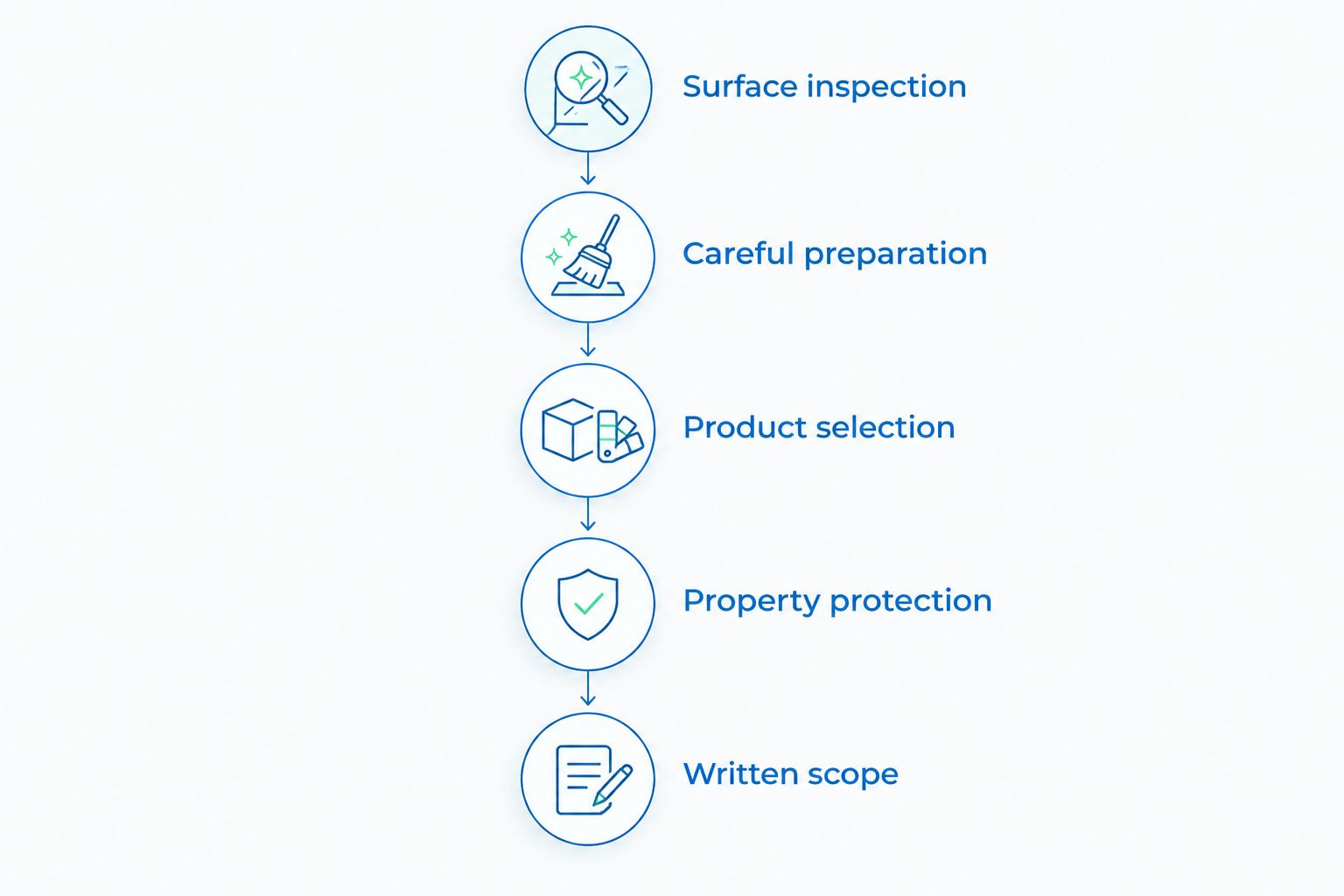
A good 2026 paint choice still needs a clear job scope. Use this sequence when requesting estimates for a Westminster, Thornton, Northglenn or Broomfield home.
Surface inspection
Identify peeling paint, stains, greasy surfaces, damaged drywall and existing glossy finishes. Ask which conditions need repair and which repairs fall outside the painting scope. Moisture problems need correction before repainting.
Careful preparation
List cleaning, patching, sanding and priming separately. Ask how the painter will contain sanding dust and protect belongings. A smooth finish starts with a sound, properly prepared surface—not a premium brand name.
Product selection
Name the wall paint, sheen, color and primer. Include separate products for trim or cabinets where required. Request approval before substitutions so low-VOC requirements do not disappear during the job.
Property protection
Specify floor coverings, furniture protection, masking and cleanup. Discuss which rooms your household can use during work. Keep ventilation and re-entry instructions tied to product guidance rather than a promise based only on odor.
Written scope
State the finish-coat requirement and who moves furniture. If an estimate specifies 2 finish coats, ask whether that means two full applications over prepared surfaces and how primer is counted. Do not accept an undefined coat count.
Yourpaintingpro offers interior and cabinet painting, but those services need separate surface discussions. When requesting a free painting estimate, explain whether you want walls, trim, cabinets or a combination, and identify any damage or household concerns.
Request a free painting estimate
Describe your rooms, surface repairs and low-VOC paint requirements.
Which low-VOC interior paint should you choose?
Choose Benjamin Moore Eco Spec as the default emissions-focused wall-paint shortlist. Choose Sherwin-Williams SuperPaint Interior Acrylic Latex for a contractor-coordinated wall specification, Behr Premium Plus for straightforward DIY repainting or PPG Pure Performance for a commercial specification.
For cabinets, pause that shortlist. Ask for a coating suited to the existing cabinet material, adhesion requirements and daily handling. Do not carry a wall-paint recommendation into cabinet work without checking its intended use.
Yourpaintingpro's interior painting services give Westminster homeowners a service option rather than another paint brand to compare. For your 2026 project, the next move is a written estimate that identifies preparation, protection and the exact coating system.
FAQ
What’s the best low-VOC interior paint brand for my home?
Benjamin Moore Eco Spec is this guide’s default for an emissions-focused interior wall project. Confirm the exact sheen, tint and primer before approving the complete coating system.
Is zero-VOC paint the same as odor-free paint?
No, zero-VOC paint is not necessarily odor-free. VOC content and odor are different properties, and product instructions still govern ventilation and use.
Is low-VOC paint safe to use while my family stays home?
A low-VOC label alone does not establish an occupancy or re-entry plan. Follow product guidance, separate occupants from active work and discuss household sensitivities before painting begins.
Can I use low-VOC wall paint on kitchen cabinets?
Do not assume low-VOC wall paint is suitable for kitchen cabinets. Select a coating intended for the cabinet surface and specify cleaning, adhesion preparation and curing requirements separately.
Does paint-and-primer paint mean I can skip priming?
No, paint-and-primer wording does not eliminate every need for a separate primer. Stains, bare repairs and difficult existing coatings require surface-specific assessment.
What should a low-VOC painting estimate include?
A low-VOC painting estimate should name the exact paint line, sheen, primer, preparation and finish-coat scope. It should also address property protection, ventilation, cleanup and approval of substitutions.
Should I choose the paint brand before hiring an interior painter?
Use a paint shortlist before hiring, but finalize the coating after the surface assessment. A qualified painter should explain how the proposed paint and primer match the condition of your walls.
One last thing
The can of finish paint is only part of the indoor-air discussion. Primer, patching materials and surface preparation belong in the same conversation. Ask what will be applied before the finish coat; that question catches omissions a low-VOC label cannot.
Related guides
