
Best Paint Finish for Kitchen Cabinets: A Guide to Durable and Stylish Results
If you ask any homeowner, they will say that satin is the best paint finish for kitchen cabinets. It is a perfect compromise between a smooth, stylish appearance, and the toughness that a kitchen surface needs. You will have a nice subtle glow that can cover your fingerprints well unlike shiny surfaces but at the same time, it can be washed down to suit the everyday environment of a lively home.
Your Guide to the Perfect Kitchen Cabinet Finish
One of the most significant decisions about your kitchen that you will make is probably the paint finish selection. Besides color, it also determines how the house looks, the cleaning time, and the durability of your cabinets. A kitchen is basically a tough environment. It is a place that gets very busy, also has a lot of moisture, and therefore the cabinets get touched, stained, and cleaned very frequently. The paint’s sheen, or the amount of light it reflects, is your main defense against all that mechanical damage.
There are essentially three finishes to choose from: satin, semi-gloss, and matte. Since each one reflects light differently they change the mood of your kitchen and also determine how easily the fingerprints and scratches will show. A smart project is when the finish is in line with the family’s way of life, the lighting in the kitchen, and even the style of the cabinets. If you are interested in going deeper, this article on choosing the best paint finish for kitchen cabinets is an excellent reference.
Key Factors to Consider
Before we get into the specifics of each finish, let’s talk about what really matters. A beautiful finish that can’t handle your day-to-day life is a waste of time and money.
- Durability and Cleanability: How well does the paint stand up to stains, scuffs, and repeated scrubbing? Generally, the more shine, the easier it is to wipe clean.
- Aesthetic and Sheen: Are you going for a bright, reflective look or something softer and more subtle? The sheen level will completely change the atmosphere of your kitchen.
- Hiding Imperfections: If you’re working with older cabinets, finishes with less shine are your best friend. They are much more forgiving and do a better job of concealing minor dents and dings.
I can’t stress this enough: no finish will perform well without meticulous prep work. A flawless, long-lasting paint job is built on a clean, smooth, and properly primed foundation. Make sure you understand how to prep cabinets for painting; it’s the most important step.
To make things a bit easier, I’ve put together a quick comparison of the most popular choices.
Quick Comparison of Popular Kitchen Cabinet Finishes
Here’s a simple, at-a-glance summary of the top three contenders. Think of it as a cheat sheet to help you narrow down your options based on what matteirs most to you and your kitchen.
Finish Type | Sheen Level | Durability | Best For | Key Feature |
Satin | Low-Lustre | Good | Most kitchens, busy families | Hides fingerprints well, soft look |
Semi-Gloss | Medium-High | Excellent | High-traffic areas, modern designs | Extremely easy to clean |
Matte | No Sheen | Fair | Low-use kitchens, minimalist style | Hides surface imperfections |
This table should give you a solid starting point. Each finish has its place, but one is likely a better fit for the unique demands of your home.
Comparing Paint Sheens For Kitchen Cabinets
The professional cabinet painting companies nearby say that the decision of paint finish for the kitchen cabinets is more than color. A kitchen cabinet finish largely determines the style, the ability to endure and the overall appearance of a kitchen. A deciding factor of the amount of light the room will have, how tough is the surface to clean after a dinner party and the durability of the cabinet finish in everyday use will be the coating you choose.
The main players are satin, semi-gloss, and matte. Each has its own personality and practical trade-offs. Let’s dig into the details to find the perfect fit for your Westminster-area home.
The Durability And Maintenance Showdown
In a kitchen, durability is everything. This is a high-traffic, high-mess zone, so you need a finish that can withstand splatters, steam, and constant scrubbing. A paint’s sheen level is directly linked to its toughness.
Higher sheen paints like semi-gloss consist of more binders. As a result, the surface becomes harder and less porous, which is excellent for resisting moisture, grease, and stains. That’s the main reason why a lot of professionals advise using it on the most heavily used areas of a house.
On the other end of the spectrum, a matte finish is more porous. While beautiful, that soft surface can trap dirt and is tougher to clean without “burnishing,” which can create a shiny spot from scrubbing too hard. Satin is the happy medium, giving you solid washability without the high shine of semi-gloss.
The real test of durability isn’t just about avoiding chips. It’s about how gracefully a finish handles being cleaned repeatedly. You can scrub a semi-gloss cabinet with some real elbow grease, but a matte finish needs a much gentler approach.
Aesthetic Appeal And Light Interaction
How a finish looks is just as critical as how it performs. The amount of shine completely changes how light bounces around your kitchen, which can make the room feel bigger and brighter or more intimate and moody.
- Semi-Gloss: With its distinct shine, semi-gloss reflects a lot of light. This can make a kitchen feel incredibly bright, clean, and spacious. It’s also brilliant for showcasing the beautiful details of custom or traditional cabinet doors. The catch? That high-gloss reflection will highlight every single dent, ding, and imperfection on the surface.
- Satin: If you want a soft, velvety glow, satin is your go-to. It offers a subtle luster without the mirror-like reflections of semi-gloss. This makes it incredibly forgiving, as it effectively hides minor flaws and fingerprints. It really hits that sweet spot between a sophisticated, low-key look and the durability you need for a busy home.
- Matte: A matte finish absorbs light, creating a deep, uniform color that feels very modern and almost luxurious. Because it has zero shine, it’s the absolute best for hiding surface imperfections. The trade-off is that it can make a kitchen feel a bit flat or smaller if you don’t have plenty of natural or artificial light to balance it out.
As the chart shows, a sleek, modern kitchen might work well with semi-gloss or matte, but the practical needs of a family kitchen almost always lead back to the well-rounded performance of satin.
To make the choice even clearer, let’s break down how these finishes stack up head-to-head.
Performance Breakdown: Satin vs. Semi-Gloss vs. Matte
| Feature | Satin Finish | Semi-Gloss Finish | Matte Finish |
|---|---|---|---|
| Durability | Good. Resists scuffs and moisture well. A solid choice for most homes. | Excellent. The hardest, most resilient finish. Resists moisture and stains. | Fair. Most prone to scuffs and stains. Requires careful cleaning. |
| Cleanability | Easy. Can be wiped down with a damp cloth without much fuss. | Very Easy. The slick surface wipes clean effortlessly. Can be scrubbed. | Difficult. Can be damaged by abrasive cleaning. Prone to burnishing. |
| Hides Imperfections | Very Good. The low sheen is great at masking minor dings and fingerprints. | Poor. The high shine highlights every flaw, from brush strokes to dents. | Excellent. The lack of reflection makes it the best for hiding imperfections. |
| Appearance | Soft, subtle glow. Often described as a velvety or pearl-like luster. | Noticeable shine. Reflects light and creates a bright, crisp look. | No shine. Creates a deep, uniform, and non-reflective surface. |
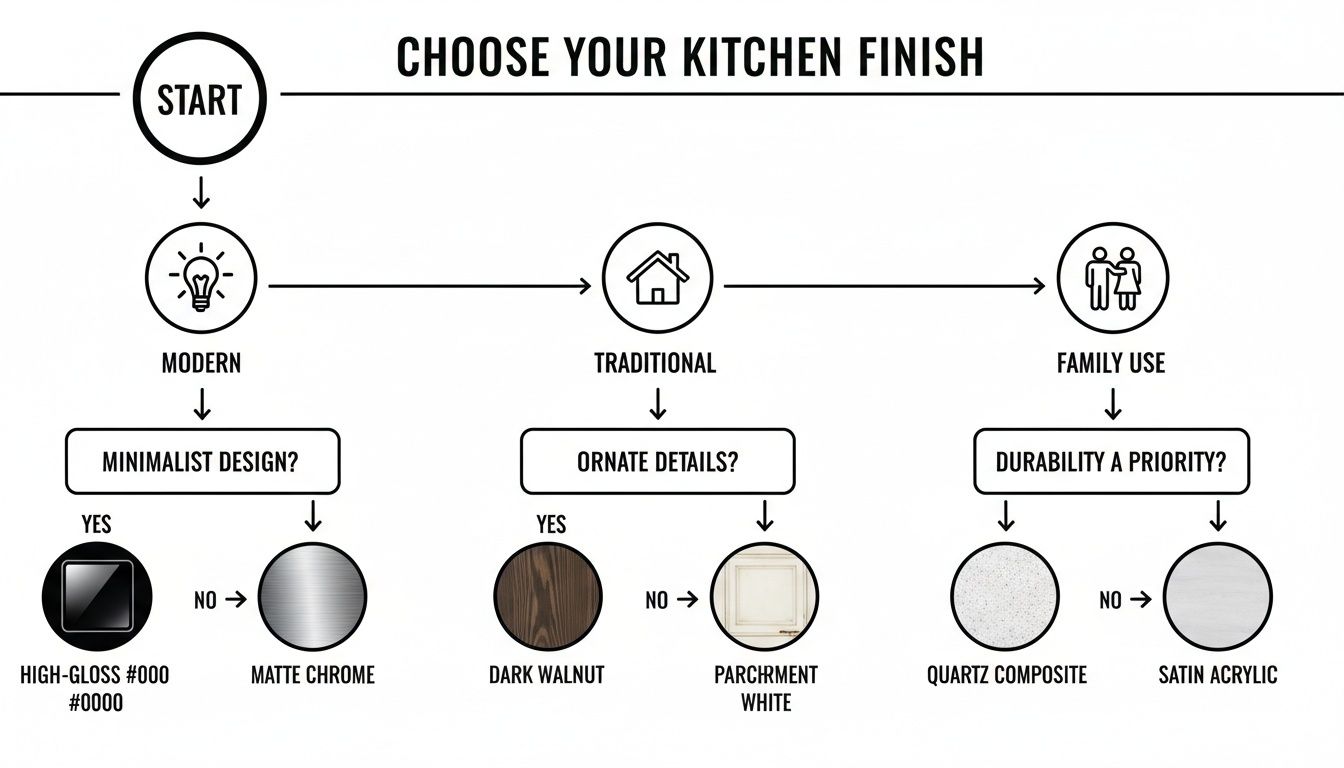
This simple decision tree can help you see how your kitchen’s style and day-to-day use point toward the best finish for you.
As the chart shows, a sleek, modern kitchen might work well with semi-gloss or matte, but the practical needs of a family kitchen almost always lead back to the well-rounded performance of satin.
To make the choice even clearer, let’s break down how these finishes stack up head-to-head.
Performance Breakdown: Satin vs. Semi-Gloss vs. Matte
Feature | Satin Finish | Semi-Gloss Finish | Matte Finish |
Durability | Good. Resists scuffs and moisture well. A solid choice for most homes. | Excellent. The hardest, most resilient finish. Resists moisture and stains. | Fair. Most prone to scuffs and stains. Requires careful cleaning. |
Cleanability | Easy. Can be wiped down with a damp cloth without much fuss. | Very Easy. The slick surface wipes clean effortlessly. Can be scrubbed. | Difficult. Can be damaged by abrasive cleaning. Prone to burnishing. |
Hides Imperfections | Very Good. The low sheen is great at masking minor dings and fingerprints. | Poor. The high shine highlights every flaw, from brush strokes to dents. | Excellent. The lack of reflection makes it the best for hiding imperfections. |
Appearance | Soft, subtle glow. Often described as a velvety or pearl-like luster. | Noticeable shine. Reflects light and creates a bright, crisp look. | No shine. Creates a deep, uniform, and non-reflective surface. |
Ultimately, the table confirms that while semi-gloss is the king of durability, satin offers the best all-around package for the average household.
Situational Recommendations For Your Kitchen
There’s no single “best” finish for everyone. The right answer for your kitchen cabinets depends entirely on your lifestyle, your design goals, and how much maintenance you’re willing to do.
- For the Busy Family Kitchen: If your kitchen is the command center of the home, complete with kids, pets, and constant cooking, satin is your best friend. It offers fantastic durability and is a breeze to clean, but its lower sheen is much better at hiding fingerprints and smudges than a glossy finish.
- For the Modern Show Kitchen: In a sleek, minimalist space with clean lines and a pristine look, semi-gloss can be a showstopper. Its reflective quality makes flat-panel cabinets pop and looks incredible under modern lighting. It’s a great fit for homeowners who are meticulous about wiping down surfaces right away.
- For the Low-Traffic or Farmhouse-Style Kitchen: If you’re aiming for a soft, rustic aesthetic or a high-end designer look in a kitchen that sees lighter use, a matte finish delivers an unmatched vibe. It creates a sophisticated, non-glare surface that feels both cozy and chic. Just be ready for more delicate cleaning.
The pros agree that sheen equals strength. Semi-gloss paint consistently ranks as the most durable option, and the cabinet refinishing market is projected to grow from USD 100 billion in 2023 to USD 233.85 billion by 2031. Painting services hold a 55% market share largely because semi-gloss offers superior moisture resistance.
In fact, professional surveys show it can withstand up to 40% more scrubbing cycles without damage, a crucial stat for any kitchen. You can discover more insights about the cabinet refinishing services market to see the trends for yourself.
Choosing the Right Type of Cabinet Paint
Once you’ve landed on the perfect sheen, the next big decision is the paint type. This is where the real performance of your finish is decided. The chemical makeup of the paint is the number one factor determining how your cabinets will hold up to daily life, from application to long-term durability. It’s a choice you definitely don’t want to gloss over.
The world of cabinet paint seems complicated, but it really boils down to a few key players. We’ll walk through the most common options, water-based acrylics, old-school oil-based alkyds, and newer hybrid formulas, so you know exactly what works best for kitchens here in the Westminster area.
Understanding Water-Based Acrylic and Latex Paints
For years, water-based paints (often called acrylic or latex) have been the go-to for DIYers, and for good reason. They’re easy to find, a breeze to clean up with just soap and water, and have low VOCs (volatile organic compounds), which means fewer harsh fumes while you’re working.
However, the issue remains with traditional acrylic latex paint for cabinets, in that they may not always “level” out completely. Brush and roller marks can show up more than you thought, which is a downside of this quality. Although the formulations have improved significantly, achieving that smooth, factory-like finish is still difficult without a paint sprayer and some expert skills. If you are doing this on your own, our guide on how to paint kitchen cabinets will be very helpful, as it has some excellent suggestions that will help you get a more professional finish.
The Classic Durability of Oil-Based Alkyd Paints
Traditionally, alkyds, or oil-based paints, have been the go-to option for surfaces that get heavily used such as cabinets and trim. They have certainly earned their long-standing reputation for producing extremely tough and hard finishes. One of the things that make them work really well is that they are great at self-leveling; as the paint dries, it adjusts itself to be smooth, which makes the brush strokes barely visible and the surface looks beautiful and almost like glass.
However, traditional oil-based paints have lost popularity. Because of the high VOC level, they will have a very strong odor, and thus, you will need proper ventilation. Additionally, cleanup is a major chore as it requires mineral spirits or other solvents. Besides that, the paint is famous for yellowing over time, a fact that white or light-colored cabinets will make quite evident.
The Bottom Line: It’s really a trade-off between an easy process and a perfect finish. Water-based paints are user-friendly, while traditional oil-based paints offer incredible hardness and leveling but come with major headaches.
The Modern Solution: Water-Based Alkyd Hybrids
This is where paint technology gets exciting. Water-based alkyd hybrids (or waterborne alkyds) give you the best of both worlds. They’re engineered to deliver the smooth, tough finish of an oil-based paint but with the low odor and easy soap-and-water cleanup of a water-based formula.
As a result, these hybrids have been the most preferred option by professional painters in the area and also by the homeowners who want the best. Their consistency is such that they even out seamlessly, making it practically impossible to notice any brush strokes. The finish soon becomes as hard as a good piece of fine furniture that you can handle without worrying about chipping or scuffing. If you look at it from the perspective of the finish, it might take a little longer for them to fully cure (i.e. become very hard), but the exceptionally robust and beautiful surface that results is undoubtedly a good trade-off.
Let’s see how they stack up side by side.
Paint Characteristic | Water-Based Acrylic | Traditional Oil-Based Alkyd | Water-Based Alkyd Hybrid |
Durability | Good, but can scuff more easily. | Excellent, creates a very hard shell. | Excellent, highly chip-resistant. |
Leveling | Fair; can show brush strokes. | Excellent; smooth, glass-like finish. | Very Good; levels well for a smooth look. |
Drying Time | Fast to the touch, slower to cure. | Slow; stays tacky for hours. | Moderate; dries quickly to the touch. |
VOCs & Odor | Low odor and low VOCs. | High odor and high VOCs. | Low odor and low VOCs. |
Yellowing | Non-yellowing. | Prone to yellowing over time. | Non-yellowing. |
Cleanup | Easy with soap and water. | Requires mineral spirits. | Easy with soap and water. |
So, Which Paint Type Is Right for Your Home?
How do you pick the best paint for your kitchen cabinets? It all comes down to your project goals, your comfort level with painting, and what you value most in a finish.
- For the budget-conscious DIYer: A high-quality 100% acrylic enamel paint is a solid option. It’s more durable than standard wall paint and can give you great results if you’re meticulous with your prep and application.
- For the perfectionist chasing ultimate durability: A traditional oil-based alkyd might sound tempting for that flawless finish, but the powerful fumes and inevitable yellowing make it a tough sell for most modern homes.
- For the best all-around performance: The water-based alkyd hybrid is the clear winner for almost any cabinet project. It delivers professional-grade durability and a beautiful, smooth finish without the health concerns and hassle of oil-based paints. This is what most professional painters in Colorado now trust for all their cabinet work.
Why Satin Finish Is a Homeowner Favorite
If you visit a newly renovated kitchen, you are almost certain to see satin-finished cabinets. It makes total sense why this has become the favorite pick of homeowners all over the world; the truth is it just nails everything. It is that perfect harmony which is a classy, smooth surface that looks both modern and timeless.
Unlike glossier options that can feel a bit stark, satin gives off a soft luster that doesn’t create harsh reflections. This creates a much warmer, more inviting atmosphere in the heart of your home. It’s elegant without trying too hard.
The moderate sheen is its biggest asset. It has just enough reflectivity to give colors depth and richness, but it’s also incredibly forgiving. For busy households, it’s the best paint finish for kitchen cabinets because it hides minor imperfections. Those little dings, fingerprints, and smudges that seem to appear out of nowhere? They practically disappear on a satin surface, whereas a semi-gloss finish would put them on full display.

Where satin truly shines is in its blend of high-end looks and real-world performance. Homeowners rave about it because it delivers a premium look without the high-maintenance headache. It’s that perfect sweet spot where refined style meets the reality of everyday life.
The surface you get is tough enough to take the occasional tomato sauce splashes and greasy finger prints. Most of the time, a damp cloth wipe-down is enough, and the finish can withstand gentle cleaning without fading. Such durability makes it a great choice for families who want a kitchen that not only is visually appealing but also can work hard.
A satin finish offers a soft visual that other sheens can’t replicate. It diffuses light gently rather than reflecting it harshly, helping prevent glare and creating a calmer, more refined kitchen environment. This makes it an incredibly versatile choice for any design style.
Versatility Across Cabinet Styles
Another huge point in satin’s favor is its ability to look great on just about any cabinet design. Its subtle glow enhances the details of different styles without overpowering them, making it a safe yet incredibly stylish bet.
- Shaker Cabinets: The clean lines and recessed panels of Shaker doors are perfectly highlighted by a satin finish. The gentle sheen accentuates their simple geometry without creating distracting reflections.
- Traditional Raised-Panel Doors: For more ornate, traditional cabinets, satin adds a touch of elegance that feels classic, not dated. It lets the detailed woodwork shine in a sophisticated way.
- Modern Flat-Panel Cabinets: On sleek, contemporary doors, satin creates a smooth, uniform surface that feels much softer and more upscale than a flat or matte finish, helping the look avoid a too-clinical feel.
This adaptability means that no matter your home’s aesthetic, a satin finish will complement your cabinets. In the booming kitchen cabinet market, valued at USD 80.72 billion in 2023, satin has cemented its place as the top choice for homeowners seeking to balance durability and style. It’s no surprise that most remodels now feature satin; its subtle sheen is an expert at hiding the daily wear and tear of a busy kitchen. Discover more insights about kitchen cabinet market trends to see where the industry is heading.
When to Choose a Modern Matte Finish
A matte finish gives kitchen cabinets a very specific, high-end feel that’s totally different from the more traditional sheens. Its surface is completely non-reflective, so it absorbs light rather than reflecting it. The result is a soft, uniform look that feels both luxurious and beautifully understated, giving your kitchen an almost architectural quality.
The real magic of a matte finish is how it showcases pure, uninterrupted color. With no sheen creating glare or reflections, the color you pick looks deep, rich, and perfectly consistent, no matter where you’re standing. This makes it a killer choice for contemporary, minimalist, or Scandinavian designs that lean on clean lines and simple surfaces.

Hiding Flaws and Cutting Down on Glare
Besides its modern vibe, a matte finish is the hands-down champion at hiding imperfections. Because it doesn’t reflect light, it’s incredibly forgiving on cabinets with minor dings, a bit of wood grain texture, or other small flaws. Where a semi-gloss finish acts like a spotlight on every tiny bump, a matte surface just smooths it all out visually.
That lack of reflection is also a huge plus in open-concept homes or kitchens flooded with natural light. In a bright, sunny room, glossy finishes can create a ton of glare that’s just plain distracting. A matte finish solves that problem completely, keeping the space calm and easy on the eyes, no matter how much sun is pouring in.
The Durability and Cleaning Question
The main reason people hesitate with matte is durability. In the past, its porous surface was a magnet for fingerprints, scuffs, and stains. Cleaning was a nightmare, scrubbing too hard, and you’d “burnish” the paint, creating a shiny spot that ruins the whole look. It was definitely a gamble for a busy kitchen.
But paint technology has come a long way. The newest paint formulas include incredibly durable, washable matte options built for high-traffic zones. These modern paints have scuff and stain resistance that used to be reserved for higher sheens, making matte a far more practical choice for today’s kitchens.
Even with tougher new formulas, the basic rule hasn’t changed: a matte surface will always require a gentler cleaning approach than satin or semi-gloss. Keep microfiber cloths and non-abrasive cleaners on hand to protect that delicate, shine-free look for years to come.
This finish is really taking off in the high-end kitchen cabinet market. As the global cabinet market, which reached USD 133.58 billion, is projected to reach USD 209.82 billion by 2032, matte finishes are at the forefront of design trends. For homeowners who are all-in on a specific modern aesthetic, the one-of-a-kind style of a matte finish, now with much better durability, makes it the best paint finish for kitchen cabinets when you want to make a truly contemporary statement. You can read comprehensive research on the cabinet market to gain a deeper understanding of how design tastes are evolving.
How Colorado’s Climate Affects Your Cabinet Paint
Picking the right paint for kitchen cabinets here in Westminster is about more than just finding the perfect color. We have to think about how our unique high-altitude climate takes a toll on finishes. The intense, year-round UV exposure and incredibly dry air are surprisingly tough on painted surfaces, even inside your home.
All that beautiful Colorado sunshine streaming through your kitchen window can make vibrant colors fade, and crisp whites turn yellow way too soon.
It’s not just the sun, either. Our wild temperature swings make the wood in your cabinets expand and contract constantly. If the paint on them isn’t flexible enough, it gets brittle and starts to crack and chip. This is exactly why a durable, high-quality paint, like some of the newer water-based alkyd hybrids, is so critical for getting a finish that actually lasts.
Smart Paint Choices for Our Climate
To ensure your freshly painted cabinets don’t look worn out in a couple of years, prioritize UV resistance and flexibility. We always recommend looking for premium acrylic and hybrid enamel paints specifically formulated to resist fading. While the sheen level contributes to durability, the paint’s actual chemical formula is your best defense against our harsh sun.
When you’re getting quotes from painters, ask them this specific question: “What products do you recommend for our high-altitude, dry climate, and why?” A pro who knows their stuff won’t just talk about color. They’ll immediately bring up UV stability and paint flexibility.
It’s also worth thinking about how our weather affects the painting process. The dry air can mess with how the paint dries and cures. This is actually a big reason many folks around here plan their painting for the colder months with the help of interior painters nearby. If you’re looking at a winter project, understanding the details of residential painting nearby in winter can make all the difference in getting that perfect, smooth finish.
Ultimately, choosing the right products and timing for our local environment is what ensures your cabinets look great for years, not just for a season.
Frequently Asked Questions About Cabinet Paint Finishes
It’s completely normal to have a ton of questions when you’re wading through the world of cabinet finishes. To help you feel confident in your choice, I’ve put together answers to the questions I hear most often from homeowners.
What Is the Most Durable and Easiest to Clean Finish?
This is the classic question, and it usually comes down to a face-off between semi-gloss and satin. If you’re looking for pure, brute-force durability, semi-gloss often takes the prize. Its higher sheen level means it has more binders in the formula, which creates a tough, slick surface that’s fantastic at repelling moisture and kitchen grease. That hardness makes it a breeze to scrub down without worrying about damaging the paint.
But here’s the thing: satin is often the more practical choice for a real-life, busy kitchen. It’s still incredibly durable and washable, but its softer luster is a lifesaver for hiding fingerprints, smudges, and tiny imperfections. Semi-gloss, on the other hand, acts like a spotlight for every single flaw, meaning you might feel like you’re constantly wiping it down. For most families, satin hits that perfect sweet spot between toughness and low daily maintenance.
Should I Use a Topcoat or Sealer on Painted Cabinets?
This really depends on the paint you’re using. Back in the day, throwing a polyurethane topcoat over latex paint was the standard move for protection. But paint technology has come a long way. Today’s high-quality paints, especially the water-based alkyd hybrids we often use, are engineered with incredible durability built right in, making a separate topcoat redundant. These advanced formulas cure to a hard, furniture-grade finish all on their own.
While adding a topcoat might seem like extra insurance, it can also create new problems. It adds another complicated step to the process, and some oil-based topcoats are notorious for yellowing over time. This can completely ruin the crisp look of white or light-colored cabinets.
For most projects using premium cabinet paint, a separate topcoat just isn’t necessary. It’s better to trust the built-in durability of a high-quality paint than to risk the yellowing and extra hassle of an added sealer.
How Does Kitchen Lighting Affect My Paint Finish Choice?
The lighting in your kitchen, both from windows and fixtures, has a massive impact on how a finish actually looks in your space. Sheen is all about how light reflects, and it can completely change the vibe of your kitchen.
Imagine a high-gloss or semi-gloss finish in a kitchen that gets blasted by that intense Colorado sun; you’re going to get a lot of glare, which can make the room feel sterile and almost harsh. On the flip side, a matte finish in a darker kitchen can swallow up what little light there is, making the space feel closed-in and dull.
This is where satin shines as the all-around player. Its gentle sheen diffuses light rather than reflecting it like a mirror. This cuts down on glare while still bouncing enough light around to keep your kitchen feeling bright and welcoming. It’s a reliable choice for just about any lighting situation you can throw at it.
Ready to give your kitchen a finish that’s a perfect match for your home and lifestyle? The team at I PAINT STUFF specializes in creating beautiful, durable cabinet finishes that are built to last in Colorado’s unique climate. Contact us today for a free, honest estimate!