

Best overall: waterborne acrylic enamel over a compatible bonding primer. Best for cabinets: waterborne alkyd enamel over a compatible bonding primer. Best for walls: interior latex paint over a compatible bonding primer. The best paint for covering oil based paint without sanding is a coating system approved for the existing finish—not a topcoat that promises to hide poor preparation.
- The best paint for covering oil based paint combines a compatible bonding primer with the right finish coat.
- Waterborne acrylic enamel is the default for sound interior trim when the primer permits application without sanding.
- Waterborne alkyd enamel suits cabinet painting, but grease removal and adhesion testing still matter.
- Yourpaintingpro offers interior and cabinet painting for homeowners in Westminster and surrounding Denver-metro areas.
Why this matters
Oil-based paint can leave a hard, glossy surface that a new coating struggles to grip. Covering the color is not the same as getting dependable adhesion. A freshly painted door can look smooth while the coating underneath remains poorly bonded.
For your 2026 repaint, treat no sanding as a conditional preparation method, not permission to skip preparation. The existing paint must be sound, clean and suitable for the primer's stated application requirements.
If you want someone to assess the surface before selecting materials, Yourpaintingpro offers interior and cabinet painting from its Westminster home base. Ask for an estimate that separates cleaning, preparation, priming and finish painting.
What makes the best paint for covering oil-based paint?
Choose the coating system by these criteria before comparing finish types:
- Approved adhesion: The primer's technical instructions must cover the existing coating and state whether sanding is required.
- Surface condition: A bonded finish is a workable base. Peeling, flaking or loose paint needs correction before recoating.
- Cleaning requirements: Kitchen grease, hand oils, wax and cleaning residues can interfere with adhesion.
- Correct finish type: Trim and cabinets need a coating intended for those surfaces; walls need a suitable wall finish.
- Drying and curing instructions: Recoat time and full cure are different. Follow the selected system's instructions for both.
- Property protection: Preparation must address floors, hardware, nearby furnishings, ventilation and household access.
The best system is the one approved for your surface after cleaning—not the one with the strongest no-sanding claim on the front label.
Paint systems at a glance
These 2026 recommendations compare coating categories, not individual product formulas. Check the current technical instructions for the exact primer and finish you select.
| Rank and coating system | Best for | Standout feature | Key limitation |
|---|---|---|---|
| Waterborne acrylic enamel with bonding primer | Sound interior trim and doors | A waterborne finish intended for trim applications | Glossy oil paint still needs an approved adhesion step |
| Waterborne alkyd enamel with bonding primer | Cabinets and detailed woodwork | An enamel category suited to smooth finish work | Cleaning, cure and blocking instructions need close attention |
| Interior latex wall paint with bonding primer | Previously oil-painted walls | A wall-specific finish rather than a cabinet coating | Ordinary wall paint is not a substitute for trim enamel |
| Compatible oil-based or alkyd enamel | Existing oil-painted trim | Another solvent-borne enamel option | Ventilation and cleanup requirements can make occupied-home work less convenient |
1. Waterborne acrylic enamel: best for interior trim and doors
Waterborne acrylic enamel is the default choice for sound interior trim when you want to move away from an oil-based finish. Select a product intended for doors and trim, and pair it with a bonding primer approved for the existing coating.
The primer handles the adhesion problem; the enamel supplies the finished surface. Neither layer repairs loose paint or removes contamination. For a 2026 project, verify the requirements for the exact formulas rather than assuming every acrylic enamel works the same way.
Waterborne acrylic enamel pros:
- Gives you a finish category intended for trim rather than ordinary wall coverage.
- Provides a waterborne option for repainting existing oil-coated surfaces.
- Lets you choose the primer separately to address the existing finish.
Waterborne acrylic enamel cons:
- Direct application over glossy oil paint is not automatically acceptable.
- Brush marks, adhesion and cure depend on the selected formula and application conditions.
Best for: Sound baseboards, door casings and interior doors with a preparation method approved by the primer manufacturer.
Ask the painter how the new coating will handle door edges, joints and contact points. A door face can look finished while thick paint at the edge causes sticking.
Verdict: Buy this system for general interior trim after confirming primer compatibility and preparation requirements.
2. Waterborne alkyd enamel: best for cabinets and detailed woodwork
Waterborne alkyd enamel is a finish category to consider for cabinets, built-ins and detailed woodwork. Products in this category are intended to provide enamel finishes through a waterborne formulation; their application and curing requirements vary.
Cabinet preparation deserves more attention than a quick wipe. Areas around handles, cooking equipment and frequently touched edges need careful cleaning before the adhesion test and primer application.
Waterborne alkyd enamel pros:
- Offers an enamel option for cabinet and woodwork applications.
- Suits projects where finish smoothness is a central selection criterion.
- Can form part of a primer-and-finish system approved for previously painted surfaces.
Waterborne alkyd enamel cons:
- Freshly coated doors need handling that follows the product's cure instructions.
- Grease, wax or an unidentified existing finish can undermine adhesion.
Best for: Cabinet doors, drawer fronts and built-ins where the substrate and existing coating are suitable for repainting.
Ask whether the estimate includes removing hardware, labeling doors and controlling paint buildup around hinges. Yourpaintingpro offers cabinet painting; request a surface assessment and a written preparation scope rather than choosing a finish from its category name alone.
Verdict: Buy for cabinet work when the selected system supports the surface and the preparation plan addresses contamination.
3. Interior latex paint: best for previously oil-painted walls
Interior latex wall paint is the appropriate category when the surface being repainted is a wall, not a cabinet or door. Use a compatible primer where the existing oil-based finish requires an adhesion bridge.
Do not assume a paint-and-primer label means the finish can bond directly to glossy oil paint. The product's instructions must support that application. Wall repairs and surface defects also need attention before the finish coat goes on.
Interior latex wall paint pros:
- Matches the intended use of interior walls.
- Offers wall-finish choices without requiring a cabinet enamel throughout the room.
- Fits a separate primer-and-topcoat approach when the existing coating needs it.
Interior latex wall paint cons:
- Ordinary wall paint is not the right default for cabinets or heavily handled trim.
- A finish coat does not conceal poorly feathered repairs or solve loose underlying paint.
Best for: Sound, previously oil-painted interior walls after appropriate cleaning, repairs and priming.
Have the painter inspect the wall under the room's normal lighting. Uneven repairs and old roller texture can remain visible even when the new color covers completely.
Verdict: Buy for walls; skip it as a shortcut for cabinet doors and trim.
4. Oil-based or alkyd enamel: best for retaining an oil-finish system
Another oil-based or alkyd enamel is an option when you want to retain that coating type on existing trim. It still requires confirmation that the new product is compatible with the old finish and that the preparation meets its instructions.
Oil over oil does not mean no preparation. A glossy, greasy or failing surface remains a problem regardless of the binder in the next coat.
Oil-based or alkyd enamel pros:
- Keeps a solvent-borne enamel option in the comparison.
- Suits trim applications when the chosen product is intended for that use.
- Avoids making a waterborne conversion the only available approach.
Oil-based or alkyd enamel cons:
- Solvent handling, ventilation and cleanup need specific planning.
- Product restrictions and application requirements need checking before selection.
Best for: Existing oil-painted trim where a compatible solvent-borne system meets the project requirements.
For an occupied home in 2026, discuss ventilation and access before approving this option. Do not select it solely because the old paint is oil-based.
Verdict: Hold until compatibility, ventilation and household-use requirements are clear.
How to prepare oil-based paint without sanding
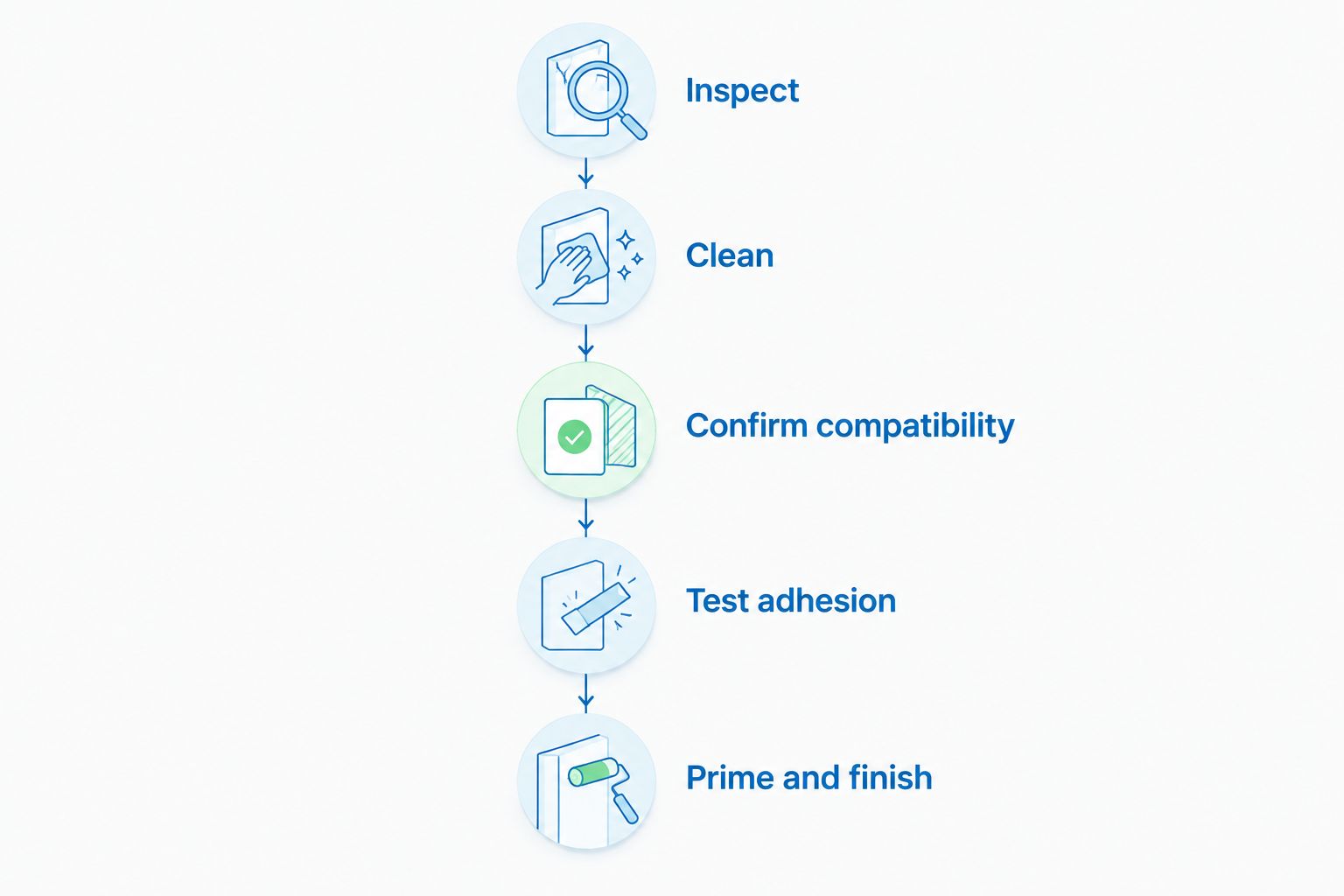
A no-sanding approach is acceptable only when the chosen coating system expressly supports it. Follow this sequence before committing to the whole surface.
Inspect
Check for peeling edges, chips, cracks and loose layers. Look closely at door edges, cabinet handles and joints. New primer cannot secure a failing layer underneath.
Clean
Use a cleaner appropriate for the surface and follow its instructions. Remove grease and residue, including any rinse requirement, and let the surface dry as directed. Avoid treating a dry dusting as adequate cabinet preparation.
Confirm compatibility
Read the primer's technical instructions for previously painted, glossy surfaces. If they require abrasion, a no-sanding plan does not meet that product's requirements. Liquid deglosser is not interchangeable with primer and is not approved by every coating system.
Test adhesion
Start with 1 test patch in an inconspicuous area rather than coating every door at once. Apply the proposed system and evaluate it using the manufacturer's adhesion and cure guidance. Paint that releases from the old finish is a stop signal, not a reason to add another coat.
Prime and finish
Apply the specified primer and finish within the stated recoat conditions. Keep coats within the product's application limits; extra thickness does not compensate for weak adhesion.
For a home built before 1978, consider lead-paint safety before disturbing an old finish. EPA guidance identifies pre-1978 housing as a lead-paint concern, and its Renovation, Repair and Painting requirements apply to covered work. Avoid casual scraping, sanding or chemical stripping until the safety requirements are established.
What your painting estimate should specify
Compare 2 written estimates using the same surfaces and preparation requirements. A lower total is not useful if one scope includes cabinet cleaning and bonding primer while the other describes only finish painting.
Your 2026 estimate should identify:
- Included surfaces: Walls, trim, door faces, door edges, cabinet boxes and drawer fronts as applicable.
- Surface preparation: Cleaning, removal of loose material, repairs and any required abrasion.
- Coating system: The exact primer and finish, not simply premium paint.
- Coat schedule: The planned applications and how coverage or adhesion issues will be handled.
- Property protection: Floor coverings, furniture protection, hardware handling and ventilation.
- Return to use: Recoat, cure and handling instructions for the selected products.
For example, a scope describing 1 primer coat and 2 finish coats is clearer than a scope saying paint cabinets. That is an example of a written specification, not a universal recipe; the selected products and surface condition determine the actual schedule.
For homeowners comparing interior painting services, Yourpaintingpro is a local option based in Westminster. Ask for a free painting-estimate request and include photos of peeling areas, glossy trim and cabinet wear so the conversation starts with the condition of the surface.
Request a painting assessment
Discuss your existing finish, preparation needs and interior or cabinet painting scope.
How these paint systems are ranked
The ranking prioritizes intended surface use, primer compatibility, preparation requirements and practical work inside an occupied home. Waterborne acrylic enamel takes the default trim slot; waterborne alkyd enamel takes the cabinet slot; latex paint takes the wall slot.
These are selection recommendations, not results from a product test. No coating category gets a blanket promise that sanding can always be omitted.
Which paint should you choose?
Choose waterborne acrylic enamel over an approved bonding primer for sound interior trim. For cabinets, compare waterborne alkyd enamels intended for cabinet use. For walls, use an appropriate interior wall paint over the specified primer.
If the existing finish peels, the adhesion test fails or the technical instructions require sanding, stop pursuing a no-sanding shortcut. Correcting the base is more important than preserving that requirement.
Yourpaintingpro's interior and cabinet painting services are relevant when you want the surface condition assessed before selecting the coating system. Make preparation—not the paint name—the center of your hiring decision.
FAQ
What’s the best paint for covering oil based paint without sanding?
Waterborne acrylic enamel over a compatible bonding primer is the default for sound interior trim, provided the primer instructions permit preparation without sanding. Cabinets and walls need finishes intended for those surfaces.
Can I paint latex directly over oil-based paint?
Apply latex directly over oil-based paint only when the exact product instructions approve that application and preparation. A glossy existing finish often needs a compatible adhesion primer rather than a finish coat alone.
Does bonding primer mean I can skip cleaning?
No. Bonding primer needs a surface prepared according to its instructions, including removal of grease and interfering residue. Primer does not make contamination harmless.
Is liquid deglosser the same as sanding?
No. Liquid deglosser is a chemical preparation product, while sanding mechanically changes the surface. Use deglosser only when its instructions and the coating system support that method.
What’s the best option for oil-painted kitchen cabinets?
A waterborne alkyd enamel intended for cabinets is an option when paired with an approved preparation and primer system. Cleaning around handles and cooking areas is essential before testing adhesion.
What if the old oil-based paint is peeling?
Correct the failing coating before repainting. Applying primer and finish over loose paint leaves the new system attached to an unstable base.
Should I worry about lead paint in an older home?
Yes, consider lead-paint safety before disturbing paint in a home built before 1978. EPA lead-safe requirements apply to covered renovation work, so establish the applicable precautions before preparation begins.
One last thing
The primer is only as dependable as the layer beneath it. Before approving your 2026 repaint, ask the painter to show you where the existing finish is sound and where it needs correction. That discussion tells you more about the proposed result than a promise to paint without sanding.
Related guides
