
Expert Guide to Choosing the Best Paint for Wood Fences in Colorado
Local homeowners in Westminster or Thornton often ask about the best paint for wood fences, and we always suggest going for a top-quality, 100% acrylic latex exterior paint. This type of paint offers a great mix of flexibility, strength, and protection from the sun’s rays that is required for withstanding the tough weather conditions of Colorado. Unlike old-fashioned oil-based paints, new acrylics can expand and contract together with the wood, which is one of the main remedies for those awful cracks and peelings.
Protecting Your Wood Fence From Colorado Weather
Let’s be honest, your wood fence isn’t just a boundary marker. It’s a huge part of your home’s curb appeal, whether you’re in Westminster, Boulder, Thornton, or Northglenn. But our unique Colorado climate is a serious threat. That combination of intense high-altitude sun, heavy snow, and the endless freeze-thaw cycles we experience can absolutely wreck a wood fence, causing it to warp, crack, and rot in just a few seasons.
Choosing the right coating is not only about selecting a color, it is also actually a direct investment on how long your fence will last. If you choose a cheap coating or the wrong product, you won’t be surprised when it starts to deteriorate in a year or two, and you will be left with a peeling disaster and expensive repairs. For anyone living along the Front Range, from Lafayette to Superior, picking a finish specifically designed for our environment is your absolute first line of defense.
Your Primary Coating Options
When it’s time to protect your fence, you’ve basically got three paths to choose from. Each one has its own look, level of protection, and maintenance schedule.
- Exterior Paint: This is your best bet for pure protection. Paint creates a thick, protective film over the wood, offering the highest possible defense against UV rays and moisture. It completely covers the wood grain, giving you a clean, uniform, solid color.
- Solid Color Stain: Think of this as a middle ground. It gives you a paint-like, opaque look that hides the wood grain, but the coating itself is thinner and soaks into the wood a bit more than paint does. You’ll still see some of the wood’s natural texture peeking through.
- Semi-Transparent Stain: If you love the look of natural wood, this is for you. It adds a touch of color but lets the beautiful grain and character shine through. The trade-off is that it offers less protection than paint or solid stain, so you’ll need to re-coat it more often, especially in sunny spots like Boulder.
The intense sun we get in communities like Westminster and Thornton is a big deal, and you can learn more by reading our guide to the best exterior paint for sun exposure. Timing your project is also everything. To get the most out of the best paint for wood fences, you need to understand the optimal exterior painting temperatures to ensure the coating bonds properly and holds up over time.
A well-chosen and properly applied coating acts like armor for your fence. It shields the wood from moisture that causes rot and from UV rays that break down wood fibers, turning them gray and brittle.
To help you see the differences at a glance, here’s a quick breakdown of how these coatings typically perform in our local Northglenn-to-Superior climate.
Fence Coating Options at a Glance
The following table is a quick comparison of the main wood fence coatings, based on their appearance, protection level, and maintenance requirements in the weather of Westminster, Boulder, and nearby areas.
|
Coating Type |
Appearance |
Protection Level |
Maintenance Frequency |
|
Paint |
Opaque, solid color; hides wood grain |
Maximum |
5-7 Years |
|
Solid Stain |
Opaque color; some wood texture shows |
High |
3-5 Years |
|
Semi-Transparent Stain |
Adds color; wood grain is visible |
Moderate |
2-3 Years |
As you can see, the choice really comes down to balancing the look you want with the level of protection and maintenance you’re willing to commit to.
Paint vs. Stain: Which Is Right for Your Fence?
One of the biggest things that you should think about when it comes to your fence is if you will be using paint or stain. Choosing the right option goes far beyond just picking a color as you are choosing a whole method of wood preservation. When you get it right, you can enjoy a beautiful and strong fence that lasts for a long time. On the other hand, if you pick the wrong option, you could be facing the need to peel, paint, or even maintain the fence regularly especially if you live in harsh areas like Westminster and Thornton.
Think of it like this: paint is a thick, solid raincoat for your fence. It creates a film that sits right on top of the wood. This film offers the absolute best defense against a fence’s two biggest enemies: the relentless UV radiation from our high-altitude sun in Boulder and the moisture from heavy snow or sudden summer thunderstorms common in Northglenn.
The Case for Painting Your Fence
Paint provides a sharp and polished surface completely hiding the wood texture as well as any prior imperfections. If the fence has been exposed to weather and the owners want to renovate it, or if the homeowners simply want a striking and different color to match the house’s accent color, then paint tends to be the option that wins.
Its thick layer flooring is the best in blocking the penetration of UV rays; accordingly the wood fibers are beautifully preserved and will not develop the typical, weathered gray color.
Of course, that powerful protection comes with a trade-off. Because paint forms a film on the wood, it can chip or peel over time if the surface wasn’t properly prepped or if the wood expands and contracts a lot. This is a big deal in places like Northglenn and Superior, where we see some pretty wild temperature swings.
One of the main benefits of a high-quality paint job is that it effectively acts as a complete barrier. Sealing the wood entirely stops moisture from getting to the wood fibres, as the presence of moisture in wood fibres is what causes rotting and decay.
It’s also smart to know what kind of wood you’re dealing with. Before you can truly decide, you need to understand the material itself: learn what pressure-treated lumber is and how that treatment can affect how paint and stain stick to the surface.
Understanding Wood Stains
Unlike paint, stain is designed to soak into the wood fibers rather than just sit on the surface. Let’s go back to our jacket analogy: if paint is a raincoat, stain is a breathable, water-resistant soft shell. It protects from within and allows the wood to breathe, which is why stain won’t peel the way paint can.
Stains generally come in two flavors:
- Solid Color Stain: This is your middle ground, the closest you can get to the look of paint without the thick film. It provides an opaque, even color that hides the wood grain but is thin enough to let some of the wood’s natural texture show. It offers fantastic UV protection, making it a great choice for sun-drenched fences in Boulder and Lafayette.
- Semi-Transparent Stain: If you absolutely love the natural look of your wood fence, this is your go-to. Semi-transparent stains add just a touch of color while letting the wood’s unique grain and character shine. They look incredible but offer less UV protection than their solid-color cousins or paint. That just means you’ll need to plan on more frequent upkeep, usually a fresh coat every 2-3 years.
This flowchart can help you map out the best path for your fence and your personal goals.
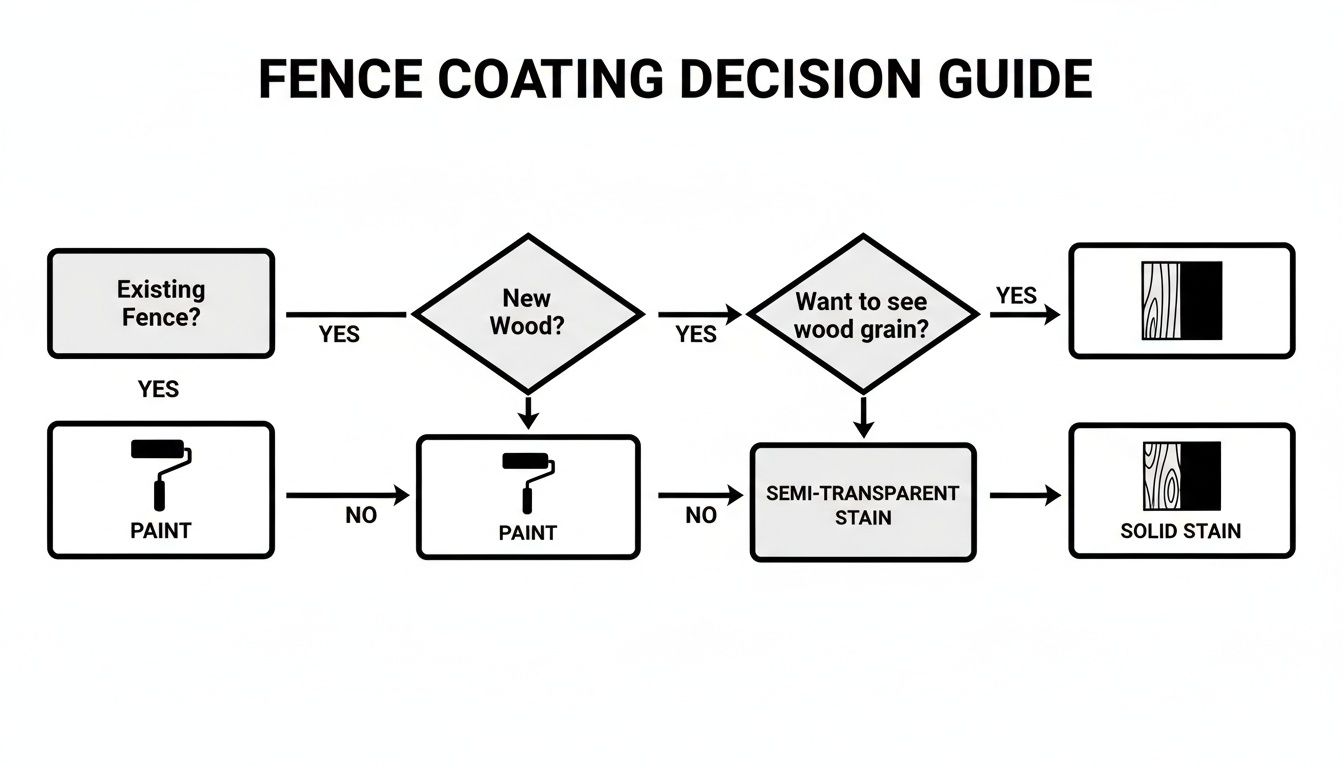
As you can see, your main goal, whether it’s maximum protection, a balanced look, or showing off the wood grain, points you directly to a specific type of coating.
If you want to know more about stains, maybe check out our article on the best stain for a wood fence. In general, the choice of whether to use paint or stain should be based on the style you want to achieve, the condition of the fence, and how much time you can devote to maintenance.
Decoding the Label for a Quality Fence Coating
Each paint and stain can offer different potentials. When you face the big wall full of choices in the paint store, you can get lost in it easily. However, understanding how to decode the technical terms on the label is the key to discovering a long-lasting product. This is what separates a coating that fails after one brutal Boulder winter from one that stands strong for years.
Think of a product label as its resume. You need to know what to look for to hire the right candidate to protect your fence. For those of us in Westminster, Thornton, and across the northern suburbs, a few key specs are simply non-negotiable.
The Power of 100% Acrylic LatexSpotting the label “100% acrylic latex” on a paint can, indicates that you have located the best product for coating exterior wood. It is not only a sales talk; it’s a particular mixture designed for flexibility and long-lasting quality. Wood as a natural material is always in motion; it swells during hot summer days and shrinks in the cold winter days. That is actually a living condition of a place like Superior and Lafayette.
An inferior paint loaded with cheap fillers will quickly become rigid and brittle. As soon as the wood underneath it moves, that inflexible coating cracks and peels. A 100% acrylic formula, on the other hand, acts more like spandex than a stiff suit of armor. It has the elasticity to flex right along with the wood, maintaining a continuous protective film that locks out moisture.
Choosing a 100% acrylic latex paint is your best insurance policy against premature peeling. Its ability to expand and contract with the wood is essential for surviving the temperature swings common from Northglenn to Boulder.
Must-Have Additives for Colorado’s Climate
Beyond that base formula, the best exterior coatings contain special additives that function like a specialized support team. They’re designed to tackle specific environmental threats that are particularly aggressive here. When you’re scanning a label in a Thornton or Westminster paint store, keep an eye out for these key ingredients.
- High-Quality UV Inhibitors: The sun at our altitude is relentless. UV radiation doesn’t just fade your fence’s color; it actively breaks down the paint’s binders and degrades the wood fibers underneath. Good UV inhibitors act like a powerful, built-in sunscreen, deflecting those harmful rays to preserve both the color and the integrity of the coating for much longer.
- Mildewcides and Fungicides: After a spring snowmelt in Superior or a heavy hailstorm in Northglenn, moisture can linger on your fence, creating a perfect breeding ground for mold, mildew, and algae. These growths aren’t just ugly; they can damage both the paint and the wood itself. Products with mildewcides contain agents that actively fight this organic growth, keeping your fence looking clean and healthy.
These additives elevate standard paint into one that’s truly built for our local conditions. A cheap can of paint simply won’t have the robust additive package needed to fend off the intense sun and moisture cycles we experience. By investing in a product with these features, you’re not just buying color; you’re buying years of real-world durability.
Why Prep Work Is the Secret to a Fence Finish That Lasts
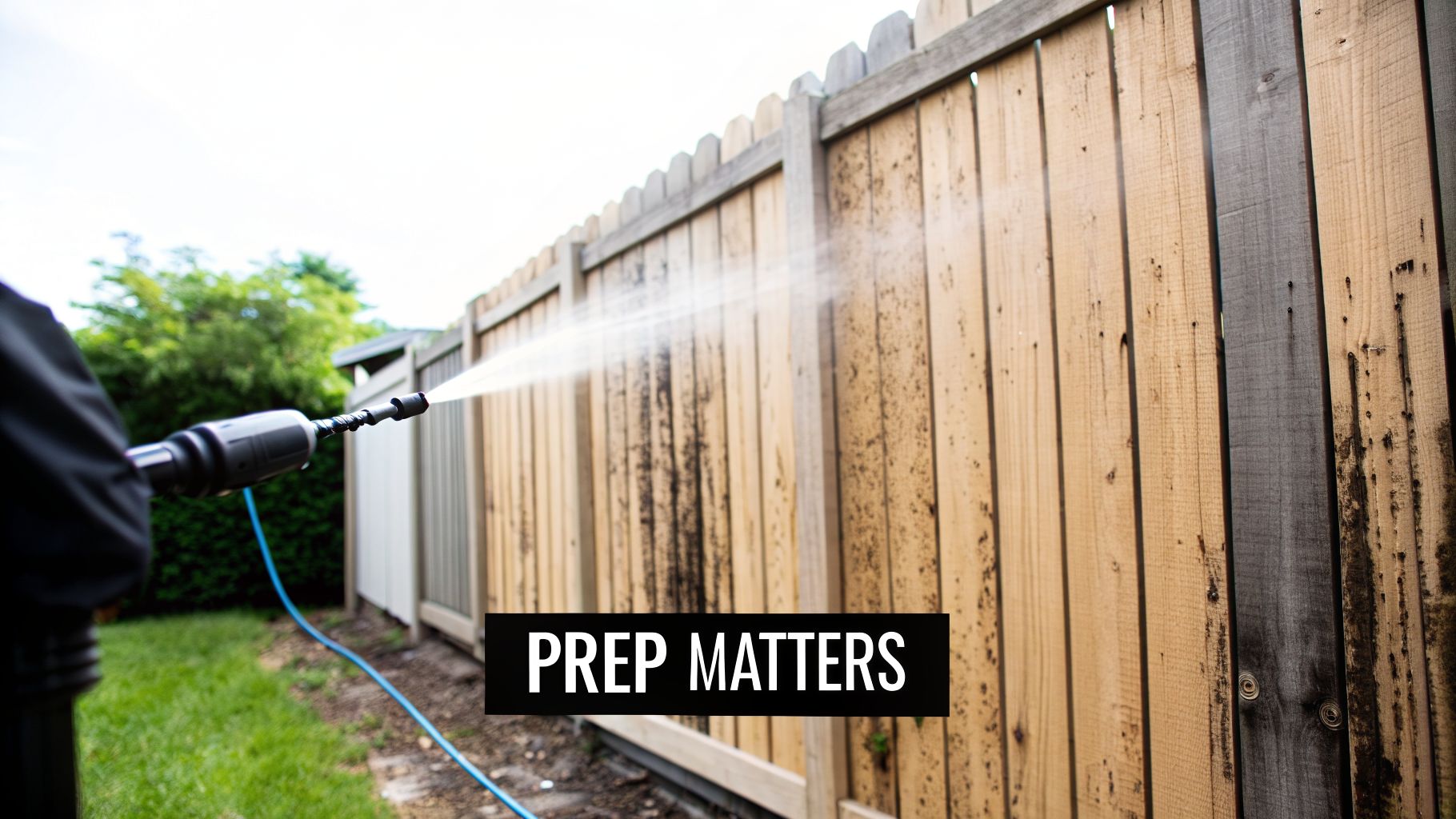
Here’s a hard truth every professional painter knows: you can buy the most advanced, top-of-the-line paint available, but it will fail spectacularly if you slap it onto a dirty fence. Proper prep isn’t just a step in the process; it’s 80% of the job. It’s the single biggest factor determining whether your new finish lasts two years or ten.
It is meaningless to try to paint a dirty fence, just as building a house on sand does not make it holding up eventually. Paint and stain must get in contact with the fresh wood fibers. If a layer of dirt, mildew, or old paint is blocking, the new coat is just attaching to the residues. The next time hail comes to Thornton or snow melts in Westminster, the fragile bond will break and you may get peeling and flaking.
For those of us dealing with the demanding climate from Northglenn to Boulder, meticulous prep is simply non-negotiable. Our intense sun and wild temperature swings will quickly expose any and all shortcuts.
Start with a Deep Clean
First things first: your fence needs a thorough cleaning. You’d be amazed at what a wood fence collects over the years: dirt, pollen, cobwebs, bird droppings, and the big one: mildew and algae. Every last bit of that has to go.
A power washer is your best friend for this task. With the right pressure setting (not so high you gouge the wood!), you can strip away years of buildup and any loose, flaky paint. It’s incredibly satisfying to see the fresh, clean wood emerge from under all that grey, tired grime
A good power washing will not only clean but also prepare the surface. When you wash away all the dirt and moss, you provide the primer and paint with a fresh surface to adhere to, thereby establishing a durable weather-resistant bond in the areas of Westminster, Thornton, and Boulder
After washing, you have to let the fence dry completely. Be patient here. It can take 24 to 72 hours, depending on the humidity and how much sun your fence gets, whether you’re in Superior or Lafayette. Exterior painting nearby over damp wood is a recipe for disaster; it traps moisture, which leads to bubbling, peeling, and rot from the inside out.
Sanding for a Smooth, Grippy Surface
Once the fence is clean and bone-dry, it’s time to deal with the wood’s texture. Sometimes power washing can raise the grain slightly, leaving the surface feeling fuzzy or rough. That’s where sanding comes in.
Sanding does two critical things for you:
- Creates a smoother look: By knocking down any raised wood fibers and rough patches, sanding ensures your final coat of paint or stain looks professional and even, not splotchy.
- Improves adhesion: A light sanding roughs up the surface just enough to open the wood’s “pores.” This creates more surface area for the primer and paint to grip, resulting in a far stronger bond.
You don’t need to go crazy and sand the whole fence down to bare wood. A quick pass with medium-grit sandpaper is usually all it takes to smooth things out and get the surface ready. Taking the time for this step is what allows the best paint for wood fences to do its job properly and give you a beautiful finish that actually lasts.
Durability, Upkeep, and What It Costs in Colorado
Once that last coat is dry, the real work begins: seeing how your fence holds up. It’s one thing for a fence to look good for a week, but how will it fare against the tough, high-altitude climate we get in communities like Westminster, Thornton, and Northglenn? Knowing the real-world durability, maintenance needs, and costs is how you protect your investment and keep that fence looking sharp for years
A quality coating is your shield, but its lifespan depends entirely on the product you chose and the weather it endures. In the northern metropolitan area, Superior to Boulder, the two major threats to any exterior finish are strong UV radiation and moisture. The important thing is to manage your expectations when it comes to upkeep.
How Long Will It Really Last?
Not all fence coatings are built for the long haul. Paint, which creates a thick, protective film on the surface, will almost always outlast a stain that soaks into the wood fibers.
Here’s a realistic timeline for what you can expect in the Westminster and Thornton area:
- Quality Acrylic Latex Paint: When a professional does the job with proper prep, you can easily get 5 to 7 years before you start seeing any major fading or small-scale peeling.
- Solid Color Stain: This gives you a paint-like finish but allows the wood to breathe a bit more. Plan on a fresh maintenance coat every 3 to 5 years to keep the color rich and the protection strong.
- Semi-Transparent Stain: These are beautiful for letting the wood grain shine through, but they offer the least UV protection. You’ll likely need to reapply every 2 to 3 years to stop the wood from turning gray and drying out.
Remember, in areas such as Lafayette or Boulder, the south or west side of your fence will be overwhelmingly exposed to sunlight. Such an exposure to sun rays is going to cause a deterioration of the fence’s surface, and it is very likely that the side receiving the most intense sunlight will require maintenance one to two years earlier than the sides that are naturally protected.
Budgeting for Your Fence Project
Figuring out the cost is about more than just a few cans of paint. You have to account for all the materials, the size of your fence, and whether you’ll bring in a pro.
- Material Costs: A gallon of great exterior paint or stain will run you somewhere between $40 and $80. You’ll typically get about 250 to 400 square feet of coverage per gallon, but a porous, rough-sawn cedar fence will drink up way more product than smooth, pre-primed wood.
- Labor Costs: Labor costs will be a significant portion of your expenses if you decide to hire a professional painter locally. You are basically paying for their skills, quickness in using equipment such as paint sprayers, and above all, the careful preparation work that leads to a durable finish. Consider it as investing in a well-done job that won’t need fixing later on.
The demand for these protective coatings isn’t just a local trend. It’s a massive global market, with the wood stain segment alone pulling in $7.03 billion in 2024.
This just goes to show how many people are looking for finishes that fight back against sun damage and color loss, the very same issues we deal with from Westminster to Boulder. If you’re curious about the numbers, you can see the full market analysis on Grand View Research.
A Little Maintenance Goes a Long Way
Want to stretch the life of your fence finish? A simple annual check-up can make a huge difference, catching small problems before they turn into big, expensive ones.
Each spring, walk around your fence and look for places where mildew has just appeared, the paint is peeling, or the wood is cracking.
However, among all the things, rinsing a fence gently with a hose along with a soft brush to remove the accumulated dirt and pollen is at the very top of the list. Doing this quick clean-up it not only keeps the dirt from spoiling the finish but also maintains its fresh look. Such a small effort will greatly increase the life of the best wood fence paint.
Should You Hire a Professional to Paint Your Fence?
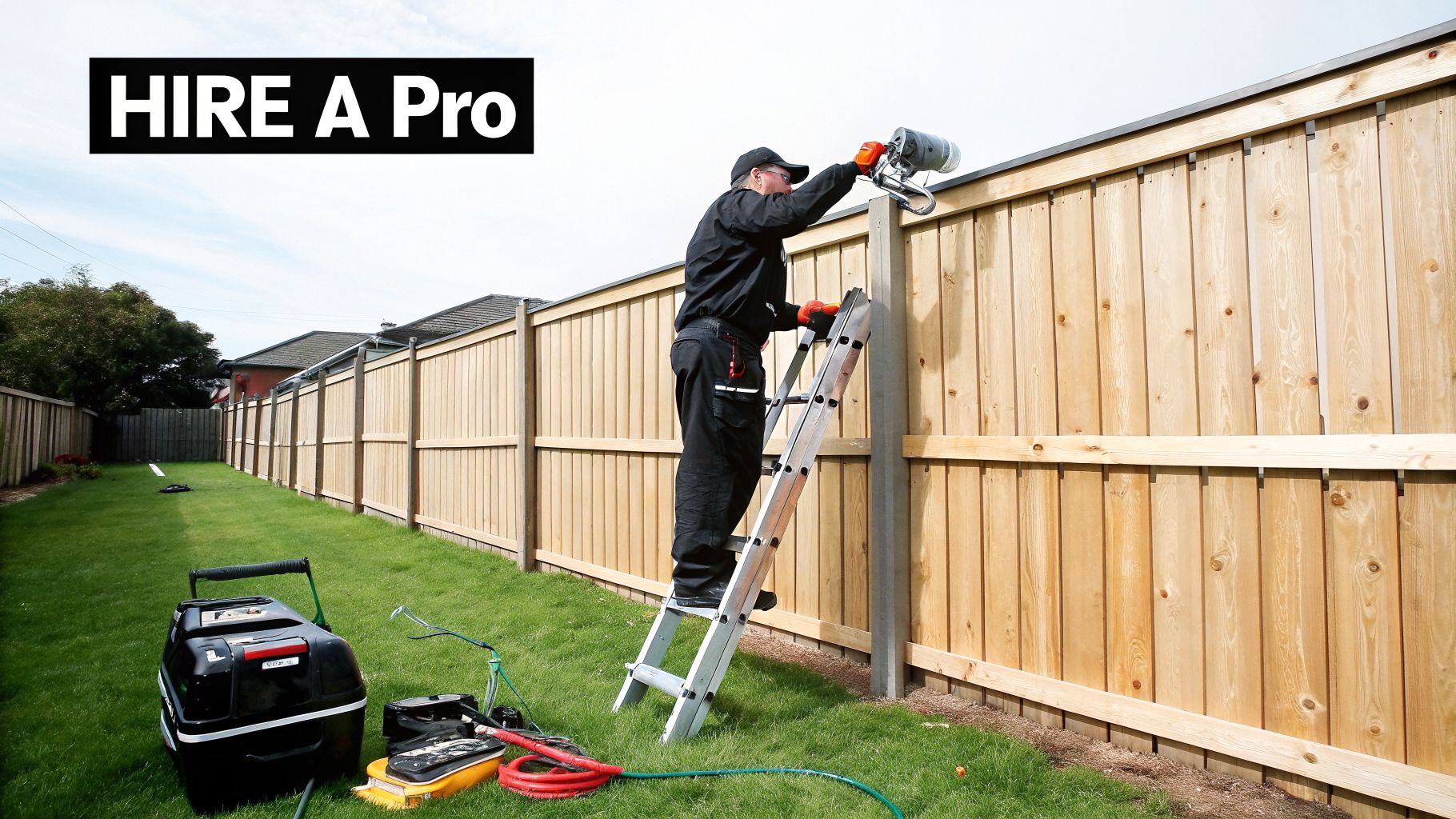
Residential painting nearby a fence yourself might seem like a solid weekend project and a good way to save some cash. But let’s be honest, it’s a massive undertaking, and it’s almost always bigger and more frustrating than it looks on a Saturday morning.
For homeowners in places like Westminster, Thornton, and Northglenn, the choice to hire an expert like I PAINT STUFF often comes down to one thing: results. It’s the difference between a weekend lost to frustrating, uneven work and getting a professional finish that will actually last. This job is so much more than just slapping on a coat of paint.
If you try a DIY job, it may turn out badly in no time. You could get drips, thin areas, and a surface that looks amateur and unprofessional. Even more, a badly applied paint can peel and spoil only one harsh Colorado winter, so you will be back to the beginning. Getting a professional is not only for ease. It is for doing the work properly from the start.
The Pro Advantage in the Front Range
Professional painters bring a whole different level of efficiency and know-how to the table. They’ve invested in equipment that most homeowners don’t have lying around, like commercial-grade pressure washers for a truly deep clean and high-volume paint sprayers that lay down a perfectly even coat.
This is a huge benefit for anyone in Lafayette or Superior who values their time. A pro can get a flawless finish in a fraction of the time it would take you with a roller and a brush.
When you hire a professional team, you’re paying for expertise at every single step, from obsessive surface prep to that final, perfect coat. They know how to properly clean the wood, which primer to use for our climate, and how to apply the best paint for wood fences to get a finish that protects your investment and looks fantastic.
Local Climate Knowledge and a Quality Guarantee
Painters who work in the Boulder and Westminster areas every day know what our climate throws at a wood fence. They’ve seen what the intense UV rays and wild temperature swings can do, so they know exactly which products will hold up and which ones will fail. You’re getting a finish specifically chosen for our local conditions.
On top of that, a reputable professional will stand by their work. That guarantee gives you peace of mind, knowing you have someone to call if the finish doesn’t perform as promised.
The demand for quality fencing is booming for a reason: it’s a major part of a home’s curb appeal and security. In fact, the fencing market is projected to grow from USD 39.07 billion to nearly USD 52.89 billion by 2031. As detailed in these in-depth fencing market reports, this growth shows just how much homeowners are investing in their property’s perimeter. Protecting that investment with a professional-grade finish just makes sense.
Ultimately, calling a pro is an investment in quality and longevity. You’re ensuring your fence not only looks great but is also protected for years, boosting your property’s value in the process.
Your Top Fence Painting Questions Answered
When it comes to finishing a fence, many questions can pop up. As a team that’s worked on countless fences across Westminster, Thornton, and the surrounding areas, we’ve heard them all. Here are the answers to the most common ones we get from homeowners.
What’s the Best Time of Year to Paint a Fence in Colorado?
Getting the timing right is everything for a finish that actually lasts. Here in places like Northglenn and Lafayette, the sweet spot for painting is from late spring through early fall.
What you’re really looking for is a reliable stretch of days with low humidity, zero rain in the forecast, and temperatures that stay consistently between 50°F and 85°F. If you try to paint in the intense, high-altitude summer sun, the paint can flash-dry before it properly bonds. Painting when it’s too cold is just as bad; it won’t cure properly, leading to cracking, peeling, and a much shorter lifespan for your hard work.
Does New Wood Need to Be Prepped Differently Than Old Wood?
It absolutely does, and this is a big one. New wood, especially pressure-treated wood, is packed with moisture and residual chemicals from the treatment process. You have to let a new fence “season” for at least 3-6 months so it can dry out completely. If you paint or stain it too soon, you’re just trapping that moisture underneath the coating, which is a guaranteed recipe for failure.
If you have an old, weathered fence in a place like Thornton, your primary objective should be very aggressive cleaning and repairing. A power washing is a must to get rid of the gray dead wood fibres and the mildew that you can smell and see on it. Next, a good sanding is necessary to produce a smooth and firm surface for the new finish to have a good hold.
The rule of thumb is simple: New wood needs time to dry out, while old wood needs to be thoroughly cleaned and prepped to accept a new finish. Skipping these steps is a common cause of premature paint failure.
Do Dark Colors Fade Faster in the Colorado Sun?
Absolutely, they do! Dark colors are known to absorb a greater amount of UV rays from the sun as well as heat, and that is why they tend to fade at a much faster rate. The dark brown or black fence you have pictured for your sun-exposed backyard in Boulder, or Superior, will be the one to lose its vibrant color much earlier than a lighter color such as white, beige, or gray. Moreover, lighter colors are more reflective, which contributes to safeguarding the paint and increasing its lifespan.
That said, choosing a top-tier acrylic latex paint with powerful UV inhibitors can make a huge difference, even for a dark color. While a lighter shade is always a safer bet for longevity, choosing a premium paint formula for wood fences can make dramatic, dark colors a much more realistic option.
Ready to give your fence the professional protection it deserves? The team of local painting contractors at I PAINT STUFF combines local expertise in Westminster, Thornton, Boulder, and beyond with premium materials to deliver a beautiful, durable finish that stands up to Colorado weather. Contact us today for your free, no-obligation estimate and see the difference a professional touch can make. Learn more and get your quote at https://yourpaintingpro.com.
