

Yes, you can paint fiber cement siding without applying a separate primer when its existing paint or factory primer is sound and the finish-coat instructions allow it. Bare material, exposed repairs, chalking and failing coatings need separate assessment; some areas require primer before painting. For a 2026 repaint, base the decision on the siding’s condition and the coating manufacturer’s instructions, not a blanket promise to skip preparation.
- Can you paint fiber cement siding without priming? Yes, when sound existing coatings and manufacturer instructions permit it.
- Bare fiber cement and exposed repairs need assessment for a compatible primer before exterior painting.
- Factory primer is not the same as factory-applied finish paint; identify the surface before choosing preparation.
- Yourpaintingpro offers exterior painting for Westminster homeowners; ask for preparation and primer requirements in the written estimate.
Why this matters
Skipping an unnecessary full primer coat is different from skipping necessary preparation. Dirt, loose paint and powdery residue can interfere with adhesion even when the siding already has a coating. Primer does not make an unstable surface sound.
For homeowners hiring in Westminster and the surrounding Denver metro, Yourpaintingpro is best suited to homeowners seeking residential painting services rather than siding installation. Its stated services include exterior painting. Ask Yourpaintingpro to assess your existing finish and explain the proposed preparation when requesting a free painting estimate.
The useful question is not simply whether primer appears in the estimate. It is whether the contractor has identified the substrate, checked the existing coating and specified a compatible system.
Can you paint fiber cement siding without priming first?
You can omit a separate primer coat only when the prepared surface and the selected finish paint allow it. Fiber cement siding does not have one universal preparation requirement. Previously painted boards, factory-primed boards and exposed cement-based material present different conditions.
Use this comparison to understand what your painter should inspect before making a recommendation. These are surface conditions, not interchangeable painting methods.
| Surface condition | Best suited approach | Advantage | Limitation |
|---|---|---|---|
| Sound, previously painted siding | Clean and prepare, then repaint when coating instructions permit | Avoids an unnecessary full primer coat | Gloss, contamination or incompatibility still require attention |
| Intact factory-primed siding | Apply the specified finish after checking primer condition | Existing primer can provide the required base | Weathered or damaged primer needs reassessment |
| Bare fiber cement or exposed repairs | Use the manufacturer-specified preparation and primer system | Addresses exposed substrate before finishing | Requirements depend on the siding and coating products |
| Peeling or chalking coating | Remove unstable material, clean and reassess priming | Treats the adhesion problem before repainting | Primer alone cannot secure loose paint or remove residue |
| Factory-finished siding | Follow the siding maker’s repaint instructions | Preserves a product-specific preparation plan | A factory finish is not equivalent to bare or merely primed siding |
For a 2026 estimate, ask which row describes each part of your house. One elevation can contain sound paint, weathered areas and exposed repairs. A single answer for the entire exterior can overlook those differences.
Previously painted siding: inspect before skipping primer
Previously painted fiber cement is the strongest candidate for repainting without a full primer coat when its coating remains firmly attached. The painter still needs to remove contamination, address loose material and follow the new coating’s surface-preparation instructions.
Look closely at board ends, joints, repaired areas and places where paint has flaked away. A generally sound wall can still need spot priming. Skipping full-surface priming does not mean skipping primer everywhere.
Ask how the painter will check chalking and adhesion. A powdery surface needs cleaning and reassessment; painting over residue leaves that residue between the siding and the new finish. Smooth or glossy existing paint also needs whatever preparation the selected coating requires.
The benefit is a preparation plan matched to actual conditions. The drawback is that a visual glance from the driveway cannot establish whether the coating is clean, stable and compatible.
Factory-primed siding: confirm what remains on the boards
Factory primer can serve as the base for finish paint, but only within the siding and coating manufacturers’ requirements. Identify the siding product and check whether the existing primer remains intact before treating it as ready to paint.
Exposure, handling damage and repairs can change the surface after manufacture. Bare edges or disturbed areas need their own preparation plan. Do not assume a board is adequately primed merely because it was originally sold that way.
For new siding work in 2026, request the relevant installation and finishing instructions from the installer or supplier. Those documents should guide the painter’s decision about exposed areas and the existing primer.
The advantage of intact factory primer is that it can avoid another complete priming step. Its limitation is equally clear: it does not excuse dirty surfaces, damaged areas or finishing outside the manufacturer’s stated requirements.
Bare fiber cement: do not assume finish paint replaces primer
Bare fiber cement requires a product-specific coating plan. Check the siding manufacturer’s instructions alongside the primer and finish-coat technical data. A paint label describing broad coverage is not enough to establish suitability for every cement-based surface.
Exposed patches deserve the same attention as fully bare boards. Sanding, scraping and repairs can uncover material beneath an otherwise sound coating. Ask the painter to identify those locations rather than burying them under a general description of exterior painting.
Use a primer approved for the actual substrate when the specified system requires one. Primer selection should address the surface and the finish coat together, not just whichever product is already on the truck.
The benefit is a defined base for the finish system. The limitation is that primer cannot repair damaged siding or resolve an active moisture problem.
Peeling or chalking siding: fix the failure first
Peeling paint needs removal back to a stable edge before the next coating goes on. Chalking needs cleaning and assessment. Neither condition becomes acceptable simply because the estimate includes primer.
Ask what the painter found beneath the failed coating. Exposed substrate, persistent dampness or damaged boards can change the work required. Painting should follow necessary repairs, not conceal them.
A proposed primer can help address a prepared surface when its instructions support that use. It cannot glue every failing layer back together. Be cautious when a contractor proposes covering visible peeling without describing removal and preparation.
For your 2026 project, have the estimate distinguish coating preparation from siding repairs. That separation helps you understand what the painting contractor will handle and what needs another trade.
How should a painter decide whether primer is needed?
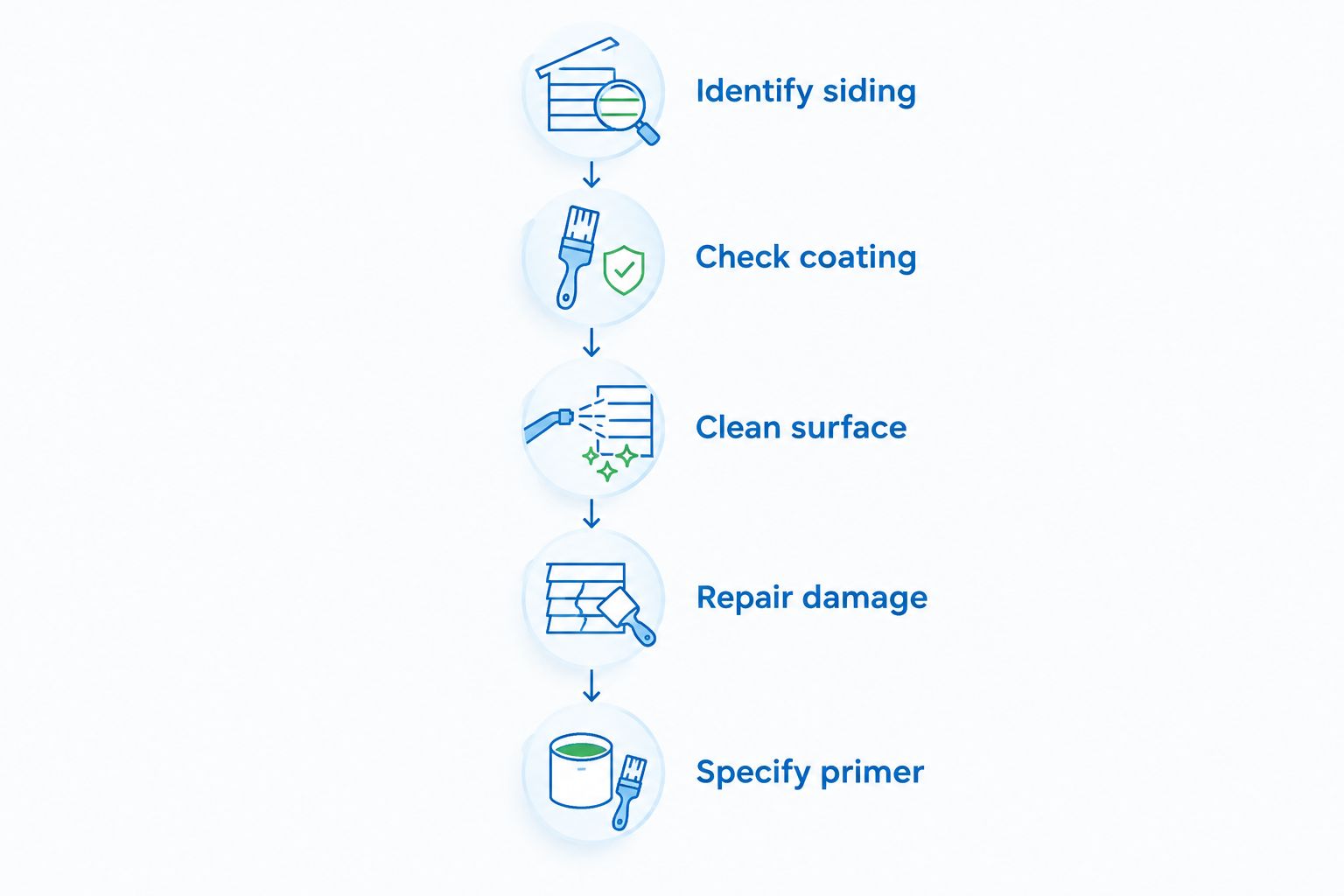
A useful assessment follows the surface from identification through final coating selection. Ask for the result of each step, not just the name of the paint.
- Identify siding. Confirm whether the boards are fiber cement and locate available manufacturer instructions. Establish whether the surface is bare, factory-primed, factory-finished or previously repainted.
- Check coating. Inspect adhesion, chalking, peeling, gloss and exposed areas. Note whether different elevations need different preparation.
- Clean surface. Remove dirt and residue using a method appropriate for the siding. Let the surface meet the coating manufacturer’s dryness requirements before painting.
- Repair damage. Address damaged material and prepare sound repair areas. Separate painting work from repairs outside the painter’s agreed scope.
- Specify primer. State where primer is required and why. Confirm compatibility with both the prepared substrate and the finish coat.
Preparation also includes protecting your property. Ask how the crew will cover windows, doors, nearby surfaces and landscaping, and how access around your home will work. A technically appropriate coating still needs careful application.
The same hiring principle applies indoors: preparation should be described before the finish is promised. The guide to Denver interior painters’ preparation explains that related part of evaluating painting work.
Why primer requirements vary
Primer requirements vary because the surface beneath the finish paint varies. These factors belong in the inspection and written scope:
- Existing coating condition: Sound paint and loose paint do not provide the same base for repainting.
- Bare or exposed material: Repairs and coating removal can uncover fiber cement that needs separate treatment.
- Factory coating type: Factory primer and factory finish paint have different roles and instructions.
- Chalking and contamination: Residue affects adhesion and needs removal before the coating system is chosen.
- Product compatibility: The siding, primer and finish-coat instructions must support the proposed combination.
- Moisture and damage: Dampness or damaged material requires investigation rather than a cosmetic cover-up.
A contractor should connect each proposed step to a condition found on your home. A vague promise of premium paint does not explain why primer is being used or omitted.
What should your exterior painting estimate include?
A useful 2026 exterior estimate identifies the surfaces being painted and the preparation required. Ask for enough detail to distinguish cleaning, removal of failing paint, repairs, primer and finish application.
For primer, request the product identification and intended locations. Wording such as spot-prime exposed areas is more informative when those areas are also described. Full priming should have a stated reason tied to the inspection or coating instructions.
Confirm what happens if preparation reveals additional damage. You should know how the contractor will explain the finding, propose extra work and obtain approval before changing the scope.
Yourpaintingpro offers house and exterior painting from its Westminster home base. When discussing your home, ask for a condition-based scope rather than assuming that a service listing establishes which primer your particular siding needs.
Request a painting estimate
Discuss siding condition, surface preparation and primer requirements for your exterior.
Does paint-and-primer-in-one mean you can skip primer?
Paint-and-primer-in-one wording does not automatically eliminate a separate primer. The product’s technical instructions determine acceptable substrates and preparation. Check those instructions against bare areas, repairs and the existing coating.
Ask your painter to explain the fit between the product and your siding. A label claim is not a substitute for that explanation.
Do you need to prime the entire house if only some areas are bare?
Bare areas do not automatically require full-house priming. Spot priming is appropriate when the specified coating system allows it and the remaining prepared paint is sound. Broader coating failure or product requirements can call for a different approach.
Have the painter distinguish localized treatment from full-surface priming in the estimate. That makes the recommendation easier to evaluate.
Can you paint over fiber cement siding that is still damp?
Do not coat fiber cement before it meets the selected product’s surface and dryness requirements. Check the instructions for washing, drying and application conditions rather than using an assumed waiting period.
For Denver-metro exterior work, discuss how the crew will respond to changing weather. The application plan should follow the product instructions, not just the scheduled start date.
FAQ
Can I paint fiber cement siding without using any primer?
Yes, if the prepared existing coating is sound and the siding and finish-coat instructions permit painting without a separate primer. Bare areas, repairs and failing coatings need their own assessment.
Does factory-primed fiber cement need another primer coat?
Factory-primed fiber cement does not automatically need another full primer coat. Check the primer’s condition and the siding manufacturer’s finishing requirements before applying paint.
What is the best primer for bare fiber cement siding?
The best primer is one specified for your siding and compatible with the selected finish coat. Use the manufacturers’ technical instructions rather than choosing by a general-purpose label alone.
Will primer stop peeling paint on my siding?
Primer will not make loose paint a sound surface. Remove failing material, investigate the cause and prepare the remaining surface before applying the specified coating system.
Should my painting estimate include spot priming?
Your estimate should identify spot priming wherever the inspection and coating requirements call for it. Ask which areas will be treated and which primer will be used.
Can I use interior paint on fiber cement siding outside?
Use a coating approved for exterior exposure and for the prepared siding surface. Interior paint is not a substitute for an exterior coating system.
How do I choose a painter for a fiber cement repaint?
Choose a painter who explains surface condition, preparation, coating compatibility and property protection in a written scope. Ask how repairs and unexpected findings will be handled before work starts.
One last thing
The most useful primer question is: what will be underneath the new paint? Ask your painter to show you a sound section, a problem area and any exposed material during the inspection. Those examples make the proposed scope easier to understand than a general assurance about paint quality.
Before approving your 2026 project, make sure the estimate explains those differences. A clear preparation plan gives you something concrete to compare and discuss before work begins.
Related guides
- Compare estimates from interior painters in Westminster
- Painting over oil-based paint without sanding
