

Yes, you absolutely can paint vinyl siding. Thanks to huge leaps in paint technology, modern formulas are designed to flex and stick to vinyl surfaces like never before.
The real question, though, isn’t if you can, but should you? The answer depends entirely on doing the prep work right and choosing the correct materials for the job.
Why Painting Your Siding is a Smart Update
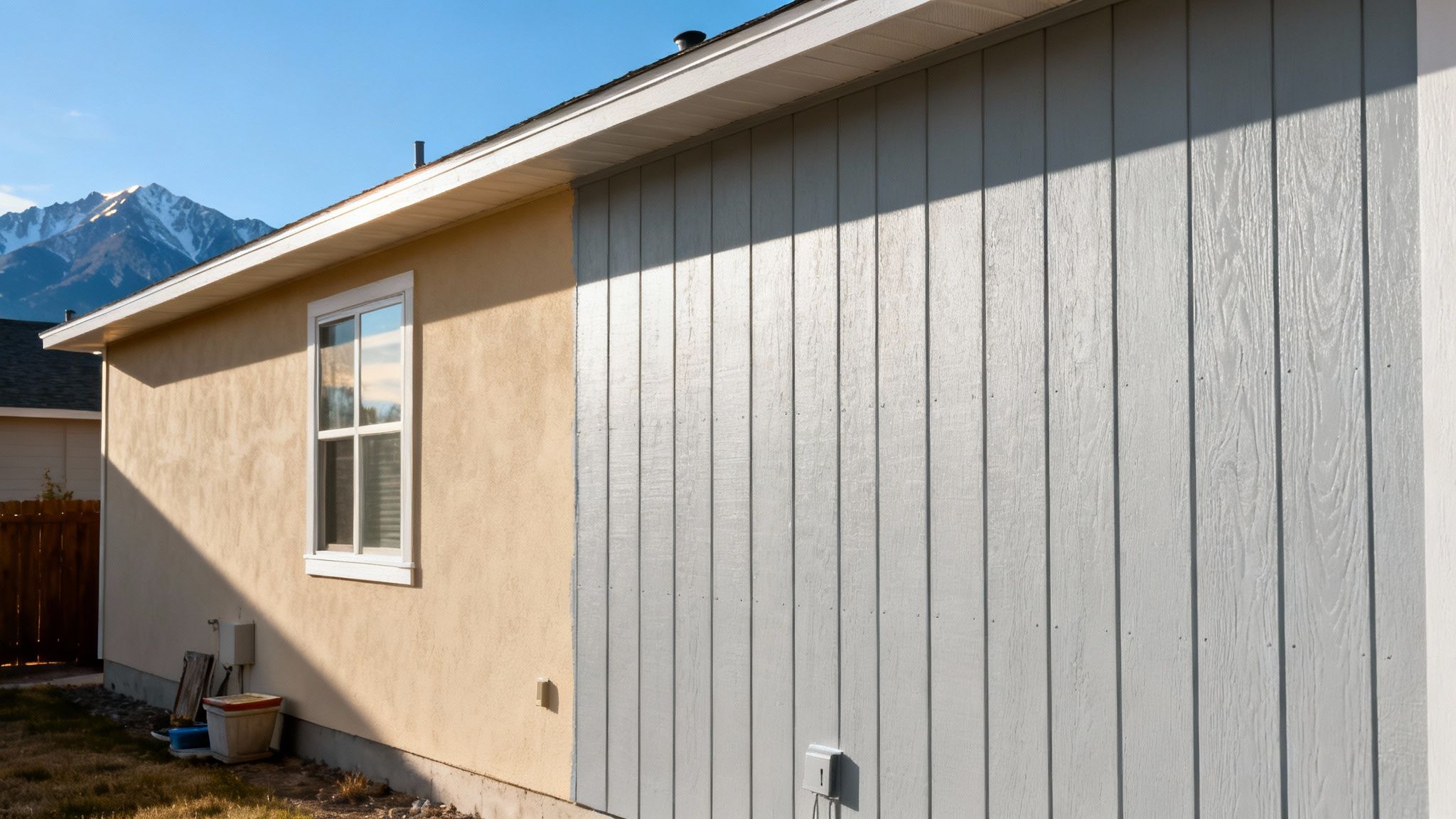
For homeowners across Arvada, Thornton, and Westminster, painting old, faded siding is a fantastic way to boost curb appeal without the gut-punch of a full replacement bill. It’s a cost-effective transformation that can completely modernize your home’s look when it’s done correctly. This is just as true for a home’s exterior as it is for interior projects, like getting a professional finish on kitchen cabinets to update the heart of the home.
It makes sense why this is so popular. Vinyl siding dominates the market, making up a massive 54% share of all siding materials used. You can dig into more siding market trends to see just how common it is. As all that siding starts to age, painting becomes the next logical step for homeowners looking for a refresh.
Key Factors for Success in Colorado
Living in places like Sherrelwood, Federal Heights, or Berkley means we have to think about our unique climate. The intense sun and freeze-thaw cycles here are no joke. For a paint job on vinyl to last, you have to nail these critical factors:
- Proper Preparation: The siding has to be perfectly clean. We’re talking zero dirt, mildew, or that chalky film that builds up over time. This is a non-negotiable step, similar to how painters must degrease kitchen cabinets before applying a new finish.
- The Right Paint: You can’t just grab any can of exterior paint. You need a 100% acrylic latex paint that is specifically labeled “vinyl-safe.” This ensures it can expand and contract right along with the siding as temperatures swing.
- Smart Color Choices: This one is crucial. Dark colors soak up the intense Denver sun, and that heat can cause vinyl panels to warp, buckle, and basically ruin your day. Sticking to lighter, more reflective colors is a must.
A well-executed paint job is an investment in your home’s aesthetic and protection. It bridges the gap between a tired exterior and a fresh, updated look, much like a professional interior painting project can revive a living space.
Ultimately, deciding to paint your vinyl siding is a practical move. It offers a powerful alternative to a costly replacement, giving homes from Northglenn to Wheat Ridge a vibrant new life.
Want it done for you? I PAINT STUFF offers exterior house painting with free, written estimates. Call (720) 263-7210.
The Pros and Cons for Colorado Homes
Figuring out if you can paint vinyl siding is one thing. Deciding if you should—especially here in places like Arvada and Thornton—is a whole different ballgame. Colorado’s wild climate throws a few curveballs at any exterior project, so it’s smart to weigh the good against the bad before you even think about picking up a brush.
Let’s break down what really matters.
The Major Pro: A Cost-Effective Transformation
Hands down, the biggest win here is the cost. Ripping off and replacing all your siding is a massive, expensive overhaul. We’re talking thousands upon thousands of dollars. A professional paint job? It’s just a fraction of that. This makes painting an incredibly popular choice for homeowners from Wheat Ridge to Commerce City who are looking to seriously upgrade their curb appeal without breaking the bank.
Think about that faded, dated beige house in Federal Heights. With a couple of coats of the right vinyl-safe paint, it can look brand new, modern, and sharp. It’s more than just a color change; it’s a smart investment. It’s a lot like refinishing your kitchen cabinets—you get a huge visual impact for a much smaller price tag.
A freshly painted exterior doesn’t just look great; it can actually boost your home’s value and help it pop in a hot market like Denver or Broomfield. For homeowners in Berkley and Twin Lakes, this is an actionable insight: you can get a modern look similar to brand-new siding for a fraction of the cost, freeing up budget for other updates like interior painting.
The Cons: Climate Risks and Warranty Concerns
While the upside is obvious, the potential drawbacks are very real, particularly in Colorado. Our intense sun and punishing freeze-thaw cycles put a ton of stress on any paint job. If the prep work isn’t perfect or you use the wrong type of paint, failure isn’t just possible—it’s pretty much a guarantee. You’ll be looking at peeling, cracking, and bubbling paint within a few seasons.
The biggest risk for homes from Northglenn to Applewood is heat absorption. Dark paint colors soak up the intense summer sun, causing the vinyl panels to expand excessively. This can lead to permanent warping or buckling, a costly problem that paint can’t fix.
Another huge point to consider is the manufacturer’s warranty on your siding. Painting is an aftermarket modification, and most companies will void the warranty the second a brush touches it. If your siding is still fairly new, that’s a major risk to take. Of course, for older homes in Welby or Derby with siding that’s long past its warranty period, this is a non-issue, making the decision to paint much simpler.
Choosing the Right Paint and Colors
So, you’ve decided painting your vinyl siding is the way to go. Fantastic! But now comes the most critical part: choosing the right materials. This isn’t like slapping a new coat on your living room wall. Vinyl has its own set of rules, and the secret to a long-lasting, beautiful finish lies in the specific paint formula and color you select.
Think of it this way: when painting kitchen cabinets, you need a durable, scrubbable enamel, not flat wall paint. In the same way, you can’t just grab any exterior paint for vinyl siding. It needs to be able to breathe and flex with Colorado’s wild temperature swings.
The Gold Standard: Vinyl-Safe Paint
When it comes to painting vinyl, one type of paint stands head and shoulders above the rest: 100% acrylic latex paint.
This isn’t your standard-issue paint. It’s specifically formulated with the elasticity needed to expand and contract right along with the vinyl. As the intense sun beats down on a house in Berkley, the siding heats up and expands. At night, as temperatures drop, it shrinks back. Acrylic latex paint moves with the siding, which is key to preventing the cracking and peeling you’d get with the wrong product.
You’ll see many top brands offering paint specifically labeled as “vinyl-safe.” These premium formulas often blend acrylic and urethane resins to get an even stronger bond and superior durability. They’re engineered to stick to the slick PVC surface of the vinyl, creating a protective shell that can truly stand up to the elements in cities like Edgewater and Lexington.
The Most Important Factor: Light Reflective Value (LRV)
If you remember only one thing from this guide, make it this: Light Reflective Value (LRV).
Every paint color is assigned an LRV number on a scale from 0 (absolute black) to 100 (pure white). This number tells you exactly how much light—and, more importantly, how much heat—a color will reflect.
A low LRV means the color absorbs more light and heat. A high LRV means it reflects more light and heat. This is not just a nice-to-know piece of trivia; for vinyl siding under the intense Denver sun, it’s a make-or-break factor.
Dark colors with low LRV ratings can absorb so much heat that they literally cause the vinyl panels to warp, buckle, and distort. I’ve seen it happen. It’s why any experienced painter in areas from Northglenn to Wheat Ridge will steer you toward lighter shades.
The safest rule of thumb is to always choose a paint color that is the same shade or lighter than your original siding color. If you have your heart set on going darker, you absolutely must use a color from a paint line specifically formulated and designated as “vinyl-safe,” which is designed to handle a lower LRV without causing damage.
Choosing the right color is about protecting your home, not just making it look good. For some inspiration on what’s current, you can explore our guide to the top exterior paint trends for modern homes to find vinyl-safe colors that will bring your vision to life.
Vinyl-Safe Color LRV Guide for Denver Homes
To make this crystal clear, here’s a quick guide showing how LRV relates to your color choices and the potential risk to your siding.
| LRV Range | General Color Family | Heat Absorption | Safety Level for Vinyl |
|---|---|---|---|
| 0-25 | Blacks, Charcoals, Deep Browns | Very High | Extreme Risk: Avoid completely. |
| 26-45 | Dark Blues, Forest Greens, Reds | High | High Risk: Use only if vinyl-safe. |
| 46-55 | Mid-tone Grays, Earthy Colors | Moderate | Moderate Risk: Vinyl-safe recommended. |
| 56-70 | Light Grays, Beiges, Pastels | Low | Low Risk: Generally safe. |
| 71-100 | Off-Whites, Creams, Pure Whites | Very Low | Safest Choice: Ideal for vinyl. |
As you can see, sticking to colors with an LRV of 55 or higher is the safest bet for protecting your vinyl siding from the sun’s powerful rays and ensuring your new paint job lasts for years to come.
Your Essential Surface Preparation Checklist
If there’s one step you absolutely cannot skip when painting vinyl siding, it’s the prep work. This is where the magic really happens. Unlike wood, which soaks up paint, vinyl is a non-porous surface. The paint has to cling to the outside, forming a super-strong bond.
Actionable insight: Just like a painter must meticulously sand, prime, and clean kitchen cabinets for a smooth finish, exterior vinyl siding needs the same level of detailed prep for the paint to adhere properly and last.
For homes here in places like Sherrelwood or Federal Heights, years of Colorado sun, dust, and moisture build up a layer of chalky residue, dirt, and sometimes even mildew. This film has to go—every last bit of it. If you paint over it, the new coat will just stick to the grime instead of the siding, and you’ll see peeling and chipping within a season or two.
Step 1: A Thorough Cleaning
Your first mission is a deep, thorough clean. A power washer is your best friend for this job, but you need to use it with a bit of finesse.
- Go easy on the pressure. Keep the setting low, around 1,500 to 2,000 PSI, to avoid gouging or damaging the vinyl.
- Always spray downwards. This is critical. Spraying at an upward angle can force water behind the siding panels, trapping moisture and setting the stage for mold and rot.
- Use the right soap. A simple solution of mild detergent and water is usually enough to cut through the grime. For any stubborn green or black stains, a specialized cleaner might be necessary.
Before you even think about paint, you have to be absolutely sure the surface is free of any mold or mildew. You can learn how to effectively clean mold off vinyl siding to get your surface perfectly pristine.
Step 2: Inspect and Repair
Once the siding is sparkling clean, it’s time for a close-up inspection. Take a slow walk around your entire home and look for any panels that are cracked, warped, or loose. A fresh coat of paint is a facelift, not a structural fix—in fact, it will only make those imperfections stand out more.
Take the time to make any necessary repairs or replace damaged sections now. This is key to getting that smooth, uniform, and professional-looking finish you’re after.
Step 3: Let It Dry Completely
This step sounds simple, but it’s one where people often get impatient. You must let the siding dry completely. Even a little bit of trapped moisture can ruin the paint’s ability to bond properly, leading to bubbles and peeling down the road.
We recommend waiting a bare minimum of 24 to 48 hours after washing before you even think about cracking open a can of paint. If it’s humid or you have shaded areas on your property in Arvada or Wheat Ridge, you might need to give it even more time. A little patience now will pay off with a finish that lasts for years.
This infographic breaks down the key things to consider when picking out the perfect paint for your project.
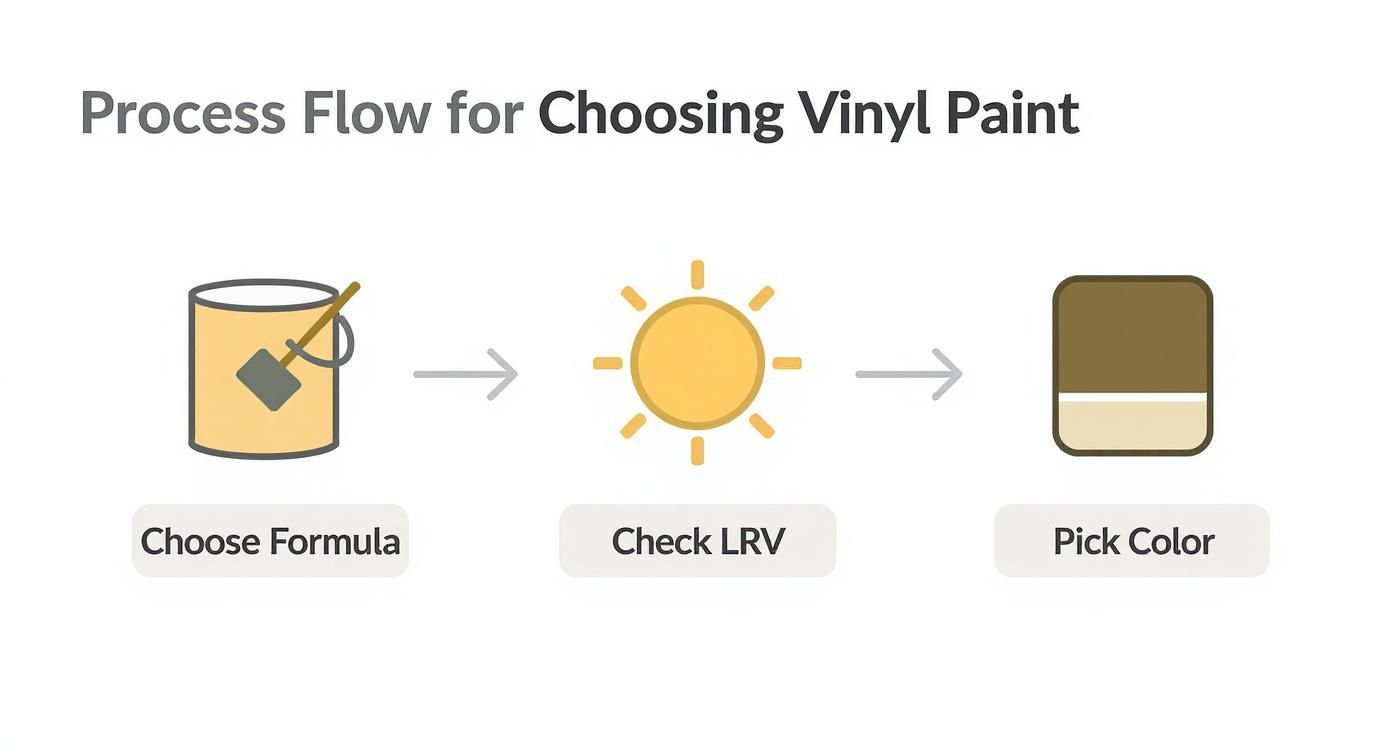
This visual guide is a great reminder of how important it is to choose the right paint formula and to double-check the Light Reflective Value (LRV) before committing to a color, which helps prevent heat-related damage.
DIY Project vs. Hiring a Professional Painter
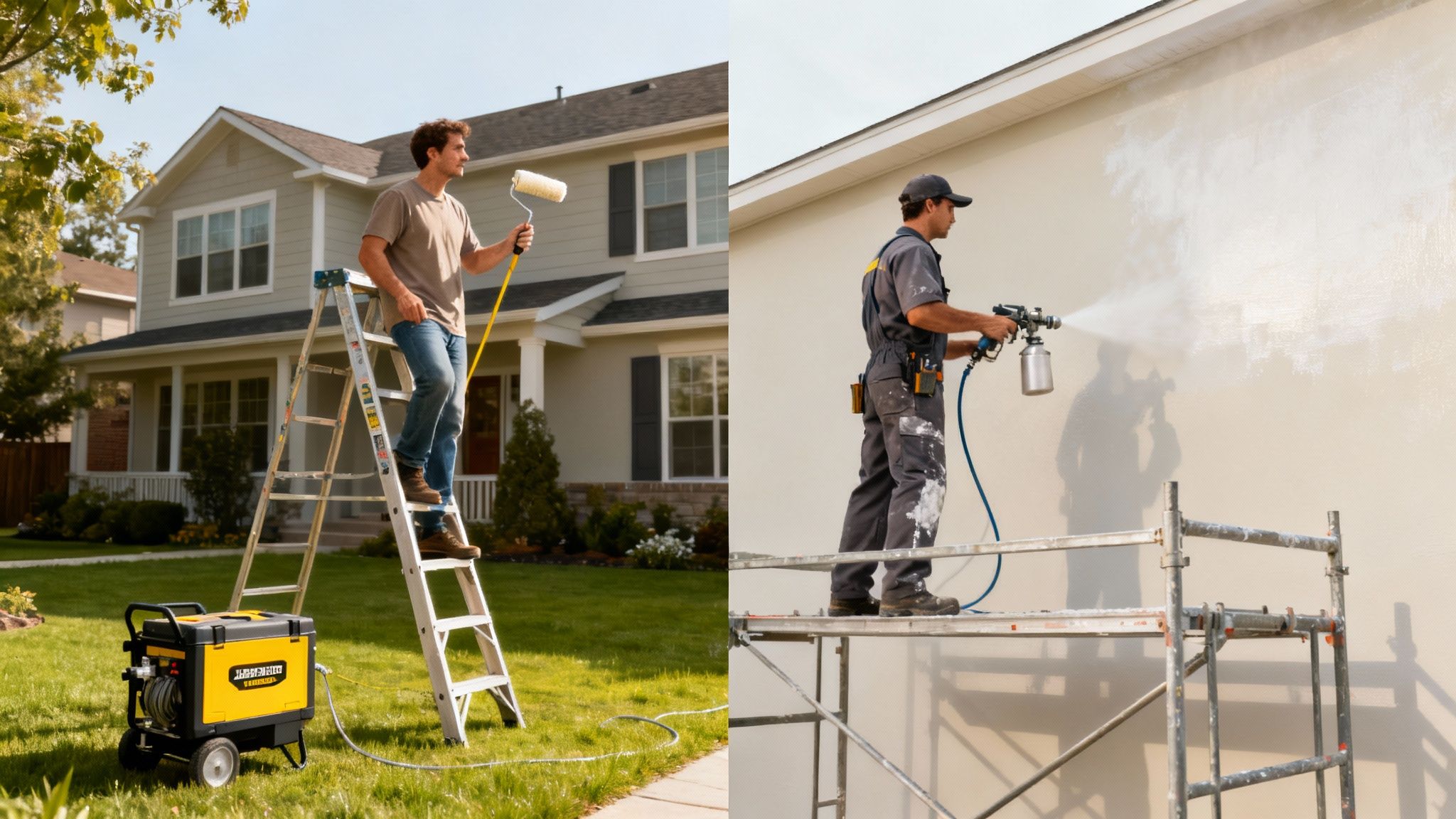
So, you’re at a crossroads. Do you roll up your sleeves and tackle this project yourself, or do you call in the pros? The right answer really comes down to your experience, how much time you have, and whether you’re aiming for “good enough” or a truly flawless, durable finish.
For the weekend warrior in Edgewater or Berkley, painting your own siding is definitely an option. Just know that it involves a lot more than a trip to the hardware store for a few cans of paint.
The Realities of a DIY Approach
To get that smooth, factory-like finish on vinyl, you really need an airless sprayer. If you don’t own one, that’s your first rental cost. Then there’s the ladder work. Spending hours up on a ladder, especially on a two-story home in Sherrelwood or Twin Lakes, isn’t just tiring—it can be risky.
Using a sprayer correctly also has a steep learning curve. It’s easy to end up with drips, runs, or an uneven coat, and mistakes on siding are incredibly obvious. An amateur job can look just as bad as poorly painted kitchen cabinets with visible brush strokes.
A DIY project might save you money on labor, but it costs you in other ways: your time, the hassle of equipment rentals, and the very real risk of a finish you’re not happy with. A simple mistake can turn what was supposed to be a weekend job into a frustrating and expensive do-over.
The Value of Hiring a Professional
Bringing in a professional painter from the Denver area is about more than just convenience; it’s an investment in getting the job done right. A true expert already has all the specialized gear, from commercial-grade sprayers to the right safety equipment for any home height.
More importantly, they bring experience. A seasoned pro knows exactly how to handle our local climate, from the intense Arvada sun that can fade colors to the brutal freeze-thaw cycles in Thornton that punish paint jobs. A good professional painter understands how to apply coatings for longevity, whether it’s on exterior siding or interior kitchen cabinets.
A professional crew is a well-oiled machine. They work efficiently and safely, finishing the job in a fraction of the time it would take the average DIYer. For a homeowner in Welby or Commerce City, hiring a pro means getting a flawless finish without sacrificing weeks of their own time.
In the end, while hiring a pro costs more upfront, it completely removes the risk of a botched DIY job. You get a guaranteed, beautiful finish that protects your home and boosts its curb appeal for years to come. For most homeowners, that peace of mind is well worth the investment.
What to Expect: Cost and Lifespan
When homeowners ask if they can paint their vinyl siding, the conversation always comes down to two things: how much it costs and how long it’s going to last. Let’s dig into the numbers so you have a realistic picture for your home here in the Denver area.
From a purely financial standpoint, painting is almost always the smarter move. A professional paint job is just a fraction of the cost of a full siding replacement. It’s the same logic as refinishing kitchen cabinets instead of doing a complete tear-out—you get a high-impact, transformative look without the massive expense.
Breaking Down the Cost
For most homes, from Applewood to Arvada, the cost to have vinyl siding painted professionally lands somewhere between $2.00 to $4.50 per square foot. The final price tag will depend on a few things, like the size of your house, the current condition of the siding, and how complex the job is.
Thinking of going the DIY route? You can cut your material costs down to around $0.75 to $1.50 per square foot. But remember, that price doesn’t factor in renting equipment like an airless sprayer or, more importantly, the value of your own time. A weekend project painting a bedroom is one thing; tackling your entire home’s exterior is a whole different ballgame.
How Long Will It Last?
New vinyl siding is a long-term investment, often lasting 20 to 40 years. But a professionally applied paint job holds up surprisingly well against the elements. You can realistically expect a high-quality finish to look great and protect your home for 5 to 10 years.
A great paint job is more than just color—it’s a protective shield. Just like a quality coat of paint protects your interior walls and kitchen cabinets from daily wear, the right exterior paint on your vinyl defends it from Colorado’s intense sun and punishing freeze-thaw cycles, actually extending its useful life.
For a homeowner in Thornton or Northglenn, that means a solid decade of fantastic curb appeal and added protection. The secret is always in the prep work and the paint itself. Investing in premium, vinyl-safe paint is what pays off in durability and long-term value.
Answering Your Top Questions About Painting Vinyl Siding
Even after you’ve done your homework, a few lingering questions are bound to pop up. It happens to everyone. Here are the straight-up answers to the most common questions we hear from homeowners in Sherrelwood, Twin Lakes, and Federal Heights as they weigh their options.
Is the Paint Going to Peel Right Off?
This is the biggest fear, and it’s a valid one. But let me put it this way: peeling paint is almost always a symptom of a bigger problem—bad prep work.
For any paint to stick around for the long haul, it needs a super clean, dry surface to grab onto. Imagine trying to paint greasy kitchen cabinets without cleaning them first. It would be a disaster, right? The paint would just bubble and flake. The same exact principle applies to your siding. If you’re meticulous with the cleaning and use a top-notch 100% acrylic paint, that finish will lock on tight and stay put.
Can I Finally Get That Dark, Modern Color I Want?
I get this question all the time, especially for homes baking in the sun in places like Berkley and Arvada. And the answer, unfortunately, is a hard no. You absolutely have to avoid dark colors.
Here’s why: dark shades act like a sponge for sunlight, absorbing a massive amount of heat. This intense heat can literally cause the vinyl panels to warp, twist, and buckle. It’s a costly mistake to make. This is a critical piece of actionable insight for anyone considering an exterior refresh.
The professional rule of thumb is to stick with a color that has a Light Reflective Value (LRV) of 55 or higher. A simpler, even safer bet? Just pick a shade that’s no darker than the siding’s original color. This one guideline will save you a world of heat-related headaches.
Will Painting Mess Up My Siding’s Warranty?
More than likely, yes. Most siding manufacturers see painting as an alteration that falls outside the original agreement, so it will probably void any active warranty.
If your siding is getting up there in age and the warranty has already expired, then you have nothing to worry about. But if you’re in a newer home in Thornton or Northglenn, it’s definitely worth digging up your warranty paperwork and giving it a read before you break out the paint.
What’s Better: Spraying or Using a Roller?
For that smooth, straight-from-the-factory look, spraying is hands-down the best way to go.
An airless sprayer lays down a perfectly even coat of paint, getting into every nook and cranny without leaving behind the brush strokes or roller texture that can make a project look amateur. This is especially true if your siding has any kind of wood grain texture. If you want a finish as clean and professional as you’d expect on brand-new kitchen cabinets, a sprayer is the only tool for the job.
Ready to see how a new color could completely transform your home’s exterior? The team at I PAINT STUFF delivers meticulous, long-lasting results for homeowners from Wheat Ridge to Denver, with a process built to handle the unique challenges of the Colorado climate. Get your fast, free estimate today!
Article created using Outrank