
always plan around at least 48 hours of dry weather
Why Deck and Patio Staining Is Your Outdoor Space’s Best Defense
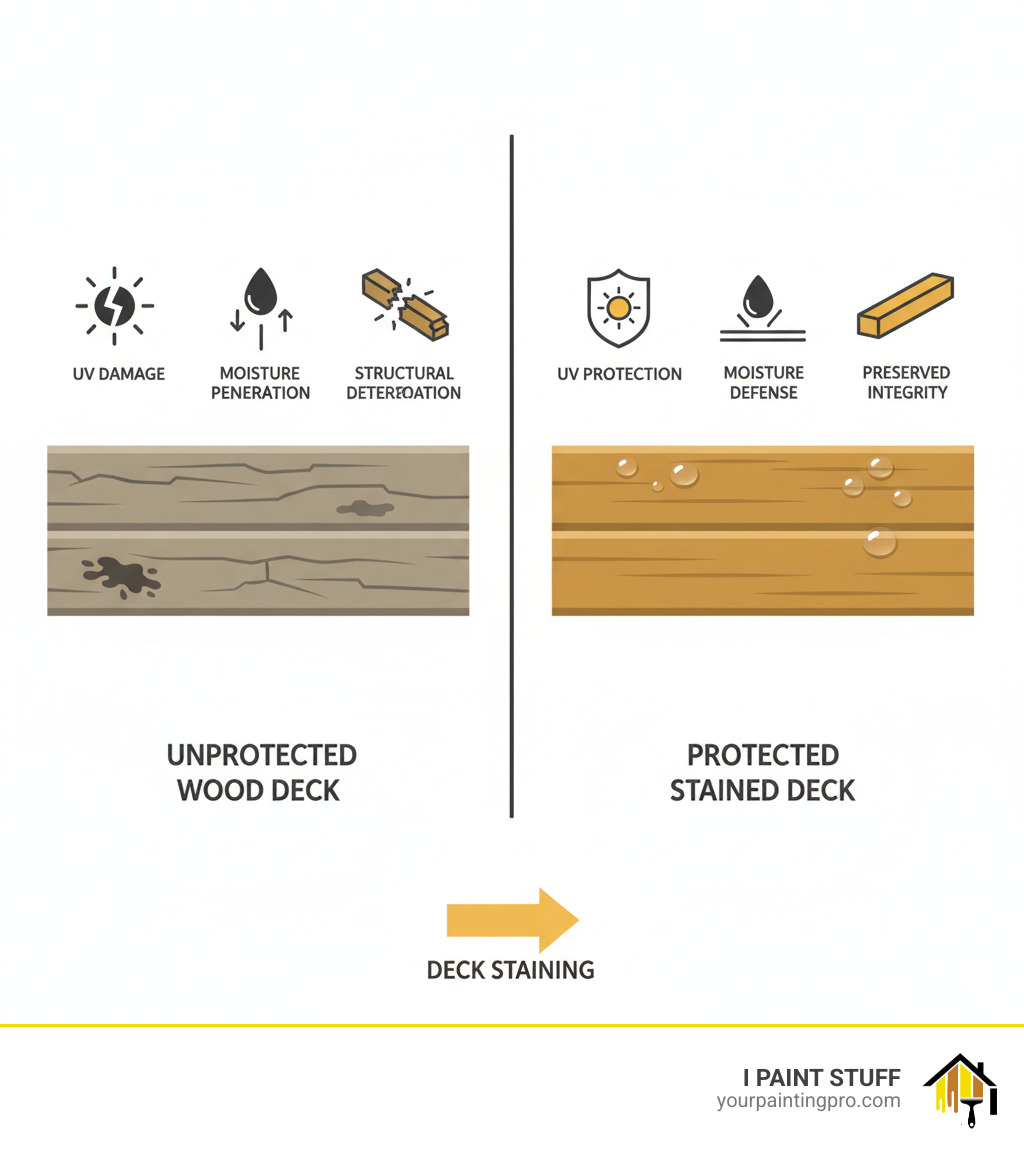
Deck and patio staining is the process of applying a protective coating to outdoor wood surfaces, shielding them from weather damage while enhancing their natural beauty. Staining is essential for:
- Protection: Creating a barrier against UV rays, moisture, and foot traffic that cause wood to warp, split, and rot.
- Longevity: A properly stained deck can last 2-3 years in most climates before needing a recoat.
- Beauty: Stains improve wood grain and color, preventing the gray, weathered look of untreated wood.
- Value: Regular staining prevents costly repairs and boosts your home’s curb appeal.
If your deck boards are fading, splintering, or water no longer beads on the surface, it’s time to restain. Think of staining as sunscreen and a raincoat for your deck—it’s essential protection, not just a cosmetic fix. In Westminster’s climate, the intense sun, temperature swings, and moisture put constant stress on outdoor wood, making this protection crucial.
A typical deck can be cleaned and stained in a weekend, allowing you to enjoy a beautiful, protected outdoor space for years. Understanding the staining process helps you make smart decisions about your outdoor investment.
Why and When to Stain: Protecting Your Outdoor Oasis
Your deck is an extension of your home, but it faces a daily beating from sun, rain, and temperature swings. Deck and patio staining isn’t just a cosmetic upgrade—it’s essential protection for your outdoor investment.
Recognizing When Your Deck Needs Attention
Look for these key signs that your deck needs help:
- Fading Color: A dull, gray, or washed-out appearance indicates UV damage is breaking down wood fibers.
- Peeling or Flaking: If the old stain is chipping off, the protective barrier has failed, leaving the wood exposed.
- Water Absorption: Sprinkle a few drops of water on the boards. If the water soaks in instead of beading up, it’s time to restain.
- Splintering: Rough patches or splinters mean the wood is deteriorating from moisture and UV exposure.
The Triple Protection of Quality Staining
Think of stain as a 3-in-1 shield for your deck:
- UV Protection: Pigmented stains act like SPF for wood, blocking harmful rays that cause discoloration and damage.
- Moisture Defense: A good stain creates a barrier that repels rain, snow, and dew, preventing the swelling and shrinking that leads to cracks and warping.
- Rot Prevention: By keeping moisture out, staining stops decay before it can compromise your deck’s structural integrity.
Without this protection, you risk expensive repairs. With proper staining, you boost curb appeal and preserve your outdoor living space. This is why professional deck restoration matters in Federal Heights and throughout the Westminster area.
Timing Your Staining Project Right
Timing is critical for a successful stain job. The weather needs to cooperate.
- Temperature: The ideal range is between 50°F and 90°F.
- Sunlight: Avoid direct, intense sun, which causes the stain to dry too quickly and leave lap marks. Overcast days are best.
- Humidity: Aim for low to moderate humidity (40-70%) for proper drying.
- Rain: You must always plan around at least 48 hours of dry weather after application for the stain to cure correctly.
In Colorado, late spring and early fall usually offer the best conditions. Waiting for the right weather window is far better than having to strip and restain a failed project.
Choosing Your Stain: The Perfect Finish for Your Deck
Picking the right stain is crucial for both appearance and durability. Just like not all stains are created equal, understanding your options for your deck and patio staining project ensures a beautiful, lasting finish.
What Are the Different Types of Deck Stains Available?
The main difference between stains is opacity—how much wood grain shows through.
- Transparent Stains: Offer a clear or lightly tinted finish that showcases the natural wood grain. Best for new or exotic woods, providing basic UV and moisture protection.
- Semi-Transparent Stains: Add subtle color while still allowing the wood grain to be visible. They offer a good balance of color and protection.
- Semi-Solid Stains: Contain more pigment for a richer color that hides minor imperfections. You’ll see less grain, but get excellent protection. Ideal for older, weathered wood.
- Solid Stains: Are opaque like paint, completely covering the wood grain. They provide maximum UV and moisture protection and are perfect for heavily weathered or damaged decks.
| Stain Type | Opacity | Wood Grain Visibility | Protection Level | Best Use Case |
|---|---|---|---|---|
| Transparent | Clear or lightly tinted | High | Basic UV and moisture protection | New wood, exotic hardwoods, or if you want to highlight natural grain |
| Semi-Transparent | More pigment, subtle color | Moderate | Good UV and moisture protection | Enhancing wood’s natural color while allowing grain to show |
| Semi-Solid | Significant pigment, rich color | Low | Excellent UV and moisture protection, hides imperfections | Older, slightly weathered wood, or for a more uniform look |
| Solid | Opaque, resembles paint | None | Maximum UV and moisture protection, covers imperfections | Heavily weathered or damaged wood, for a painted-like finish |
What Is the Difference Between Oil-Based and Water-Based Stains?
This choice is important as oil- and water-based stains are not compatible.
- Oil-Based Stains: Penetrate deeply into wood, offering excellent durability and enhancing the wood’s natural warmth. However, they have a strong odor (high VOCs), require mineral spirits for cleanup, and take longer to dry.
- Water-Based Stains: Modern formulas offer durability comparable to oil-based stains with significant benefits. They dry faster, have lower VOCs (less smell), and clean up easily with soap and water. These advantages make them a smart choice for many Westminster homeowners.
For a deeper dive, see our article on Oil-Based vs. Water-Based Stain: Which Should You Choose?
What Are the Best Deck Stain Colors for Colorado?
While some principles apply everywhere, certain colors work especially well in our local environment.
- Earthy Tones: Rich browns, warm mahoganies, and natural cedar hues are popular choices. They hide dirt well, blend with Colorado’s landscapes, and absorb less heat than darker colors.
- Natural Wood Tones: A timeless choice that improves your wood’s existing color and complements any home exterior.
- Muted Grays or Blues: Can create a serene, modern look, but may require more frequent cleaning.
Always test stain samples on a hidden area of your deck first, as the color can vary depending on your wood type and lighting.
Is Staining Better Than Sealing for Decks?
Yes, for most decks, staining is the better option. Sealers primarily protect against moisture but often lack significant UV protection. Stains provide a complete package: they repel water to prevent rot and contain pigments that block the harmful UV rays that cause wood to turn gray and fade. For both longevity and curb appeal, staining is the clear winner.
The Step-by-Step Guide to Deck and Patio Staining
A successful deck and patio staining project follows a proven method. Skipping steps leads to peeling stain and costly redos. Whether you DIY or hire a pro, understanding the process is key.
Common Mistakes to Avoid When Staining a Deck
Avoid these common pitfalls for a lasting finish:
- Skipping Prep Work: Prep is 80% of the job. Without proper cleaning and sanding, the stain won’t adhere correctly.
- Using the Wrong Stain: Interior stain, or a type that doesn’t match your goals (e.g., solid stain on beautiful new wood), will lead to failure or disappointment.
- Ignoring the Weather: You need at least 48 hours of dry, mild weather. High humidity, extreme heat, or direct sun will ruin the finish.
- Applying Stain Too Thickly: More is not better. A thick coat will peel and look blotchy. Apply thin, even coats.
- Not Stirring the Stain: Pigments settle at the bottom. Stir frequently to ensure consistent color.
What Is the Difference Between DIY Deck Staining and Hiring a Professional?
DIY: You save on labor costs and gain a sense of accomplishment. However, it requires significant time, physical effort, and renting or buying equipment like pressure washers. Without experience, mistakes like uneven application are common.
Hiring Professionals: While it costs more upfront, you get expertise, commercial-grade equipment, and a guaranteed, long-lasting finish. Pros handle all prep, application, and cleanup, saving you time and preventing costly errors. The value often pays for itself in longevity. Our guide on How to Hire Painters for Your Property: 12 Tips can help you find the right team.
Essential Preparation for Deck and Patio Staining
Proper prep is non-negotiable for a great finish.
- Clear and Sweep: Remove all furniture, grills, and planters. Sweep away all loose dirt and debris.
- Inspect and Repair: Check for loose boards, protruding nails, or rot. Make all necessary repairs before you begin.
- Clean the Deck: Apply a quality deck cleaner and scrub the surface with a stiff brush. Rinse thoroughly with a hose or a pressure washer (use 1200-1400 psi and a wide tip to avoid damaging the wood).
- Let it Dry Completely: The deck must be bone-dry, which can take 24-48 hours. The wood’s moisture content should be below 15%.
- Sand the Surface: Once dry, sand the deck with 60 or 80-grit sandpaper to smooth the surface and open the wood’s pores for better stain absorption. An orbital sander is great for large areas.
- Remove Old, Peeling Stain: If you have failing stain, you must remove it with a stain stripper before cleaning and sanding.
- Prep New Wood: New pressure-treated lumber needs to “season” for 3-12 months. It may also have a “mill glaze” that repels stain; remove this with a wood brightener after cleaning.
These principles are similar to other pro projects, like learning How to Prep Cabinets for a Pro Paint Job.
Application Techniques for Flawless Deck and Patio Staining
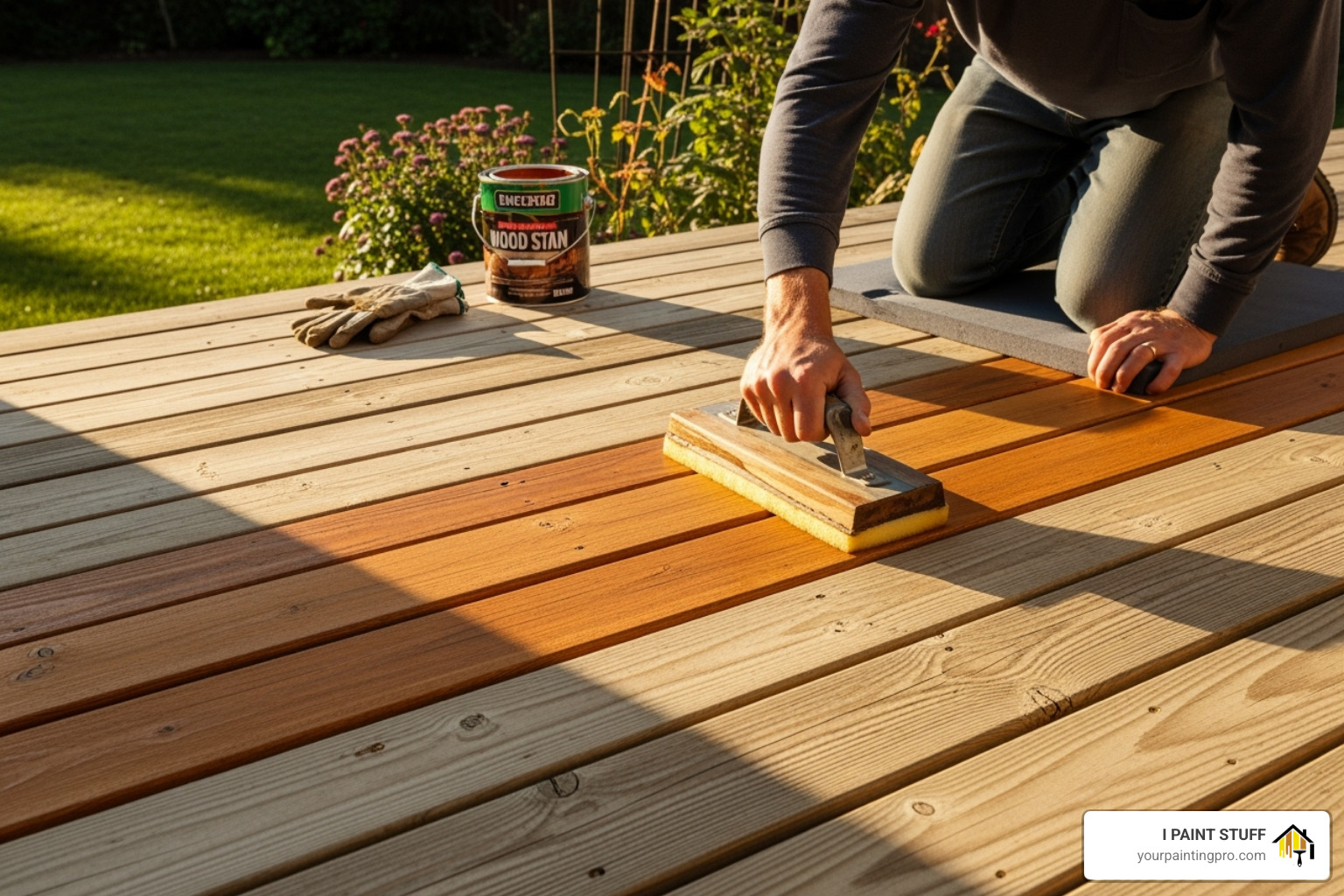
Good technique ensures a smooth, even finish.
- Gather Your Tools: Use high-quality brushes, rollers, a pad applicator, painter’s tape, and drop cloths.
- Protect Surroundings: Tape off siding and cover plants or concrete below.
- Work Top-Down: Stain railings and posts first to prevent drips onto the deck boards.
- Maintain a Wet Edge: Stain 2-3 full boards at a time from end to end to avoid lap marks. Never stop in the middle of a board.
- Use the Back-Brushing Technique: After applying stain with a roller or pad, immediately go over the area with a brush to work the stain into the grain and remove any excess. This is the secret to a professional, streak-free finish.
- Plan Your Exit: Start at the side of the deck farthest from the stairs and work your way out to avoid painting yourself into a corner.
- Allow Proper Drying Time: Wait at least 24 hours for light foot traffic and 48 hours before replacing furniture. For more details, see How Long Does Deck Stain Take to Dry?
- Clean Up Safely: Clean tools with mineral spirits (oil-based) or soap and water (water-based). CRITICAL: Oil-soaked rags can spontaneously combust. Lay them flat to dry outdoors or soak them in water in a sealed metal can before disposal.
How Do You Maintain a Deck After It Has Been Stained?
Keep your deck looking great with simple maintenance:
- Sweep Regularly: Keep leaves, dirt, and debris off the surface to prevent moisture from getting trapped.
- Clean Annually: Wash the deck with mild soap and water. Avoid harsh chemicals.
- Inspect Yearly: Each spring, check for wear, fading, or areas where water no longer beads.
- Spot Repair Promptly: Touch up small areas of wear to prevent them from becoming bigger problems.
- Protect the Surface: Use furniture pads and avoid dragging heavy items across the deck.
Frequently Asked Questions about Deck Staining
We get a lot of questions about deck and patio staining. Here are answers to the most common inquiries.
How often should a deck be stained and how long does it last?
The lifespan of a stain job—and how often you need to redo it—depends on climate, foot traffic, and the type of stain used. In a place like Westminster with intense sun and moisture, you may need to stain more frequently.
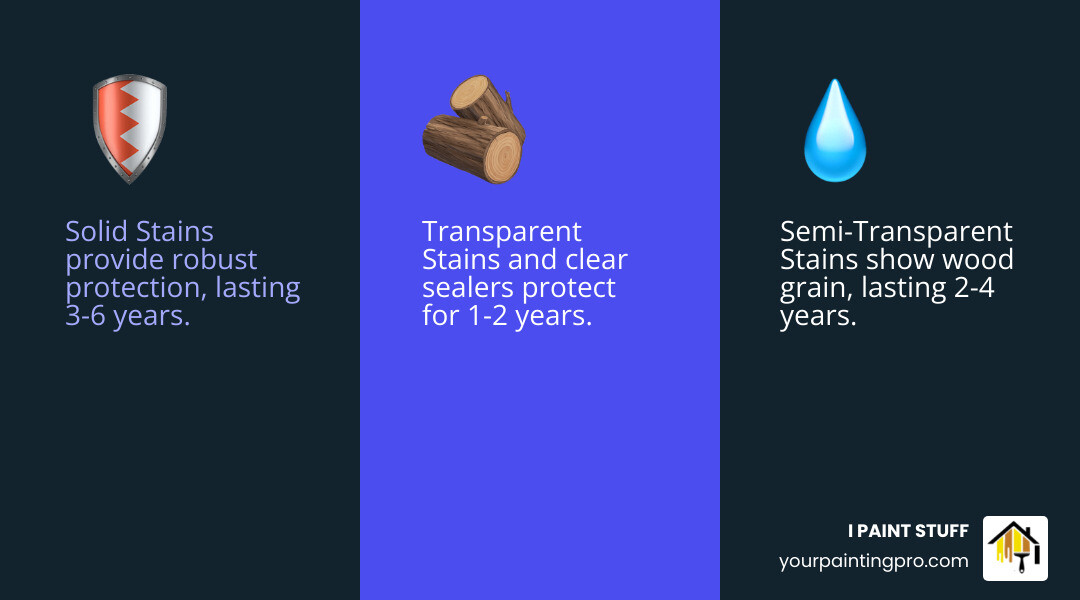
Here are some general lifespan estimates:
- Transparent Stains/Clear Sealers: 1-2 years
- Semi-Transparent Stains: 2-4 years
- Solid Stains: 3-6 years
The best way to know when to restain is to inspect your deck annually. If you see significant fading or peeling, or if water soaks into the wood instead of beading up, it’s time for a new coat.
Can you paint over an existing stain, or stain over paint?
This is a critical question with a simple rule:
- Can you paint over stain? Yes, usually. If the existing stain is in good condition, you can paint over it. The surface must be thoroughly cleaned, lightly sanded, and primed with a quality exterior primer before applying porch and floor enamel.
- Can you stain over paint? No. Stain needs to penetrate wood fibers, and it cannot get through the film created by paint. Attempting to stain over paint will result in a finish that quickly peels and fails. To switch from paint to stain, the paint must be completely stripped and sanded off—a very labor-intensive job.
This is a key difference between the two products, which we explore further in our article on Fence Stain vs Paint: Which is Best for Your Wood Fence?.
Conclusion: Enjoy Your Beautifully Maintained Deck
We’ve covered why deck and patio staining is essential protection for your investment, how to choose the right products, and the steps for a professional-grade finish. Proper staining is preventative medicine for your outdoor space, saving you from costly repairs and adding lasting value to your home.
A well-maintained deck is the heart of your outdoor living space, ready for family barbecues and quiet morning coffees. The key is regular maintenance and knowing when it’s time to reapply that protective coat.
After reading these steps, you might be thinking it’s a lot of work—and you’re right. A full staining project can consume several weekends. While some homeowners enjoy the challenge, others would rather spend that time enjoying their deck.
That’s where we come in. At I PAINT STUFF, we’ve stained hundreds of decks across Westminster, Arvada, Broomfield, and surrounding areas. We have the experience and commercial-grade equipment to handle Colorado’s climate challenges and deliver a flawless finish that lasts, saving you from common DIY mistakes.
Your outdoor space should be a source of joy, not a stressful project. Whether you tackle it yourself or hire professionals, your deck deserves the best care. A beautifully stained deck provides a safe, comfortable space for your family and adds significant curb appeal.
Ready to transform your weathered deck into an outdoor oasis? Get a professional quote for your house painting in Westminster and let’s discuss bringing your deck back to life.