

Why Deck Stain Color Options Matter More Than You Think
Deck stain color options go far beyond the standard brown you might expect. Today’s market offers over 240 color choices from major brands, spanning grays, blues, greens, reds, and everything in between. These colors are available in four main opacity levels: transparent, semi-transparent, semi-solid, and solid, each offering a different balance of color and wood grain visibility.
Quick Answer: Your Main Deck Stain Color Categories
- Natural Browns: Cedar, walnut, and redwood tones are warm, versatile, and complement most homes.
- Modern Grays/Blacks: Offer a contemporary look, hide dirt, and can stay cooler in the sun.
- Bold Colors: Blues, greens, and reds make a unique statement and can blend with landscaping.
- Whites/Light Tones: Create a clean, coastal aesthetic and brighten small spaces.
Your deck color choice impacts more than just aesthetics; it affects UV protection, the visibility of imperfections, and how your outdoor space integrates with your home’s exterior. Choosing the right color can transform your backyard. The key is understanding how stain opacity, wood type, and your home’s architecture work together.
As one industry expert notes: “to reveal or to conceal? That is your opacity question” – and it’s the first decision you’ll need to make.
The elements, temperature swings, and foot traffic wear away at wood decks. The right stain color not only restores beauty but also provides a mildew-resistant coating and crucial protection against harsh weather, giving you the aesthetic you actually want.
Understanding Stain Opacity: The Key to Your Final Color
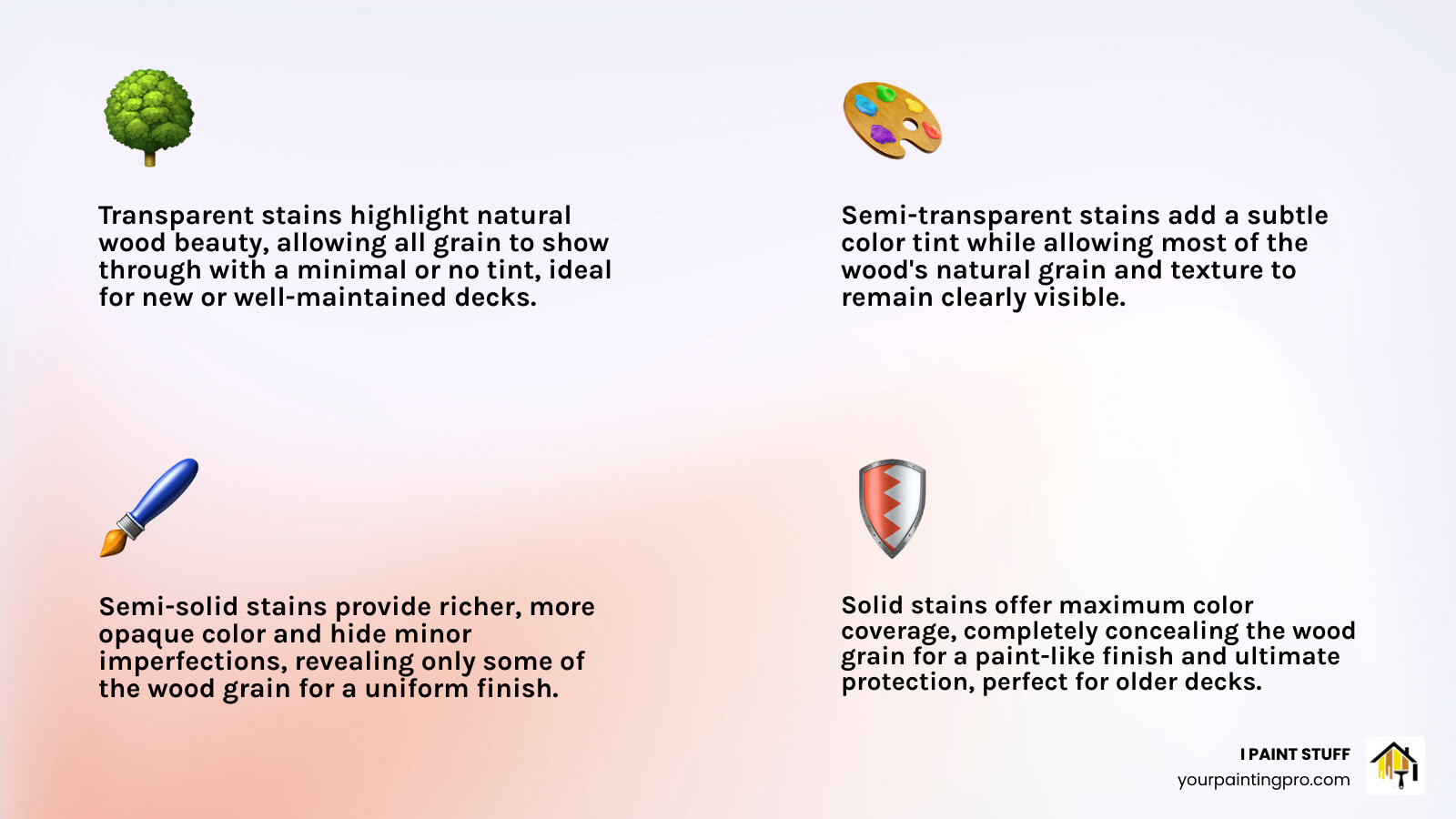
Before falling in love with a color, you must decide on opacity. This choice determines how much of your wood’s natural grain shows through and how much protection your deck receives. It’s a scale from a nearly clear coat that celebrates the wood’s character to a rich, uniform color that provides a fresh look while letting the wood breathe.
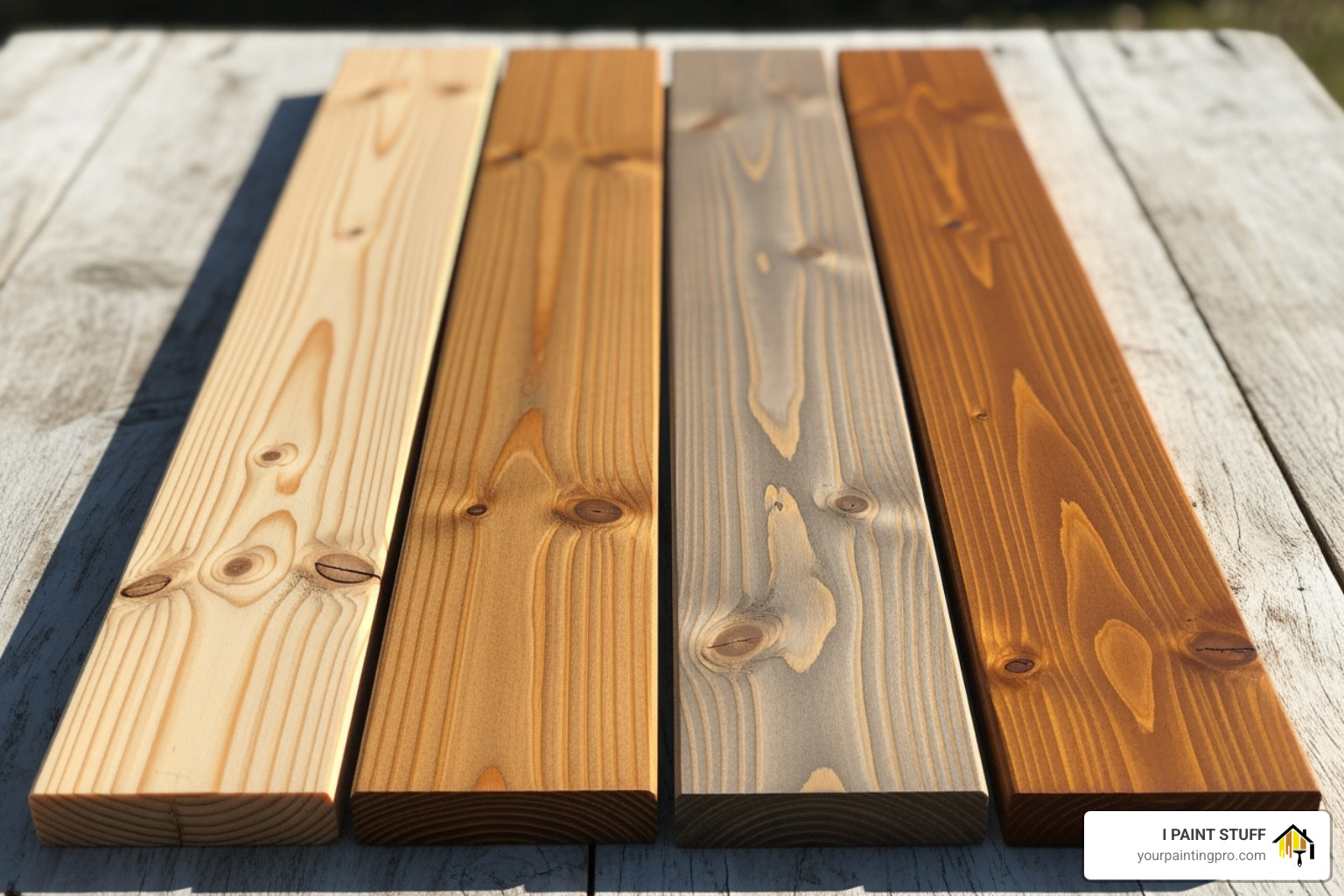
The condition of your deck is a major factor. A new cedar deck with beautiful grain deserves to be shown off, while a deck that has weathered several Colorado winters might need something that conceals imperfections while highlighting the wood’s texture.
Here’s how the four main opacity levels stack up:
| Opacity Type | Wood Grain Visibility | UV Protection | Durability | Best Use Case |
|---|---|---|---|---|
| Transparent | High | Low | Moderate | New or excellent condition wood, hardwoods |
| Semi-Transparent | Moderate | Moderate | Good | Well-maintained wood, 5-10 years old |
| Semi-Solid | Low | High | Very Good | Older wood, slight imperfections |
| Solid | None (texture shows) | Very High | Excellent | Weathered wood, significant imperfections |
Transparent & Semi-Transparent Stains: For a Natural Look
If you appreciate the natural beauty of wood, transparent and semi-transparent stains are your best options. These deck stain color options protect your deck while letting its character shine through.
Transparent stains act like a clear sealant or add a whisper of color, enriching the wood’s existing tone. They are perfect for new decks or well-maintained hardwoods where you want every detail visible. They offer excellent waterproofing but have limited UV protection.
Semi-transparent stains provide more noticeable color, but the wood grain remains a strong feature. They work beautifully on decks that are 5-10 years old and need some rejuvenation, offering better UV protection than transparent stains while still celebrating the wood’s unique patterns. Both options penetrate the wood, so they won’t peel or chip like surface coatings.
Semi-Solid & Solid Stains: For Rich Color and Maximum Protection
For decks that have seen more wear or when you want a bold color change, semi-solid and solid stains are the go-to deck stain color options. These choices deliver rich, uniform color and serious protection.
Semi-solid stains have deeper pigmentation that hides most of the wood grain but leaves the texture intact. This level is excellent for camouflaging minor imperfections on older decks (around the 10-year mark) and provides robust UV defense.
Solid stains offer maximum coverage, completely hiding the wood grain with opaque color while leaving the texture visible. It looks similar to paint, but with a critical difference: solid stain penetrates and allows the wood to breathe, preventing the moisture trapping that leads to rot and peeling with paint. This makes solid stain far easier to maintain—recoating often just requires cleaning, not extensive stripping. For weathered decks over 10 years old or for a dramatic color change, solid stain is the ideal solution. For more on this, see Fence stain vs. paint: Which is best for your wood fence?.
Solid stains are also perfect for high-traffic areas, offering maximum durability and color uniformity. For more guidance, see Choosing the best deck stain for old decks.
A Guide to Popular Deck Stain Color Options
Now that you understand opacity, let’s explore the exciting world of deck stain color options. The right color can transform the mood of your outdoor space, turning your deck into a true extension of your home. Whether you want cozy, contemporary, or a vibrant statement, there’s a color family to match your vision.
Your deck color sets the tone for your outdoor room. It can make your backyard feel more open, warm, or sophisticated, and it plays a crucial role in harmonizing your deck with your home’s siding and landscaping.
Classic Browns and Natural Tones
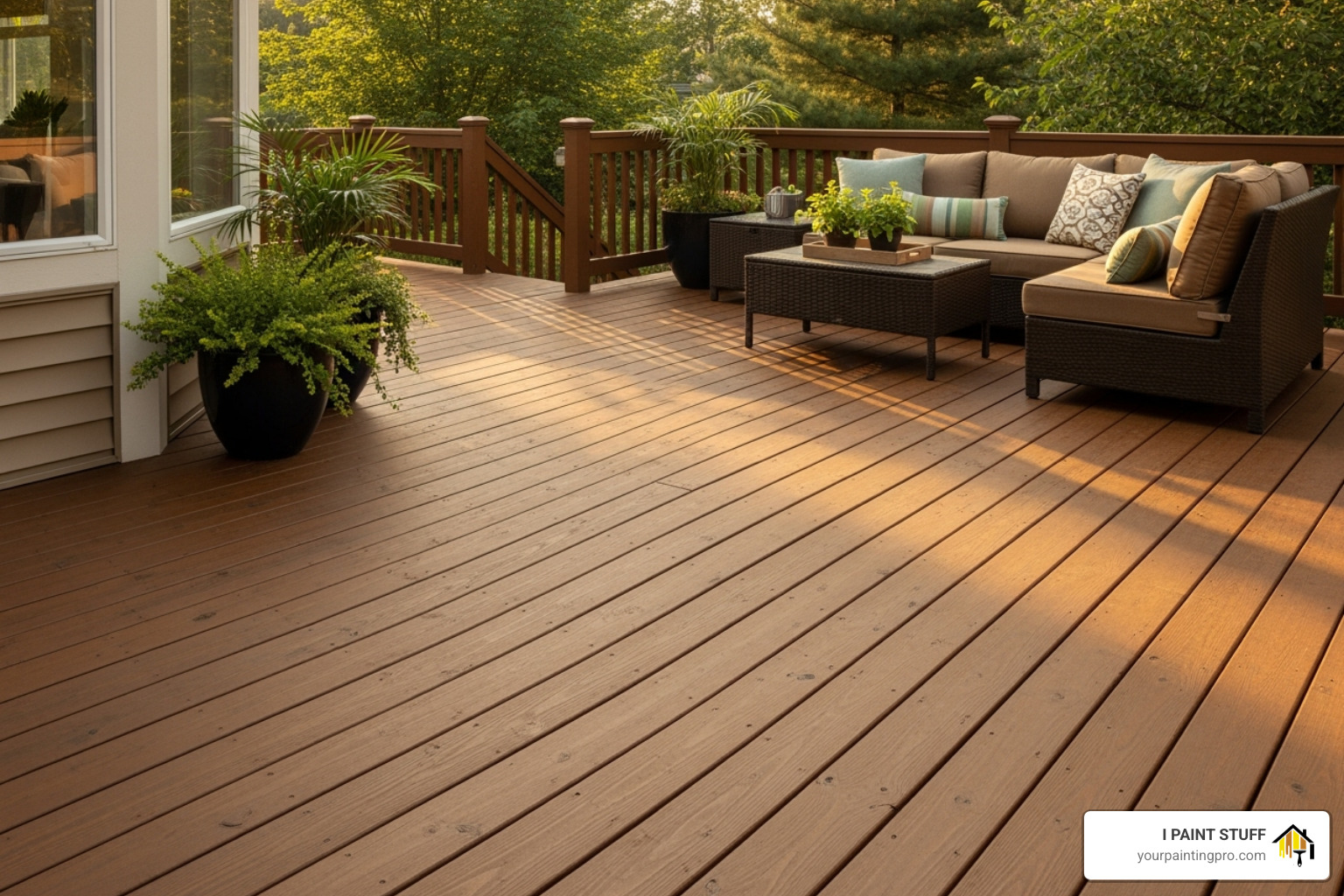
Browns and natural wood tones are the most popular deck stain color options because they are timeless and versatile. These earthy shades create an instant sense of warmth and help your deck feel like a natural part of your yard.
- Cedar tones offer a classic, reddish-brown warmth that is cozy and welcoming.
- Redwood shades bring deeper red undertones for a more substantial and neat feel.
- Walnut stains provide darker, cooler tones that bridge the gap between traditional brown and modern gray, adding depth and sophistication.
- Pecan and honeytone stains deliver golden, sun-kissed browns that brighten smaller or shaded decks.
The key is to match the undertones (cool grays vs. warm golds or reds) to your home’s exterior and landscaping for a cohesive look.
Modern Grays and Blacks
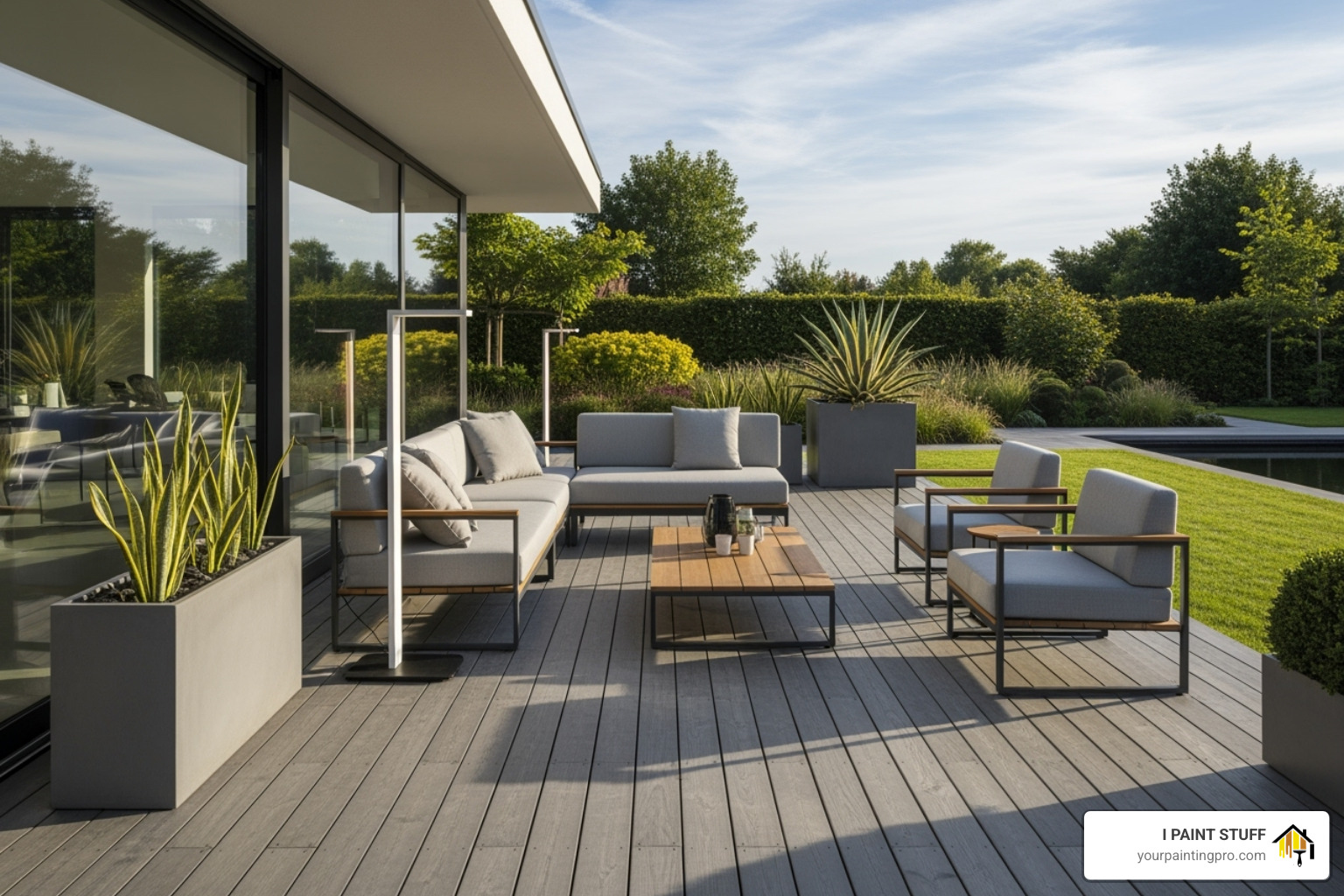
Gray has become a favorite in modern deck design. These cooler deck stain color options bring a sophisticated, contemporary edge with practical benefits.
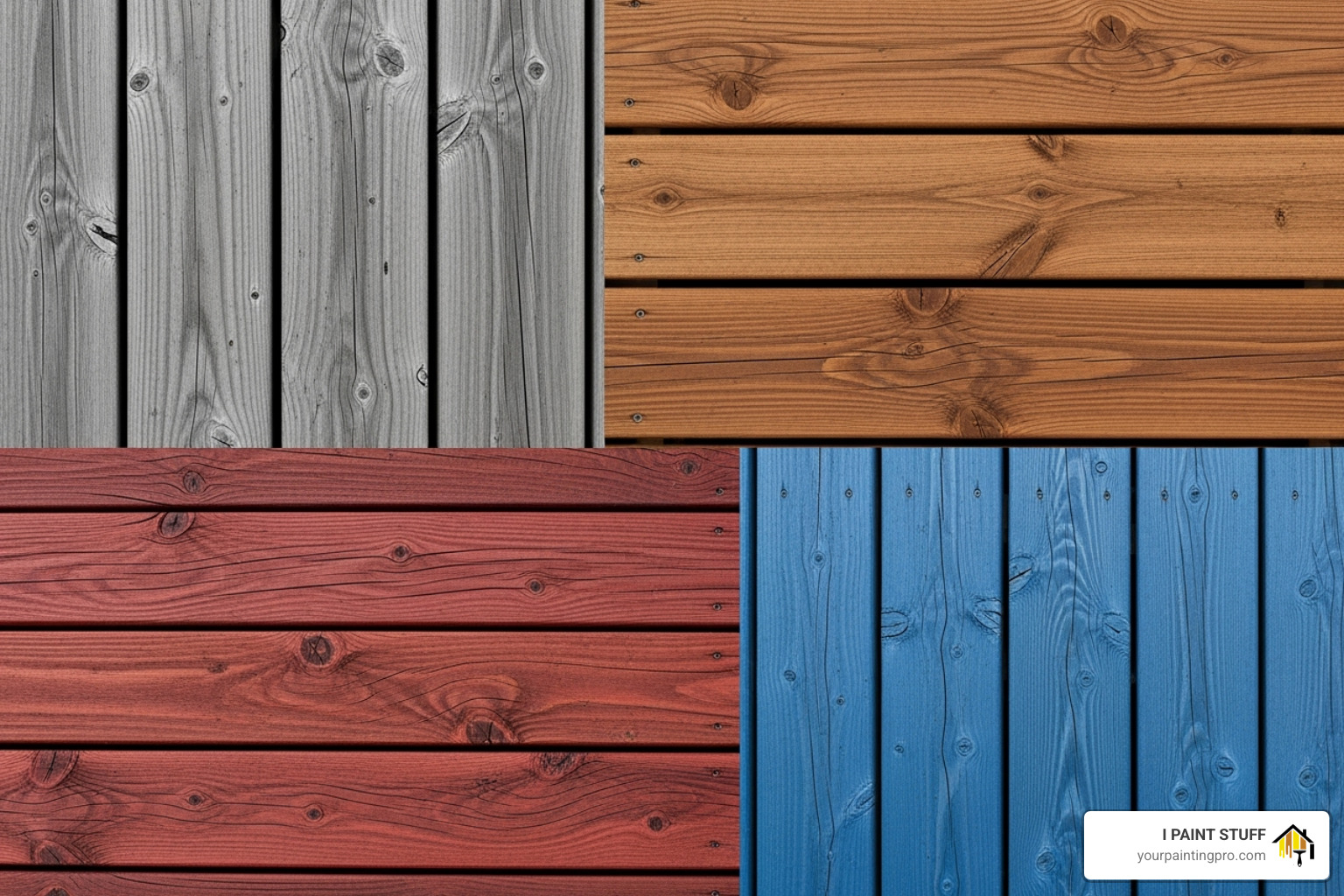
Gray stains range from soft, silvery tones to deep charcoal. Lighter grays make small decks feel more expansive and stay cooler underfoot. Darker grays create a dramatic backdrop that makes furniture and planters pop. As a bonus, grays are excellent at hiding dirt and tend to fade more gracefully than other colors.
For a truly bold statement, black deck stain offers the ultimate in contemporary sophistication. It creates stunning contrast with lush greenery or white railings, delivering a high-end, minimalist look.
These cooler tones work best with modern architecture and homes with neutral exteriors, providing a calm canvas that lets your outdoor décor shine.
Bold Reds, Blues, and Greens
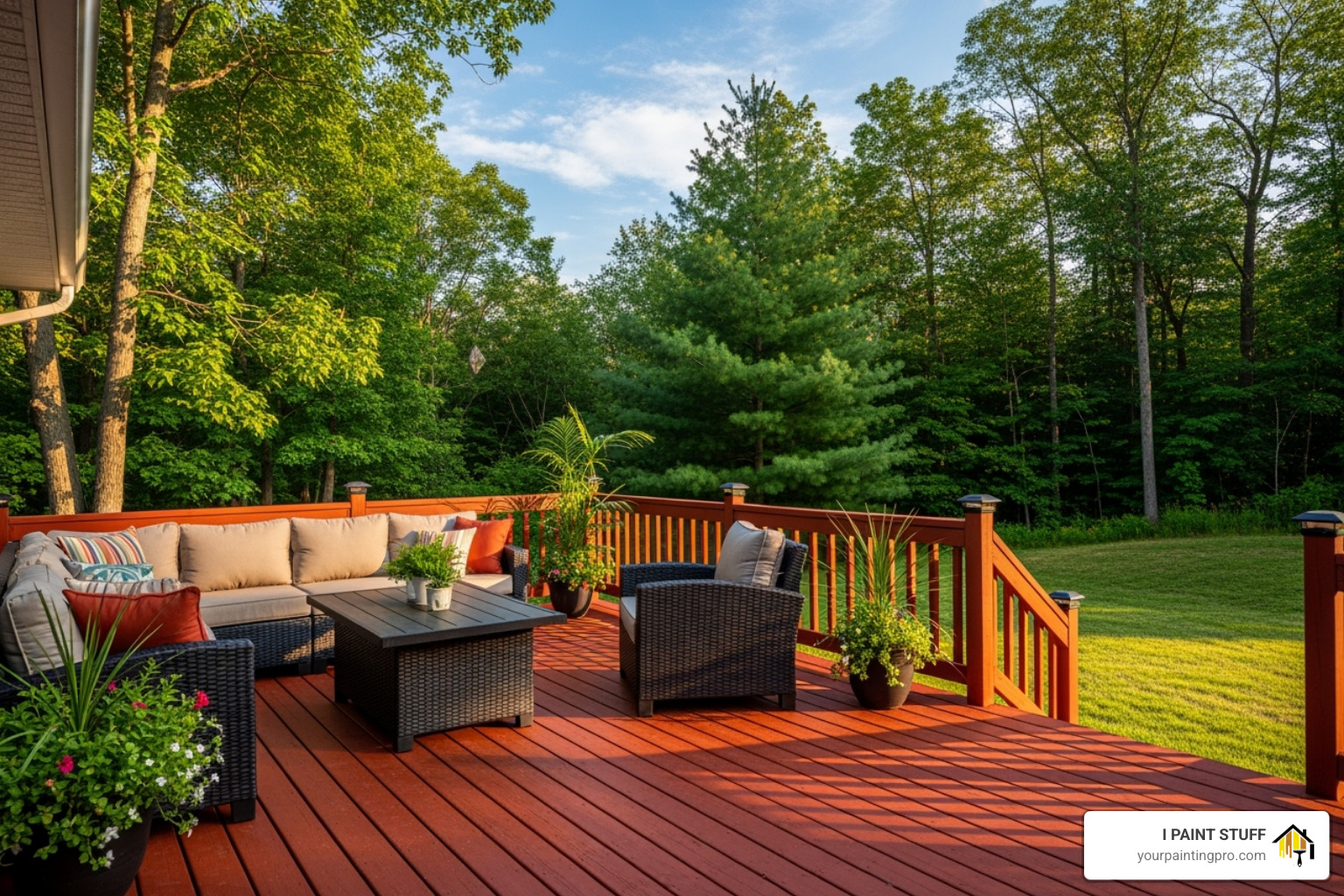
For a unique space with genuine personality, consider adventurous deck stain color options.
- Red stains, from barn red to terracotta, inject energy and warmth, creating an inviting atmosphere for gatherings. They work well with brick exteriors or Mediterranean styles.
- Blue deck stains offer a serene, unexpected beauty. Lighter blues evoke coastal vibes, while deep navy tones bring sophistication, especially in forested settings.
- Green stains, from soft sage to deep forest tones, create harmony between your deck and the surrounding landscape, making it feel integrated with nature.
To incorporate bold colors without overwhelming the space, try a two-toned approach on railings or borders, use color to highlight architectural features, or choose a shade that complements your garden’s flowers. A bold color is your chance to create an outdoor space that is genuinely yours.
How to Choose the Perfect Deck Stain Color
Picking the perfect deck stain color options is about creating harmony between your deck, your home, and your outdoor space. The goal is to make your deck look intentional and like it belongs. Several factors influence the best color for you, and it’s normal to feel overwhelmed by the choices. Resources like Get help With your Stain Project can guide you, and our team is always here to help.
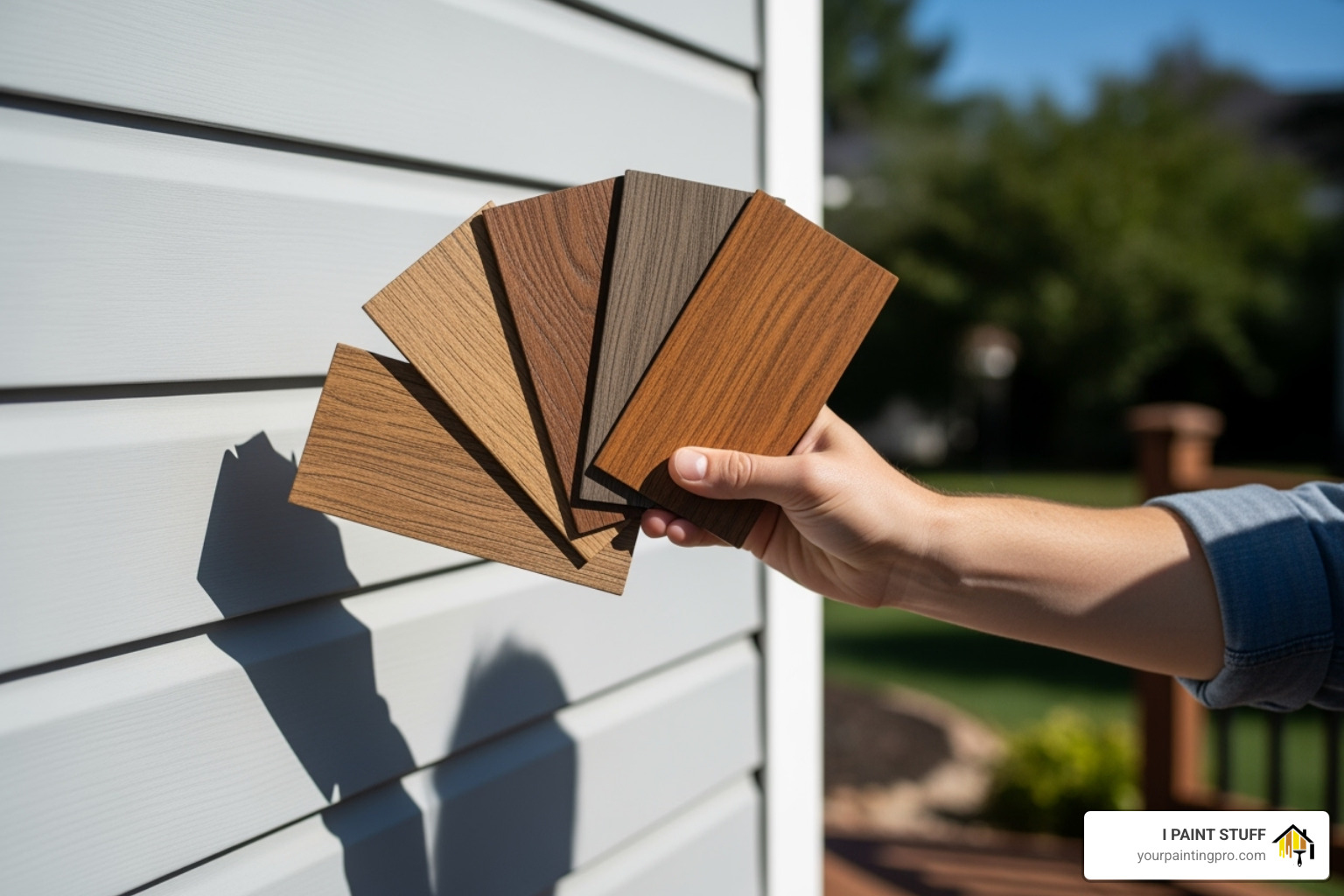
Coordinating with Your Home’s Exterior
Your home’s exterior is the biggest clue for choosing a deck stain. Your house and deck should complement each other, not compete.
Start with your siding color. Warm-toned siding (cream, beige) pairs well with warm brown or red stains. Cooler-toned homes (blues, grays, whites) often look best with gray or charcoal deck stains. You can use the color wheel to create either a harmonious blend with analogous colors or a pleasing contrast with complementary colors.
Don’t forget your roof color and any brick or stone accents. A dark gray roof might look stunning with a charcoal deck, while a brown stain with reddish hints can echo warm brick beautifully. Your home’s architectural style also matters—a rustic cabin calls for natural cedar tones, while a modern farmhouse might shine with a contemporary gray.
Considering Your Wood Type and Deck’s Age
The type and age of your deck’s wood will dramatically affect how any stain looks. These are fundamental factors in choosing the right deck stain color options.
Every wood species has its own natural wood hue (e.g., pine is yellowish, cedar is reddish). Transparent and semi-transparent stains interact with these natural colors, so the same stain will look different on different woods. Softer woods like pine and cedar often do better with semi-solid or solid stains as they age, which offer more protection and hide damage. Dense hardwoods like IPE typically look best with penetrating transparent formulas that improve their natural beauty.
For weathered wood, a semi-transparent stain can restore color while showing texture. For decks with significant imperfections like cracks or patches, solid stains are your best friend. They provide complete, uniform coverage, which is especially useful for decks over ten years old. For more on this, see Choosing the best deck stain for old decks. The rule is simple: the more imperfections, the higher the opacity you’ll want.
The Importance of Sampling
Never skip the sampling step. The color on a chip or screen will not look the same on your actual deck. Sampling is how you avoid expensive mistakes.
Test in inconspicuous areas, like under a planter or on a leftover piece of deck wood. Apply the stain and let it dry completely before judging the color.
Most importantly, observe the sample in different lighting conditions. Check it in the bright morning sun, at midday, in the shade, and as the sun sets. A color can shift dramatically throughout the day. Most brands offer small sample cans of their deck stain color options; they are worth every penny. Think of sampling as insurance against regret. Taking the time to properly sample gives you confidence that you’ll love the final result.
Frequently Asked Questions about Deck Stain Color Options
We hear many questions about deck stain color options from our clients in Westminster, CO. Here are answers to some of the most common ones.
What is the most popular deck stain color?
Certain deck stain color options consistently rise to the top. Cedar tones remain the perennial favorite for their warm, natural look that blends beautifully with outdoor environments. In recent years, grays have become very popular, especially for modern homes or those seeking a coastal aesthetic. They offer a sophisticated feel and are practical for hiding dirt.
Regional trends also play a role; lighter colors are often chosen in sunnier climates to absorb less heat. The “most popular” color is the one that complements your home and makes you happy. Don’t be afraid to choose a unique color that reflects your personal style.
How long does deck stain last and does color affect it?
Generally, we recommend staining your deck every 2 to 3 years, but several factors influence longevity. The quality of the stain, proper surface preparation, and your deck’s exposure to sun, rain, and foot traffic all play a role. For more insights, our article on How long does fence stain last? covers similar principles.
Color and opacity are key factors. Transparent and semi-transparent stains have less pigment, offering less UV protection, and typically need reapplication every 1-2 years. Semi-solid and solid stains contain more pigment, provide superior UV protection, and can last 3-5 years or more.
Direct sunlight is the biggest enemy, as UV rays break down pigments. In sunny areas like Westminster, a high-quality stain is essential. While darker colors have more protective pigment, they also absorb more heat. Lighter colors reflect more sunlight and stay cooler, which can help them last longer in intense sun. Regular cleaning is the best way to extend the life of any stain.
Should I use an oil-based or water-based stain?
Both oil-based and water-based stains have their strengths, and the right choice depends on your priorities. For a full breakdown, read our article Oil-based vs. Water-based stain: Which should you choose?.
-
Oil-based stains penetrate deeply into wood, offering excellent conditioning and moisture protection, which is great for high-traffic areas. They stay wet longer, which can make application easier. However, they have higher VOCs (stronger odors) and require mineral spirits for cleanup.
-
Water-based stains have improved dramatically. Modern formulas offer excellent color retention, fade resistance, and flexibility to prevent cracking. They dry much faster, have low VOCs, and clean up easily with soap and water, making them a more environmentally friendly option.
Here in Westminster, CO, our intense sun and fluctuating temperatures are tough on decks. A stain with excellent UV protection and flexibility is key, regardless of which base you choose.
Bring Your Deck Vision to Life
You’ve explored deck stain color options, from opacity levels to the spectrum of colors that can transform your outdoor space. The key takeaways are to choose your opacity based on your deck’s condition, coordinate the color with your home’s exterior, and always sample before you commit.
Now comes the fun part: bringing that vision to life. While choosing the right stain is crucial, proper application is what ensures a professional, long-lasting finish. Surface preparation, technique, and timing all play a role in achieving that magazine-worthy look.
That’s where our team at I PAINT STUFF comes in. As a family-owned business, we’ve been changing Westminster, CO decks for years, and we know how the right color and expert application can completely change an outdoor space. We guide homeowners through every step, from color consultation to the final protective coat that seals in beauty and durability.
We understand how Colorado’s climate affects different stains. We prep surfaces carefully and apply stain with the care your deck deserves for even coverage and long-lasting results. Your deck should be a place you want to spend time, not one you avoid.
Whether you’re dreaming of a warm cedar tone, a sleek modern gray, or a bold statement color, we’re here to make it happen.
Ready to stop dreaming and start enjoying your outdoor space? Let’s talk about your deck. We’ll walk you through the best deck stain color options for your home and answer any questions you have.
Get a professional quote for your Westminster deck staining project today and let’s create something beautiful together!