
How Much Does House Painting Cost? A Complete Guide
So, you might be curious about the real cost of a paint job done by professionals. Local Westminster Denver market for interior works $2.50-$6.00 per square foot. For exteriors, the price varies between $2.00 and $5.50 per square foot, however, this is influenced by your home’s size and the kind of siding.
Your Quick Guide to House Painting Costs in Westminster
Trying to budget for a painting project is very much like planning a road trip. You first set the destination, a beautifully updated home and then the final cost depends on the car you drive (paint quality), the route you take (the scope of work), and the condition of the road (your walls). You may be tempted only to think about a price per square foot, but knowing what’s behind that number is what really allows you to make a wise decision.
Nationally, you’ll see a pretty wide spectrum. While the average interior project costs around $3,842, the per-square-foot cost can range from $2 to $6. What surprises most homeowners is that the biggest chunk of the bill isn’t the paint itself. Labor is the real driver, accounting for 75% to 95% of the total cost.
Estimated Painting Costs in the Westminster & Denver Area
To bring it closer to home, let’s look at some numbers you can expect to see in quotes from local professionals in our area. These figures are a great starting point for budgeting.
Just keep in mind, every house tells a different story. If you have soaring vaulted ceilings, intricate trim that requires extensive detail work, or walls that need significant repairs, your final price will reflect the extra time and skill.
Project Type | Average Cost per Square Foot | Example Project Estimate (2,000 sq ft Home) |
Interior Painting (Walls Only) | $2.50 – $4.50 | $5,000 – $9,000 |
Interior Painting (Walls, Trim, Ceilings) | $4.00 – $6.00 | $8,000 – $12,000 |
Exterior Painting (Wood/Composite Siding) | $2.50 – $5.50 | $5,000 – $11,000 |
Exterior Painting (Stucco/Brick) | $2.00 – $4.00 | $4,000 – $8,000 |
These figures aren’t only about putting some paint on the walls. They encompass everything, from essential prep work through to laying the last coats of high-grade paint. A beautiful paint job is indeed putting your money into shielding your house and falling in love with it again.
If you’re ready to explore what it takes to refresh your living spaces, you can find more details in our guide on professional interior house painting in Westminster. Up next, we’ll dig into all the little details that influence your final quote.
Decoding Your Painter’s Estimate
Getting a painting estimate can feel like trying to read a foreign language. It’s not just one big number; it’s the full game plan for transforminge your home. To really get a handle on it, you need to understand the two biggest players on the field: labor and materials. Once you see how they work together, the quote stops being a bill and starts looking like what it is, an investment in your home.
For instance, consider a professional painter nearby as a top chef. The amazing dish you get at the end is only possible because of all the detailed prep work in the kitchen that the chef did even before anything was put on the pan. That prep work is the secret sauce, and it’s what sets apart an ordinary paint job from an exquisite one.
The True Cost of Labor
Look at any professional estimate, and you’ll see that labor is the biggest slice of the pie, usually accounting for 75% to 95% of the total cost. And no, that’s not just for the time someone spends with a roller in their hand. It’s for the skill, the precision, and the sheer hard work that goes into every single step.
This is where the real value is. A pro’s labor cost covers a ton of critical prep tasks that guarantee a sharp, durable finish:
- Surface Preparation: This is the nitty-gritty work of scraping off old, failing paint, sanding everything smooth, and filling every last crack and nail hole.
- Thorough Cleaning: Walls need to be washed down to remove years of dust, grime, and kitchen grease. If you skip this, the new paint simply won’t stick, and you’ll be looking at peeling and bubbling in no time.
- Protecting Your Home: A huge chunk of time is spent carefully covering floors, furniture, and light fixtures. It also includes the painstaking process of taping off trim, windows, and ceilings for those perfectly crisp lines.
- Priming: A quality primer is non-negotiable, especially if you’re covering a dark color or painting fresh drywall. It ensures the true color comes through and helps the paint bond to the wall, prolonging its life.
When you review your quote, you’ll see line items for this kind of prep. Using the right wall preparation tools to instantly prime, clean, and prep walls makes a world of difference in the final outcome. It’s this meticulous process you’re paying for.
A painter’s labor cost is a direct reflection of their expertise in creating the perfect canvas. Rushing the prep stage is like building a house on a shaky foundation; it doesn’t matter how great the paint is, the finish just won’t last.
This infographic gives you a quick visual breakdown of how costs are typically split between interior and exterior projects.
As you can see, the total project investment is a mix of detailed interior work and heavy-duty exterior prep, each with its own set of demanding, labor-intensive tasks.
Materials Matter More Than You Think
While labor takes up most of the budget, the quality of your materials, the paint, primer, caulk, and tape, is a massive factor in how your project looks and how long it lasts. It’s always tempting to save a few bucks a gallon on paint, but trust me, it’s a classic case of being penny-wise and pound-foolish.
It’s simply that economy paints don’t contain the same quality of ingredients (such as resins and pigments). You therefore get it poorly covered, and are thus forced to put on more coats which increases the labor cost. Furthermore, they scuff, stain, and fade at a much faster rate, so that you’ll be putting your clothes again to use sooner than you’d wish.
Here’s a quick guide to paint grades:
- Contractor-Grade: This is the basic stuff, often used for new builds or rental properties. It’s cheap, but it’s not very durable or washable.
- Mid-Grade: This is the sweet spot for most homeowners. It offers a great balance of durability, coverage, and cost, and it holds up well to cleaning.
- Premium-Grade: This is the top-of-the-line paint. It’s packed with the best binders and pigments for amazing coverage, incredible durability, and often includes extra perks like mold resistance.
Choosing a premium paint might add 10-20% to your material costs upfront, but it can easily extend the life of your paint job by several years. Over the long haul, that saves you a ton of money and a lot of hassle. When a painter specs a higher-quality paint on their estimate, they’re not upselling you; they’re recommending an investment in longevity.
Calculating Your Interior Painting Costs
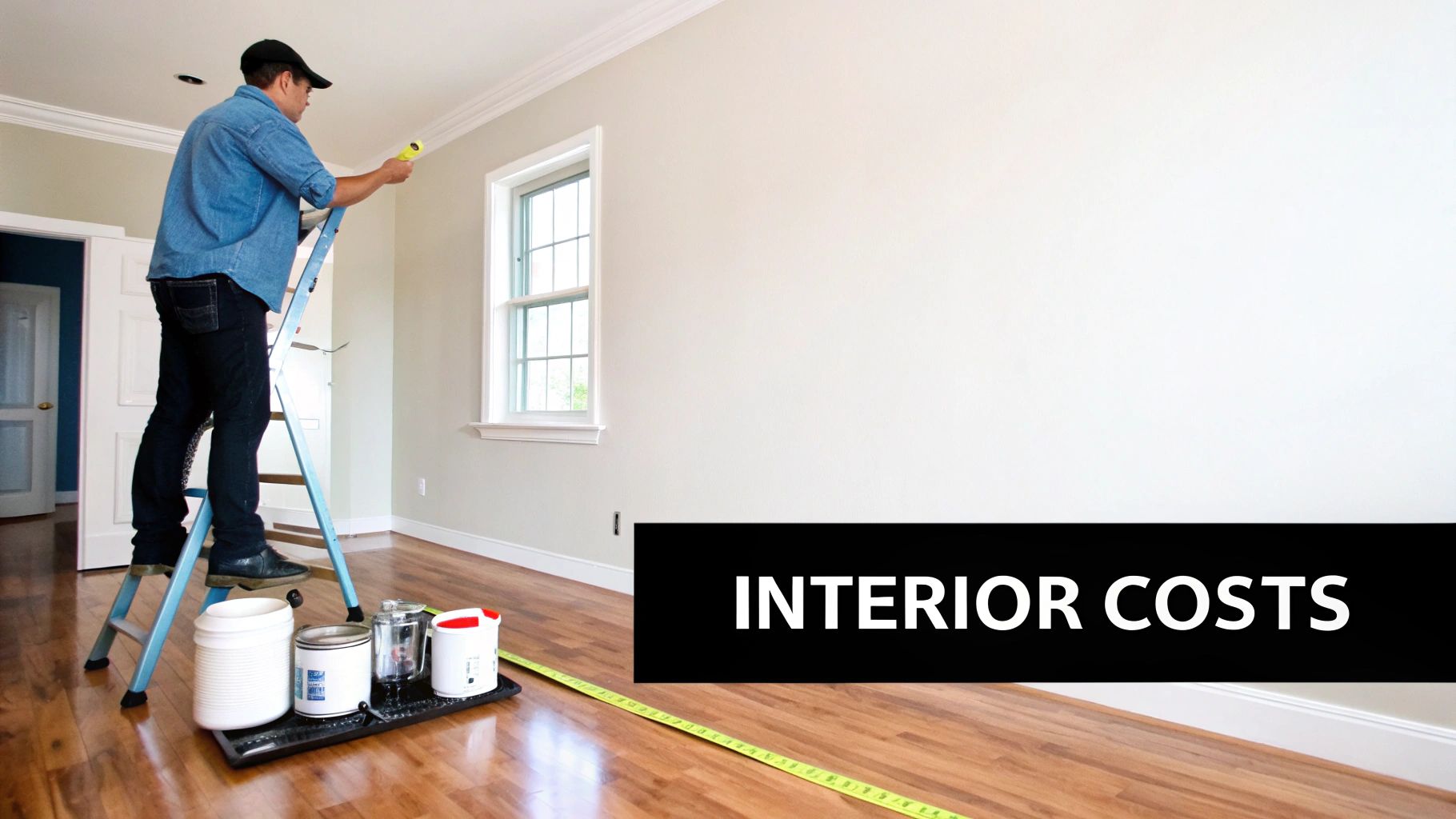
When we move the conversation indoors, the question “What is the cost of residential painting nearby?” becomes much more personal. While we often price exterior jobs based on the home’s total footprint, interior projects are a different animal. Painters typically build their estimates in one of two ways: per room or by the actual paintable square footage of walls and ceilings.
That’s the reason why a standard, comfortable, small 1, 500 sq ft ranch in Arvada with typical 8-foot ceilings might basically have a quite simple cost. But a luxury two-story in Westminster with the same total square footage, yet filled with vaulted ceilings, an open floor plan, and giant walls, will require significantly more time and paint. Of course, the price will be indicative of that.
Pricing Per Room Versus Per Square Foot
So, how do painters actually land on a final number? The truth is, most seasoned pros use a blend of both methods to get to an accurate quote. Thinking “per room” gives you a decent starting point, but calculating the exact square footage of the wall surface is what really dials in a fair and precise estimate.
- Per-Room Pricing: This is your quick-and-dirty estimate. A standard bedroom might land somewhere between $400 and $900, while a bigger living room could run from $900 to $2,000. These ballpark figures almost always assume normal ceiling heights and minimal prep work.
- Per-Square-Foot Pricing: For real numbers, painters measure the length of all the walls, multiply by the ceiling height, and then subtract the space taken up by doors and windows. This gives them the true “paintable area” and is a much more reliable way to figure out how much paint and labor are needed.
Think of it as buying carpet. A salesperson can give you a rough idea of the price per room but the final payment is dependent on the exact square footage. An interior painting job is a bit like that too: the final cost is largely determined by the specific details of your home.
Ultimately, a detailed quote from a painting company near me, like I PAINT STUFF, will combine these approaches. We look at the room count and the specific surface area to give you a price that’s both transparent and accurate.
How Architectural Details Impact Your Budget
Beyond the basic dimensions, it’s your home’s unique character that really shapes the final cost. All those architectural features that give a house its charm also demand more time, skill, and precision from a painter, which adds to the labor side of the estimate.
Here are a few of the most common cost drivers we see:
- High Ceilings and Vaults: Anything above the standard 8-9 feet means we’re breaking out taller ladders or even scaffolding. That extra setup, takedown, and the meticulous care needed to work safely at height add significant time to the job.
- Intricate Trim and Millwork: All that beautiful crown molding, detailed window casings, wainscoting, and baseboards require a steady hand. The careful taping and “cutting in” is where real craftsmanship shines, but it’s time-intensive work that adds to the cost.
- Doors and Windows: Every single door and window creates another interruption on a wall. A painter has to carefully work around each one, which is far more complex than just rolling a simple, flat wall.
The Role of Paint Sheen and Quality
And of course, the paint itself is a major part of the equation. The type of sheen you go for, like a flat matte or a high-gloss, will not only affect your expenses but also the level of difficulty of the application. Shiny paints are notorious for being very picky; they reveal every small flaw in the surface, so the surface preparation should be perfect.
Beyond sheen, the quality of the paint is a strategic decision. Sure, economy paints are cheaper off the shelf, but premium paints deliver far better durability and color retention, helping you avoid repainting sooner.
For instance, a basic paint job might cost $3,500 and last for 4 years. A premium project using top-tier materials could be $6,500, but it can easily last a decade or more. You can dive deeper into how paint selection impacts project costs in this insightful guide. It really comes down to balancing the upfront investment with long-term value.
Understanding Exterior Painting Expenses
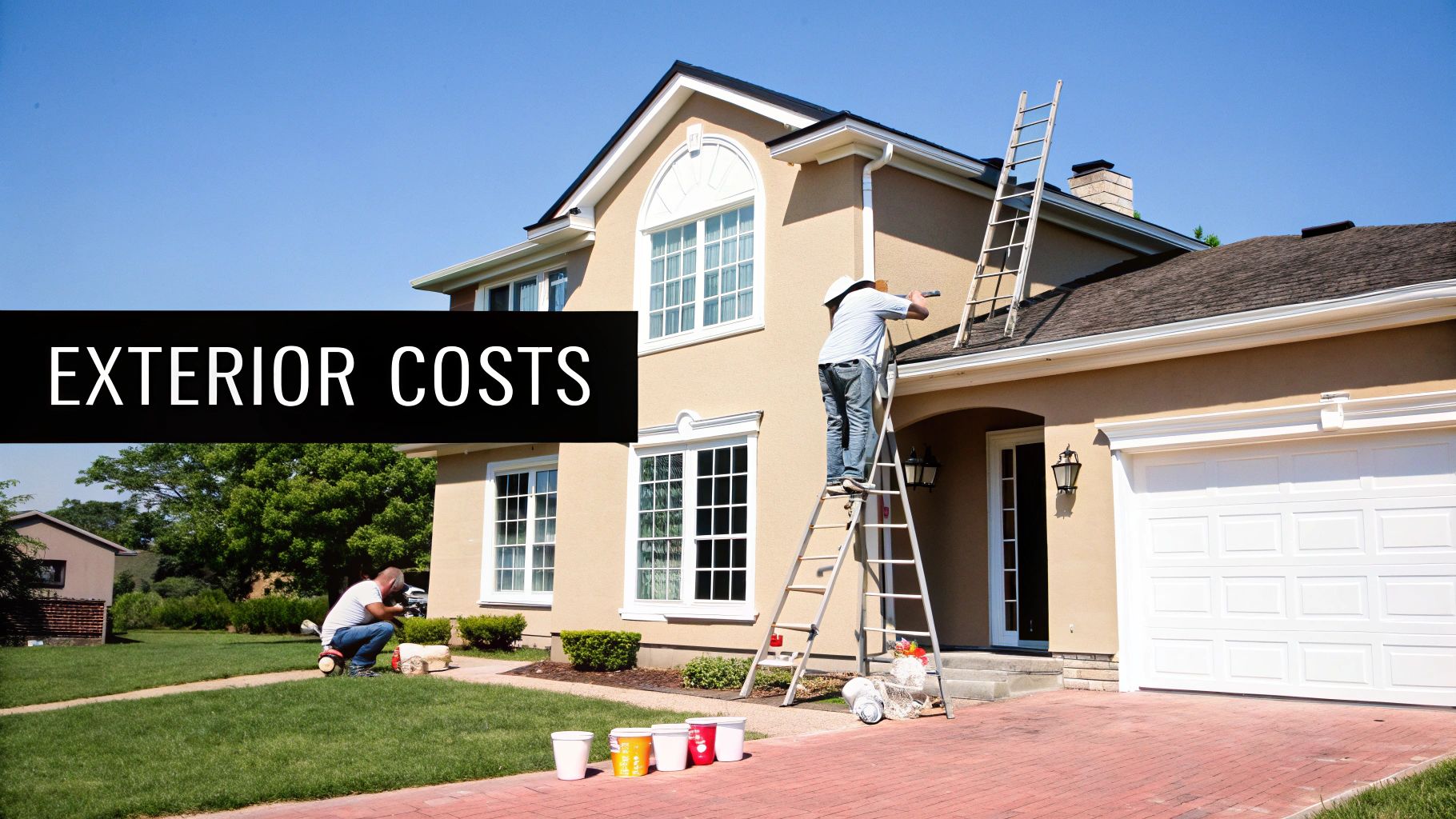
Painting your home’s exterior is about so much more than just a color change. It’s your property’s first line of defense against Colorado’s tough climate, from the intense sun and hail to the freezing snow. This protective role means an exterior job is a whole different beast than an interior one, requiring different materials, far more prep work, and specialized skills.
Naturally, the answer to “how much does house painting cost?” changes quite a bit when we step outside.
Exterior jobs typically cost more than interior projects, with the national average hovering just over $3,000. Most homeowners fall in the $1,819 to $4,551 range, depending on factors such as the home’s size and materials.
Even the paint itself varies, with standard exterior latex running $15 to $30 per gallon, while specialty coatings can climb to $20 to $35 or more. If you’re curious about national averages, you can read this detailed home improvement breakdown.
Siding Material: The Foundation of Your Quote
One of the main reasons your painting quote is heavily influenced by the type of siding on your house. Every material literally has its own character, and a skilled painter is aware of how to work with each one. It is like cooking: you simply would not make a delicate fish the same way you treat a rich steak.
- Wood Siding: It’s a classic for a reason, but it’s also high-maintenance. Wood is prone to peeling, cracking, and rot, so a proper paint job requires a lot of prep: scraping, sanding, caulking gaps, and priming bare spots to ensure the new paint sticks and protects the wood from moisture.
- Vinyl Siding: While it’s pretty low-maintenance day to day, vinyl still needs a thorough cleaning to remove chalky residue and grime before painting. Pros also have to use a specific vinyl-safe paint that lets the material expand and contract with the weather.
- Stucco Siding: a favorite option around Colorado. It is generally a good idea to power wash and seal any fine cracks on the stucco surface before painting as stucco is both tough and porous. For stucco, an elastomeric paint with a thick consistency is required because it has to ‘bridge’ those micro cracks and form a waterproof but breathable layer.
The condition of your siding is just as critical as the material itself. A well-kept surface requires less labor, resulting in lower costs. But if your siding is peeling, damaged, or in rough shape, that adds a lot of time to the prep phase—and time is money in this business. To see what that work looks like, explore our guide on what is included in exterior house painting services.
Architectural Complexity and Accessibility
Right after siding, your home’s architecture is the next big-ticket item on a labor estimate. A simple, single-story ranch home is a breeze to paint compared to a three-story Victorian loaded with gables, dormers, and decorative trim.
The more corners, angles, and high places your home has, the more time a painter must spend on ladder work, safety rigging, and detailed “cut-in” work. This meticulous labor is what drives up the cost for more complex homes.
Here are the key architectural features that can add to your final bill:
- Multiple Stories: Painting a second or third story isn’t just about height; it’s about safety and precision. It requires extensive ladder work and sometimes even scaffolding or lifts, which adds equipment rental and labor hours to the bill.
- Gables, Dormers, and Eaves: All these angles create more surface area and demand careful, time-consuming brushwork. Every corner has to be “cut in” by hand to get those clean, professional lines.
- Porches, Decks, and Trim: Painting railings, spindles, columns, and detailed window trim is meticulous work that simply can’t be rushed. The more of these features you have, the more labor your quote will reflect.
It all boils down to the painter’s time and expertise. A straightforward job is efficient. A complex, multi-level home with hard-to-reach spots is a much bigger, and therefore more expensive, undertaking.
The table below breaks down how these different factors can swing your final cost from one end of the spectrum to the other.
How Project Variables Influence Your Final Bill
Cost Factor | Low-Cost Scenario | High-Cost Scenario | Impact on Price |
Home Size | Single-story, <1,500 sq ft | Three-story, 3,000+ sq ft | Major Impact: More square footage means more paint and more labor. |
Siding Type | Smooth vinyl in good condition | Peeling wood or cracked stucco | Major Impact: Wood and stucco require extensive prep (sanding, repairs). |
Architecture | Simple ranch or box-style home | Victorian with gables, dormers, trim | Significant Impact: Complex designs drastically increase detailed cut-in work. |
Accessibility | Flat lot, easy ladder access | Steep hills, dense landscaping | Moderate Impact: Difficult access slows down the crew and may require special equipment. |
Paint Quality | Standard exterior acrylic paint | Premium elastomeric or specialty coatings | Moderate Impact: High-end paints cost more per gallon but offer better durability. |
Color Change | Similar color repaint | Drastic change (e.g., light to dark) | Minor Impact: Drastic changes may require an extra coat of paint or a tinted primer. |
As you can see, two homes of the exact same size can have wildly different painting costs based on these variables. Understanding them is the key to getting a fair and accurate estimate for your project.
Smart Ways to Manage Your Painting Budget
Understanding the figures in a painting estimate is one thing, but figuring out how to change those figures without taking shortcuts is quite another. That’s indeed where your real impact can start. A well-done paint job is probably one of the smartest home improvement investments you can make, and with a bit of clever planning, you shouldn’t have to spend a fortune to get that gorgeous, durable finish. It is basically a matter of wise decisions that eventually bring you a lot of benefits.
This is more important than ever. The demand for professional painters is booming; the market was valued at $58.2 billion in 2023 and is projected to hit nearly $89.4 billion by 2032. As more homeowners renovate and build, knowing how to manage your budget effectively becomes a crucial skill. You can dig into the specifics of these trends in this comprehensive industry report.
Take on Simple Prep Work Yourself
Basically, a simple strategy to slightly reduce the labor cost is to do some easy prep work by yourself. You should definitely keep the high-skilled tasks such as sanding, patching, and major repairs for the professionals, however, there is so much you can do to give them a good start.
Before the crew even shows up, consider tackling these tasks:
- Move Furniture: Get smaller items completely out of the rooms and cluster the bigger pieces in the center. This gives the painters a clear workspace and saves them a ton of time.
- Remove Wall Hangings: Take down all pictures, mirrors, curtain rods, and outlet covers. A great pro tip is to put the screws and hardware for each item in a labeled sandwich bag; you’ll thank yourself later.
- Clear the Perimeter: If we’re painting the exterior, trim back any bushes or tree limbs touching the house. Move grills, patio furniture, and garden hoses to a safe distance.
Be Strategic with Scheduling and Scope
Believe it or not, scheduling your project can affect the price. Just like any other trade, painters have their peak seasons and their slower times. You can use this to your advantage.
You could compare it to when you’re arranging a holiday. Basically, if you intend to travel during the off-season, you will be able to catch much better deals on your flights and hotels almost 100% of the time. The principle is the same here: if you plan to get your house painted during a less busy time, you will probably get more attractive quotations and better availability as well.
Here are a couple of strategies to consider:
- Schedule Interior Work in Winter: In Colorado, exterior painting grinds to a halt once the cold weather sets in. This makes winter the slow season. Booking an interior project between November and February can sometimes get you a better rate.
- Bundle Your Projects: If you know you want to paint the living room, a couple of bedrooms, and the hallway, do it all at once. It’s far more efficient for a crew to set up for one larger job than for three separate small ones. Painting one room now and another in six months will almost always cost you more in the long run.
Invest in Quality for Long-Term Savings
This might sound backward, but one of the best ways to save money on painting is to spend a bit more on high-quality paint. It’s tempting to grab the cheaper, contractor-grade can to save a few bucks per gallon, but that’s a classic example of a false economy.
Bargain paints just don’t perform. They cover poorly, require more coats (which increase labor costs), and simply don’t hold up to daily wear.
By investing in a premium, durable paint, your new finish will look great for years longer, pushing your next repaint far down the road. You’re not just paying for paint; you’re buying time. This approach maximizes the value of what you spend today and saves you money over the life of your home. It’s the difference between a quick fix and a lasting solution.
How to Hire the Right Painter in Westminster
It is important to be aware of the figures, however, the real worth is in the selection of the right contractor. If you pick the wrong local painting contractor team, even after budgeting to the last dollar, you will have to pay in one way or another. A painter’s estimate is more than just a price; it’s a commitment, and you should locate a Westminster professional who will honor their commitment.
Think of it this way: you wouldn’t let just any mechanic work on a classic car. You’d want a specialist who knows the machine inside and out, has a shelf full of trophies, and comes highly recommended. Your home is your most significant asset; it deserves that same level of care.
Vetting Your Potential Painting Contractor
Before you even think about signing a contract, it’s time to do a little detective work. A truly professional painter will welcome your questions and be completely transparent. This isn’t about being difficult; it’s about being a savvy homeowner protecting your investment. A few pointed questions can reveal everything you need to know.
Treat this process like a checklist. Any contractor who balks at providing these simple details is waving a giant red flag.
Here are the non-negotiables to ask every single painter you’re considering:
- Are you licensed and insured? This is the big one. Request copies of their general liability insurance and workers’ compensation policies. If someone gets hurt on your property, this is what protects you from a lawsuit. No proof, no project.
- Can you give me local references? A painter who’s proud of their work will have a long list of happy customers right here in Westminster, Arvada, or Thornton. Don’t just take the list, actually call a few of them.
- What specific products are you using? A quote that just says “high-quality paint” isn’t good enough. You need to know the brand and the exact product line, like Sherwin-Williams Emerald or Benjamin Moore Aura. There’s a huge difference in performance and price.
- What, exactly, does your warranty cover? Get it in writing. A solid warranty will cover both labor and materials against defects such as peeling, blistering, or chipping for at least a few years.
The goal here isn’t just to hire a painter. It’s to find a trusted partner for your project. The right team will communicate, respect your home, and stand by their work long after the paint cans are gone.
The Importance of a Detailed Written Contract
What a handshake and a verbal agreement can do is just make you feel good in a way they are old-fashioned methods. It’s just that they will not be able to save you when the dispute arises. The most foolproof way to keep yourself safe from disagreements and unplanned expenses is to have a comprehensive contract in writing. In such a way that it changes the unclear talks into definite, binding promises. For more on this, check out these 12 essential tips for hiring painters for your property.
A proper contract should spell out every last detail of the job, leaving no room for interpretation. Make sure it includes:
- A Clear Scope of Work: The contract must list every surface to be painted, the specific prep work to be done (e.g., scraping, sanding, caulking, priming), and the number of coats of paint to be applied.
- Payment Schedule: A standard agreement is a deposit to start, maybe a payment midway through, and the final balance only when you are 100% satisfied with the finished job. Never, ever pay the full amount upfront.
- Project Timeline: While weather can cause delays, the contract should have a clear start date and an estimated completion date to keep everyone accountable.
Hiring a painter is more than just a simple transaction. It’s an investment in your home’s future, protecting its beauty and structural integrity for years to come.
Got Questions About Painting Costs? We’ve Got Answers.
While budgeting and planning your project, some questions inevitably arise. It’s completely understandable. Usually, the cost of painting a house can be figured out by knowing only a few crucial details. We can go over some of the questions we get most frequently from homeowners so that you can carry on confidently.
How Often Should I Repaint My House Exterior in Colorado?
Here in Colorado we have very intense sun, high altitude and crazy weather. So a rough figure of a good repaint of the exterior of a house is generally every 5 to 7 years. But that’s only a rough guide, not a strict rule. The true answer depends on the material of your house and the quality of the last paint job.
Wood siding, for example, will be hit by the elements and will probably be in need of maintenance very soon after you see the peeling or cracking. Strong materials like stucco, in contrast, usually can last for a much longer time. The most beneficial move that you can make is to inspect your home exterior once a year. You should think about repainting when the paint is fading, chipping, or becoming chalky.
Is It Cheaper If I Buy the Paint Myself?
It seems like a smart way to cut costs, but buying the paint yourself often backfires, costing you more money and creating major headaches. Professional painters have long-standing accounts with suppliers and get deep discounts on high-end paint, savings that are almost always baked into your quote.
Here’s the real kicker: a painter’s warranty on their work is almost always tied to the materials they use. When a pro supplies the paint, they’re standing behind its performance. If you bring your own and it fails, you could be on the hook for the do-over.
In addition, a skilled painter can tell you the right primer and paint that will perform well on any surface, whether it is a wall in a busy hallway or your sun-exposed exterior trim. Their knowledge is a sure bet for a finish that not only looks beautiful but also lasts for years, something you simply cannot obtain from a generic product straight from the shelf.
Does My Color Choice Affect the Painting Cost?
You bet it can, though usually it’s not a massive price jump. The cost difference really comes down to the extra labor and materials needed to get a perfect, solid finish, especially when you’re making a big change.
- Going from Dark to Light: This is the classic example. If you’re painting over a deep navy blue with a soft white, it’s going to take more work. You’ll almost certainly need an extra coat of high-quality primer and maybe even more coats of the new color to make sure the old one is completely gone.
- Vibrant, Bold Colors: Some of the most beautiful, vibrant colors, think rich reds, sunny yellows, and bright oranges, are made with more expensive pigments. They also tend to be less “hiding,” meaning they don’t cover as well on the first pass. Achieving that deep, even tone often requires an extra coat or two.
Every additional coat means more paint and more time, and that will be reflected in the final estimate.
Ready to get a clear, transparent price for your project? The team at I PAINT STUFF provides fast, honest, and free estimates tailored to your Westminster-area home. Find out what your project will cost.