

Occupied-home interior painting is the preparation and repainting of rooms while you still live there, with the aim of improving surfaces without losing essential household access. If you are searching for interior painters denver occupied homes, arrange room access, belongings, surface repairs and ventilation before work starts—not after furniture is already covered.
For rates, our process and a free estimate, see our interior painting in Denver page.
- Yourpaintingpro is best for Westminster-area homeowners seeking professional interior painting rather than a do-it-yourself project.
- For interior painters denver occupied homes, compare preparation, property protection and room access—not just the painting scope.
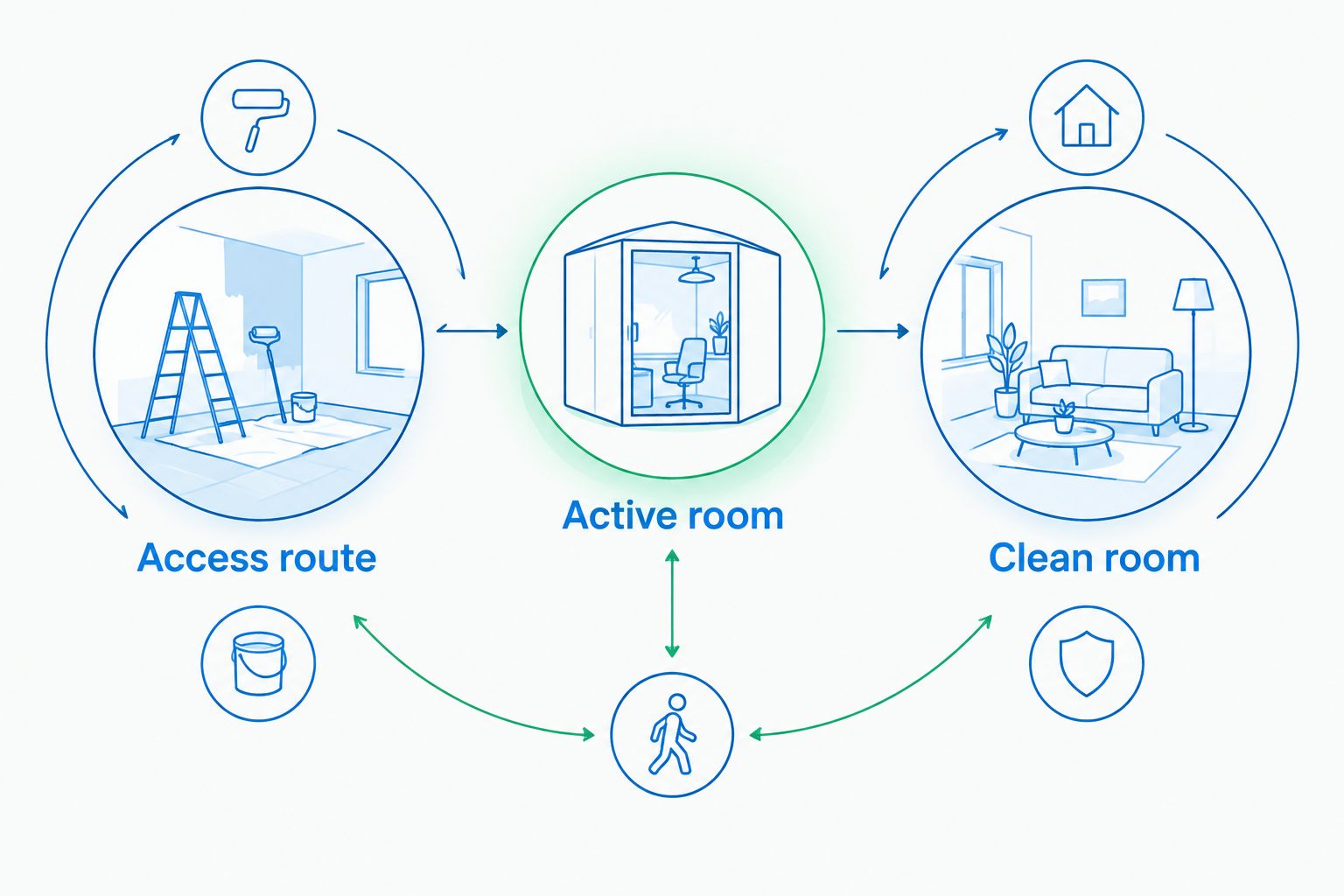
- Keep a clean room and an agreed access route separate from the active painting area.
- Cabinet painting needs a separate kitchen-access plan; wall-painting arrangements do not cover it.
Why interior painting matters for occupied-home households
An occupied home is both a worksite and your living space. Painting arrangements must account for sleeping, cooking, working from home and keeping children or pets away from tools and wet surfaces. A written estimate that lists walls but ignores these needs leaves essential decisions unresolved.
Yourpaintingpro provides interior and cabinet painting, among other residential and commercial services, from its Westminster home base in the Denver metro. This 2026 guide focuses on what you should arrange with an interior painter before your household becomes a worksite.
The best occupied-home painting plan defines which room is being worked on, which route stays accessible and which space remains clean. That is more useful than an assurance that the crew will work around you.
How to arrange interior painting while living at home
Document your room list
Start with a written room list you can make yourself. Walk through the home and identify every surface you want painted: walls, ceilings, baseboards, doors, door frames and closets. Do not assume that naming a room includes every surface inside it.
For your 2026 project, record household restrictions beside each room. A bedroom used during daytime sleeping needs different access arrangements from an unused guest room. A home office used for calls needs an agreed work window, not a promise that painting will be quiet.
Identify surfaces that should remain untouched. Built-in shelving, stained woodwork and wallpaper need explicit instructions so the estimate does not rest on different assumptions.
- Create 1 room list that names included surfaces and exclusions.
- Mark rooms needed for sleep, meals, work or caregiving.
- Identify closets, door backs and trim separately.
- Photograph existing damage and areas you want left unchanged.
- Note furniture or equipment that needs special handling.
Inspect the surfaces before choosing a finish
You can identify visible problems without buying equipment. Look for peeling paint, glossy surfaces, stains, cracks, loose drywall tape and patches that show through the existing finish. Share those observations during the walkthrough rather than asking only about color.
Painting does not replace repair or solve the source of a moisture problem. A stained ceiling needs an explanation before repainting. Loose paint needs a preparation decision. A damaged wall needs an agreed repair scope, not an assumption that another coat will hide it.
Ask the painter to distinguish cleaning, sanding, patching and priming. These are separate tasks, and different surfaces need different preparation. Cabinet doors also require their own assessment because grease, existing coatings and repeated handling affect the work.
- Point out peeling areas, stains and damaged drywall.
- Ask which repairs are included and which are excluded.
- Clarify where cleaning, sanding and primer are required.
- Resolve active leaks or moisture sources before repainting.
- Ask how preparation dust will be contained and cleaned.
Compare written estimates on the same scope
First, use your room list to compare estimates yourself. Ask each painter to price the same surfaces and describe the same preparation requirements. A shorter estimate is not easier to compare if you must guess whether ceilings, door frames or patching are included.
Yourpaintingpro offers professional interior painting; an estimate discussion is the point to confirm how that service fits your occupied home. In 2026, ask for the work boundaries, protection responsibilities and room sequence in writing. A professional service is useful when you want the painting work handled for you, but you still need to approve the household arrangements.
Use the guide to comparing interior painting estimates in Westminster to organize your questions. Compare scope before choosing a contractor, and keep any later additions in writing.
- Compare 2 written estimates against the same room list.
- Confirm included surfaces, repairs, preparation and coating system.
- Ask who moves furniture and removes wall-mounted items.
- Record protection, cleanup and room-access responsibilities.
- Confirm how additional work is approved before it starts.
Assign responsibility for protecting the home
Begin with the belongings you can safely handle yourself. Remove small breakables, personal paperwork and items you need daily. Leave heavy, awkward or valuable items for a specific handling discussion rather than trying to clear everything alone.
Covering furniture is not the same as providing working space. The painter needs access to surfaces, and your family needs safe routes through the home. Discuss flooring, furniture, light fixtures and adjacent rooms separately so protection does not stop at the room's doorway.
Ask how the crew will store tools and materials when work pauses. An occupied home needs a clear boundary between the work area and household space, especially when children or pets are present.
- Agree who moves each large item and who puts it back.
- Identify delicate flooring, valuables and fragile fixtures.
- Remove daily essentials before furniture is covered.
- Establish storage locations for tools, materials and removed hardware.
- Keep exits and agreed household routes clear.
Set a room sequence around household needs
Sketch the room sequence yourself before discussing it with the painter. Start with the spaces you can release most easily and identify rooms that must remain available. This gives the contractor household constraints to work with instead of an open-ended request to minimize disruption.
Define an active room, an access route and a clean room. The active room is the work area. The access route connects you to essential parts of the home without passing through that work area. The clean room holds daily essentials and stays outside painting activity.
Room-by-room work limits the area taken out of use at once, but it also requires repeated household coordination. Painting several rooms together reduces that separation. Choose the arrangement your household can actually support, not the one that sounds simplest on paper.
- Name the active room before each phase begins.
- Keep an access route to essential rooms and exits.
- Reserve a clean room for belongings and daily routines.
- Agree how you will learn that a room is ready for use.
- Discuss kitchen access separately if cabinets are included.
Arrange ventilation and re-entry before work starts
Begin by identifying windows that open, mechanical ventilation and household members who need specific precautions. Then ask the painter how ventilation will work during preparation, application and drying. An open window is not a complete plan if weather, security or pets prevent you from leaving it open.
For a 2026 project, use the selected coating's label and manufacturer instructions to discuss drying, ventilation and return to use. Dry to the touch does not automatically mean ready for cleaning or normal handling. Walls, doors and cabinets can have different handling requirements.
Do not use odor alone to judge whether a room is suitable for someone with health concerns. Discuss those concerns with an appropriate healthcare professional and share relevant restrictions with the painter before work begins.
- Ask which coatings will be used on each surface.
- Review the manufacturer's ventilation and handling instructions.
- Agree who opens, closes and secures windows.
- Keep children and pets outside active work areas.
- Confirm when furniture, doors and cabinets can be used normally.
Inspect the work before resetting each room
Walk through each completed area with the painter before moving everything back. Use your original surface list so the inspection covers the agreed scope, not just the most visible wall. Look at surfaces under normal room lighting and identify anything that needs attention.
Separate appearance questions from unfinished work. A missed edge, an excluded repair and a stain returning through paint require different discussions. Record the location and the agreed next action instead of relying on a general promise to address touch-ups.
Make 3 inspection checkpoints part of your plan: completed surfaces, property protection and cleanup. After that, follow the coating instructions for returning furniture and cleaning painted areas. Resetting the room too quickly defeats careful handling arrangements.
- Check walls, trim, doors and other included surfaces.
- Note missed areas, visible defects or unresolved repairs.
- Confirm tools, coverings and preparation debris are removed.
- Review any damage concerns before restoring furniture.
- Keep coating details and care instructions with your project records.
Discuss your occupied-home painting project
Ask about preparation, room access and a free painting-estimate request for your home.
Compare your occupied-home painting options
Choose an approach according to how much household space you can release and how much work you want to handle yourself. Each option has a useful role and a limitation; hiring a painter does not remove the need to plan access.
| Option | Best for | Main advantage | Key limitation |
|---|---|---|---|
| Do-it-yourself interior painting | Homeowners comfortable handling preparation and application | You control when work starts and stops | You also handle protection, repairs, cleanup and household coordination |
| Yourpaintingpro interior painting | Westminster-area homeowners seeking professional painting service | Interior painting is part of the company's stated services | Room sequence, furniture handling and occupied-home arrangements still need agreement |
| Professional room-by-room painting | Households that must preserve essential living space | Limits the area assigned to active work at once | Requires repeated decisions about moving belongings and reopening rooms |
| Professional multi-room painting | Households able to release several rooms together | Groups work areas into a larger work zone | Takes more household space out of normal use at the same time |
Choose room-by-room painting when access is your main constraint. Choose a larger work zone only when your household can function without those rooms. Neither approach replaces a written preparation and protection scope.
Common mistakes occupied-home households make
Treating a room name as a complete scope
An estimate for a bedroom does not explain whether the ceiling, closet, baseboards or doors are included. Name the surfaces and exclusions before comparing estimates. Otherwise, you are comparing different jobs under the same room label.
Moving belongings without a daily-use plan
Packing everything away can leave medication, work equipment or pet supplies trapped behind covered furniture. Move essentials into the clean room first. Then arrange the larger furniture moves with the painter.
Assuming low odor removes ventilation requirements
A coating's odor does not replace its application and safety instructions. Ask about the actual product, ventilation and return-to-use guidance. Household health concerns need specific advice, not a broad assurance that paint is harmless.
Adding cabinets to a wall-painting plan
Cabinet painting affects access to storage, hardware and frequently handled surfaces. Treat it as a separate scope with its own preparation and kitchen-use arrangements. Do not assume the kitchen remains fully usable throughout that work.
Reopening rooms without checking handling instructions
Removing covers is not the same as approving normal use of every painted surface. Ask when furniture can return, doors can close and surfaces can be cleaned. Keep those instructions separate from the visual inspection.
FAQ
Can I stay home while interior painters work?
Staying home depends on whether essential rooms, safe access and the required ventilation remain available. Agree on the work zone and household restrictions with the painter before deciding to remain in the home.
What should I move before painters arrive?
Move small breakables, personal items and daily essentials before painting begins. Agree separately on heavy furniture, wall-mounted items and anything requiring special handling.
Is room-by-room painting better for an occupied home?
Room-by-room painting is better when preserving access to essential living space is your main priority. It still requires an agreed sequence, furniture moves and clear instructions for reopening each room.
What should an occupied-home interior painting estimate include?
The estimate should identify surfaces, preparation, repairs, protection, cleanup and household-access arrangements. Furniture handling, exclusions and approval of additional work also need clear agreement.
Can cabinet painting happen while I keep using the kitchen?
Kitchen use depends on the cabinet-painting scope and the work-area restrictions. Discuss access to storage, appliances and food-preparation space before approving the plan.
How do I know when a painted room is ready to use?
Use the selected coating’s instructions and the painter’s agreed return-to-use guidance. Dry-to-touch paint does not automatically permit cleaning, furniture contact or normal cabinet handling.
Does Yourpaintingpro offer interior painting in the Denver metro?
Yourpaintingpro offers interior painting from its Westminster home base and serves surrounding Denver-metro areas. Confirm your address, occupied-home requirements and estimate scope when discussing the project.
One last thing
Before approving your 2026 painting plan, stand at your usual entrance and trace the route to your bedroom, bathroom and kitchen. If that route passes through the proposed work zone, revise the room sequence before painting starts.
A clear access route is part of the painting plan, not a household detail to solve later. Put it on the room list alongside the surfaces, preparation and protection responsibilities.
