

Typing “local painting company near me” into a search bar is easy. The really difficult thing is figuring out which painter, among the results, is actually trustworthy enough to be given your home. It is not simply a new layer of paint; the painters are expected to be thorough with the preparation, use the most appropriate materials for the job, and the outcome should be one that lasts long.
This guide will walk you through exactly how to find and hire a painter with confidence.
Starting Your Search for the Right Painter
Hiring a local painter nearby is not the same as hiring one in, say, California or Florida. Our weather can be quite tough. Your home will face more than just the need for a new color as it will have to withstand a protective shield because of the strong UV rays at high altitude, the freeze-thaw cycles, and the possibility of hail that go along with the combo of these factors.
A seasoned professional’s value here is basically their experience and equipment to carry out the painstaking prep work, scraping, sanding, and priming, that is the main factor in a paint job. What is more, they know which products our weather can support so that the paint will not fade, crack, and peel prematurely.
Why Local Expertise Is a Game Changer
There’s a real advantage to hiring a company that’s rooted in your community, whether you’re in Westminster, Arvada, or right here in Denver. Local painting companies nearby have a reputation to maintain, and that accountability makes a huge difference in the quality of their work and their communication.
Here’s what you get with a local pro:
- Real-World Colorado Experience: They know exactly which paints and primers hold up best against our high-altitude sun and wild temperature swings.
- A Verifiable Track Record: It’s much easier to drive by a few of their past projects or talk to a neighbor who used their services.
- Supporting Your Community: When you hire local, that money stays right here, strengthening our local economy.
Finding the perfect painter doesn’t have to be overwhelming. I like to think of it as a simple three-stage funnel: start wide, narrow it down, and then make your final choice.
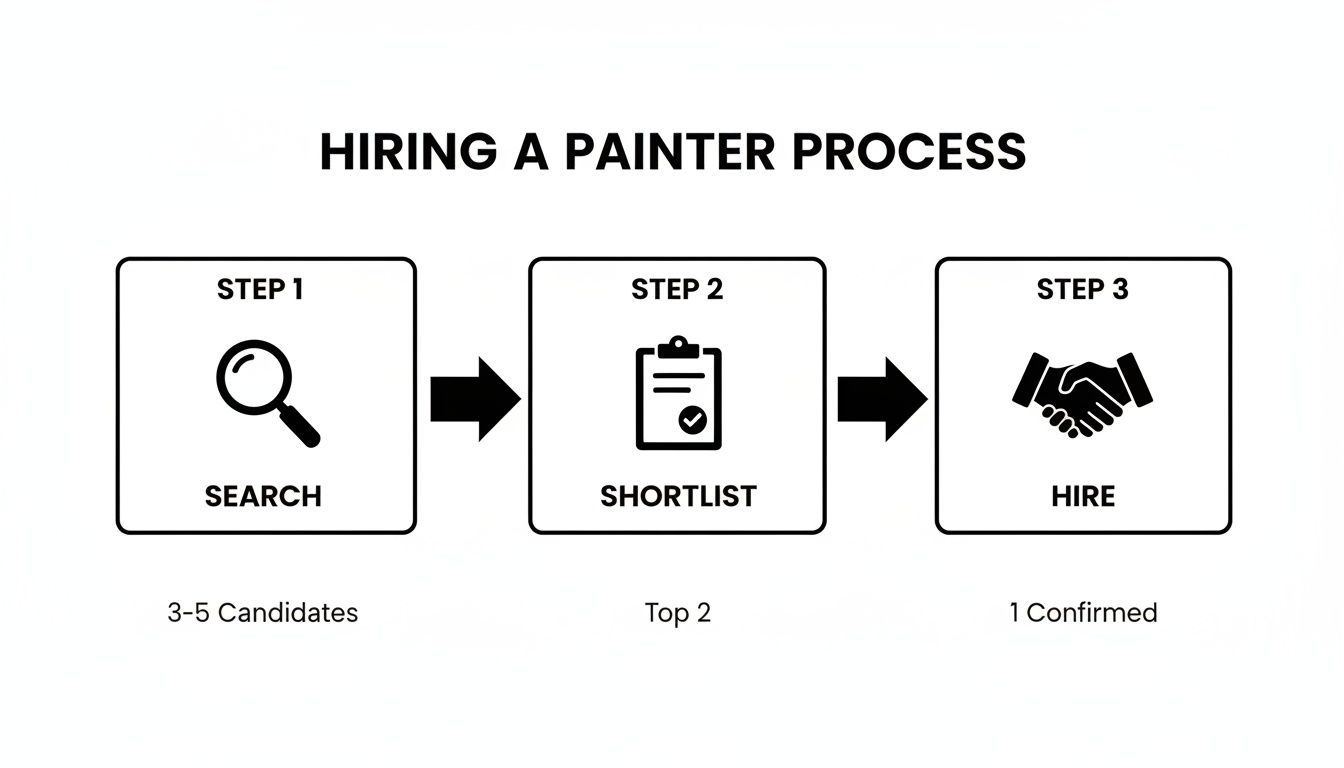
Ultimately, you’re not just hiring someone to paint your house. You’re choosing a partner to protect and enhance one of your most valuable assets.
Your Essential Vetting Checklist for Painting Companies

After you have reduced your list of potential painters to just a few, make sure to carefully evaluate them by doing the following things: verify if they have proper licenses and insurance, look at their reviews and get local references, and inquire about their painting process and materials. Doing this comprehensive evaluation will give you the utmost protection for your house, your investment, and your tranquility.
Don’t let a slick website fool you. Carefully follow each vetting step; verify insurance, review their track record, and interview past clients. Each part of this process separates a true professional from a risky hire. Your diligence ensures your high-visibility project goes smoothly.
First Things First: Licensing and Insurance
Every single professional painter worth their salt will carry the proper licensing and insurance. These aren’t just “nice to have”; they are absolute must-haves that protect you from massive financial and legal headaches.
Here’s exactly what you need to ask for:
- Proof of General Liability Insurance: This is what covers any accidental damage to your property. If a painter knocks over a can of paint on your brand-new floors or a ladder goes through a window, their liability policy pays for it, not your homeowner’s insurance.
- Proof of Worker’s Compensation Insurance: This one is critical. If a painter falls and gets injured while working on your property, this policy covers their medical bills and lost wages. Without it, you could be held liable.
Think about it: a painter slips on your deck while power washing. A legitimate, insured company handles it through its workers’ comp. An uninsured painter? They might have no choice but to sue you to cover their expenses. Understanding the critical importance of proper insurance when hiring a contractor is a non-negotiable part of this process.
The difference between a fully insured pro and an uninsured contractor is night and day. This table breaks down why it matters so much.
| Credential | Vetted Professional | Unvetted Contractor: Risky Hiring |
| Worker’s Compensation | Has a current policy that protects you from liability for injuries. | No coverage; you could be sued if a worker gets hurt. |
| General Liability Insurance | Has a current policy that shields you from harm to your stuff. | You are responsible for any accidents they cause; there is no coverage. |
| Local References | Gladly offers a list of satisfied local customers. | Vague, gives outdated references, or is unable to supply any. |
| Online Reviews | Consistent positive feedback with professional responses. | Few reviews, negative reviews, or scores that appear flawless. |
| Portfolio | Displays several finished projects that are comparable to yours. | Limited examples or low-quality photos. |
Seeing it laid out like this makes the choice pretty clear, doesn’t it? A few minutes of due diligence now can save you from a world of trouble later.
Digging Into Their Reputation; Online and Off
With the insurance paperwork confirmed, it’s time to find out what past customers really think. A company’s track record is the best predictor of the experience you’re going to have.
Start by checking out their online reviews on Google, Yelp, or even Nextdoor. You’re looking for patterns. Are customers consistently raving about their communication, cleanliness, and attention to detail? A few bad reviews aren’t necessarily a deal-breaker, especially if you see the owner responding professionally to try and make things right.
Pro Tip: Don’t just scan the 5-star and 1-star ratings. The most insightful feedback often lies in the 3- and 4-star reviews, where people tend to offer a more balanced view of the pros and cons.
Next, ask for local references, and then actually call them. A portfolio shows off a painter’s highlight reel, but a quick chat with a recent client tells you the whole story. For a deeper dive, our guide on how to hire painters for your property with 12 essential tips has even more questions to ask.
With the U.S. house painting market recently hitting $24.4 billion, it’s clear this service is a major investment for the 147.8 million homes across the country. Here in Colorado, communities like Westminster, which means finding a reputable crew who can deliver work that stands up to our harsh weather, are more important than ever.
Key Questions to Ask Before You Hire a Painter

Think of it as an interview. You’re not just hiring someone to slap on some paint; you’re trusting a team with your biggest investment. Their answers will tell you everything you need to know about whether they’re the right fit for your home.
Questions About the Process and Preparation
How a painting crew handles the “before” and “after” is often more telling than the painting itself. A truly professional job is built on meticulous prep work, and a clear cleanup plan shows they respect you and your property.
Here’s what you need to ask:
- How will you protect my floors, furniture, and landscaping? A vague “we’ll use drop cloths” isn’t good enough. A pro will detail their strategy: rosin paper on hardwood, plastic sheeting over furniture, and specific plans to cover or work around delicate plants and outdoor fixtures.
- What’s your exact surface preparation process? This is a big one. They should be able to walk you through their steps, like power washing, scraping, and sanding all peeling areas, and applying the right primer. For Colorado homes, a follow-up question is key: do they inspect for and repair minor hail dings or sun-damaged wood?
- What’s your daily cleanup routine like? One professional crew doesn’t simply wait for the final day to do their cleaning. They should be able to keep their workspace neat every day by organizing their tools and containing debris. Thus, the disruption to your daily life is minimal.
A painter who geeks out about their prep work is a huge green flag. Pros know that 70-80% of a high-quality paint job is what happens before the first finish coat ever goes on. If they rush through this topic, they’re likely cutting corners where it counts the most.
Questions About Materials and People
The paint on the walls and the people applying it are the two other pieces of the puzzle. You need to know exactly what products they’re using and who, specifically, will be working on your home. This is crucial for a finish you’ll love for years.
- Could you specify the paint brands you would suggest and give the reasons? This is quite crucial in cities like Boulder and Lakewood because of our severe UV exposure. A well-informed painter will suggest top-notch acrylic latex paints and educate the customer on how these paints can resist the effects of high-altitude sun and temperature changes.
- Will my project be done by your employees or subcontractors? Either answer can be fine, but you need to know who is ultimately responsible. If they do use subs, the crucial follow-up is: “Are they covered by your company’s liability and workers’ comp insurance?”
- Who will be my main point of contact? Nothing is more frustrating than not knowing who to call. You should have a direct line to a project manager or crew leader who can provide updates and answer questions as they arise.
A great paint job involves much more than just painting. For a full breakdown, check out our guide on what is included in exterior house painting services. Asking these questions upfront ensures you find a local company that’s committed to transparency and a job well done.
How to Decode Estimates for Colorado’s Climate
After you’ve gathered a few painting estimates, the temptation to jump on the lowest price is real. I get it. But here in Colorado, I can tell you from experience that the cheapest bid is often the most expensive mistake you can make.
A shockingly low quote is usually a sign that corners are being cut, whether it’s skimping on crucial prep work or using subpar materials. That’s a recipe for a paint job that will blister and peel under our intense sun and heavy snow, forcing you to repaint far sooner than you should.
A real professional’s estimate isn’t just a number; it’s a transparent roadmap for your project. It should be detailed and itemized, so you know exactly where your money is going. Vague descriptions like “exterior prep” or “paint house” are major red flags.
Look for Itemized Details, Not Just a Total
A trustworthy quote from a local painter will break down the costs, showing you precisely what you’re paying for. This level of detail proves they’ve actually assessed your home’s specific needs instead of just pulling a number out of thin air.
Here’s what a solid, comprehensive estimate should always include:
- A Detailed Scope of Work: The quote must clearly list every single surface getting painted; siding, trim, fascia, soffits, doors, window frames, everything.
- Clear Labor Costs: Labor is almost always the biggest chunk of the price, and the estimate should state that cost clearly.
- Specific Material List: This is a big one. The estimate must name the exact brand and type of primer and paint. Seeing “Sherwin-Williams Emerald Exterior Acrylic Latex” is a great sign; seeing “high-quality paint” is not.
- Number of Coats: It should specify at least one full coat of primer and two finish coats. This is non-negotiable for durability, especially on Colorado exteriors.
An estimate that gives you a single lump-sum price makes it impossible to compare apples to apples with other bids. A detailed, itemized quote is the hallmark of a transparent, professional contractor who is confident in their work and their pricing.
Why Colorado Demands Specific Materials
Our state’s climate is notoriously hard on home exteriors. The wild temperature swings make paint expand and contract, leading to cracking. High-altitude UV radiation pulverizes paint pigments, causing them to fade in record time. And, of course, there’s the hail.
This is why the materials section of your estimate is so critical. Any painter who truly knows their stuff in Colorado will recommend specific products built to withstand these challenges.
- For Siding: A premium 100% acrylic latex paint is the gold standard around here. It has the flexibility to withstand our freeze-thaw cycles without cracking and contains UV inhibitors to protect against the relentless sun.
- For Decks and Fences: You absolutely need a high-quality, UV-blocking stain. It works by penetrating the wood to shield it from moisture and sun damage, helping prevent the gray, splintered look so common in our dry climate.
- For Prep Work: The quote must list out the prep process. Look for power washing to remove dirt and mildew, scraping and sanding all failing paint, and applying a quality bonding primer to ensure the new paint actually sticks.
Skipping any of these steps to offer a lower price is a disaster waiting to happen. That “great deal” won’t feel so great when your brand-new paint job is peeling in just a couple of years.
Understanding such details also enables you to comprehend the actual value concealed behind the figures. You can discover more about the various components of the total in our guide to the cost of house painting. At the end of the day, a good, well-explained estimate serves as a shield for both you and the painter, being the mark of a great, durable finish that is genuinely made for Colorado.
From Prep Work to the Final Walkthrough: What to Expect
Okay, so you have put your signature on the contract, and your project is officially underway. This is really when the work begins. Being aware of what happens next can really help you worry less, so let’s go over the typical process from the beginning till the end.
Essentially, your role in the prep work is quite straightforward yet very crucial. The majority of painting teams will request that you take care of the little, personal items; items like pictures, lamps, ornaments, and electronic devices. Clearing these away from the working area well in advance is an enormous assistance.
Also, it would be wise to devise a plan for keeping kids and pets safe and out of the way. In case you need a thorough checklist, we offer an excellent guide on how to prepare your house for professional painters.
How the Pros Get Ready to Paint
Once you’ve done your part, the crew takes over. This is where you can really see the difference between a so-so painter and a true professional. The quality of the final paint job is almost entirely dependent on how well they prep the space. It’s so much more than just throwing down some drop cloths.
Here’s what a meticulous prep process looks like:
- Covering Everything: Your furniture gets moved to the center of the room and draped in plastic. Floors are covered with heavy-duty drop cloths or rosin paper to protect them from any drips or spills.
- Perfecting the Surface: This is arguably the most crucial step. The team will go through and fill every nail hole, caulk any gaps or cracks in the trim, and sand down rough patches. The goal is to create a perfectly smooth canvas for the paint.
- Priming When Necessary: Any new drywall, patched areas, or walls with dark, dramatic colors will get a coat of primer. This ensures the new paint sticks properly, and the final color looks rich and consistent.
The demand for this level of professional work is growing. While residential painting nearby is a huge market, commercial painting services are expanding at a 6.5% CAGR. Pros now account for 63% of all paint in the U.S. market, valued at a whopping $33.4 billion.
People are choosing to hire experts because they deliver durable, beautiful results; something that’s especially critical here in Colorado, where our weather demands the best materials and application. You can dig into more painter marketing statistics and trends on amraandelma.com.
The Final Coat and the All-Important Walkthrough
Now that all the preparation work is over, it is the moment to add color. The team will put on the top layers of a finish, normally two to provide the best coverage and longevity. A competent project manager will regularly update you with their progress so you are always aware of what is going on.
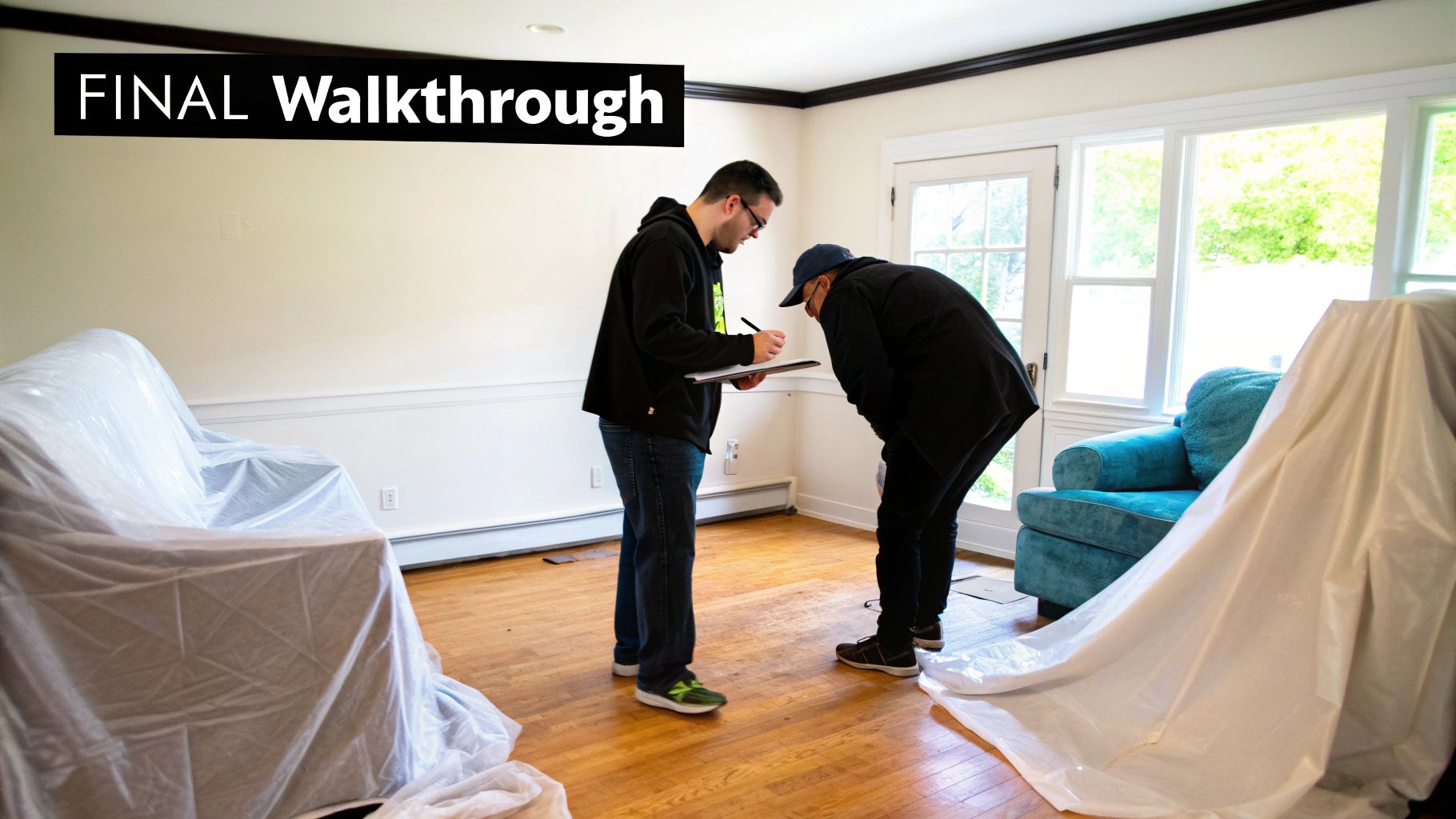
The final walkthrough is more than a formality; it’s your last and greatest chance to check if everything is up to your standards. Never let anyone hurry you through this part. Take all the time you need to examine the work in various lighting conditions.
This isn’t something you do alone. You and the crew leader will walk through the entire space together. You’ll be looking for any drips, missed spots, or sloppy cut-in lines along the trim. Any reputable painter will expect to create a “touch-up list” and will gladly fix any minor imperfections before they even consider asking for the final payment. That commitment to getting it right is the sign of a true pro.
Have You Got Questions? We’ve Got Answers!
Even after you’ve done your homework, vetted a few painters, and looked over their bids, it’s natural to still have some lingering questions. This is a big investment, after all. Feeling completely confident in your decision comes from getting straight answers.
Homeowners around Denver routinely ask us excellent questions. We thought we would share a few that come up most frequently, plus some straightforward answers.
How Long Should an Exterior Paint Job Last in Colorado?
This is the big one. If you are in Colorado, a professionally done exterior paint job could still realistically last you around 5 to 7 years. Don’t get me wrong, our weather is tough; the sun at high altitude is very harsh, and the continual freezing and thawing cycles really cause a lot of wear and tear on the paint.
Honestly, the biggest determining factor for that timeline is preparation. A painter who neglects cleaning, scraping, and priming is essentially killing the new paint even before it is taken out of the can. High-end paint is useless if the surface is not prepped properly; then the new layer of paint will not adhere well and will fail quickly.
It’s not just about the paint; it’s about the painter. Meticulous prep work is the secret sauce to a paint job that can actually stand up to Colorado weather.
What’s the Difference Between a Quote and an Estimate?
Great question. People throw these terms around as if they mean the same thing, but they absolutely don’t, and the difference is critical for you as a homeowner.
An estimate is basically a rough figure. It’s informed speculation, and if the workers encounter something unplanned they can change the estimate, for example, if after scraping the surface they find hidden wood rot.
A quote, however, is a firm price for the specific scope of work detailed in the agreement. It’s a promise. For your own protection, you should always insist on getting a detailed, written quote that breaks down all the costs. This is how you avoid nasty surprises on the final bill.
Do I Need to Be Home While the Painters Are Working?
That really depends on the project and what you’re comfortable with.
- Exterior Painting: For most exterior jobs, you don’t need to be there. As long as the crew has access to a water spigot and an outdoor power outlet, they can get everything done while you’re at work.
- Interior Painting: This is more of a personal call. Many homeowners feel fine letting the crew in and then leaving for the day. Others prefer to be around.
The main point here is to hire a company you can trust; one that is fully insured and has a good reputation. Just talk to your project manager before the project to sort out the details and make a plan everyone agrees on.
Final Thoughts
Ready to transform your Colorado home with a flawless, long-lasting paint job? The team at I PAINT STUFF is here to help. We combine meticulous prep work with premium materials to deliver stunning results that protect your investment. Get your fast, free, and honest estimate today by visiting us at https://yourpaintingpro.com.
Frequently Asked Questions
How can I get an accurate estimate for painting my home in Colorado?
Obtain several quotes from local painters and compare the prices. A detailed estimate should include the breakdown of labor, materials, preparation work, and other costs such as repair or primer. Besides, remember to ask for a cost breakdown.
Are there any specific Colorado regulations or weather considerations when painting a home?
Of course! Since Colorado’s atmospheric conditions vary drastically, it is critical for painters to grasp how changes in temperature and humidity influence the drying times and finish quality. I think it would be nice if you ask them about their ways of managing such circumstances when working in your neighborhood.
How long will it take to paint my home?
The clutter period for a project really varies with the size of the house, the number of rooms to be painted, and the kind of paint used. Typically, painting the inside can take 2-5 days, whereas painting the outside might need 1-2 weeks. It is a good idea to get a tailored time frame from the contractor for your job.
Can a local painting company help with both interior and exterior projects?
Yes, a lot of local painters provide both interior and exterior painting services. Make sure the contractor is familiar with the kind of painting you require (like drywall, stucco, wood, or siding) before hiring him.
What types of paint are best for Colorado homes?
For outdoor projects, try to find paints that are both weather-resistant and capable of withstanding the intense sun and temperature changes in Colorado. Consult with your painting company about the different options available for UV protection and durability, e.g., acrylic or elastomeric paints.
What should I do if I’m not satisfied with the paint job?
Most professional painting companies, I PAINT STUFF included, offer a satisfaction guarantee. You can contact the contractor with your concerns if the work doesn’t meet your expectations. A trustworthy company will work with you to fix any problems.
