

Painted oak cabinets usually retain visible grain unless the preparation includes a separate grain-filling process. Primer and paint change the color, but they do not automatically level oak’s open pores; even filled oak needs an approved sample rather than a promise of a completely texture-free surface. For a Denver cabinet-painting project in 2026, decide how much grain you will accept before approving the estimate.
- Cabinet painting Denver oak cabinets: expect visible grain unless grain filling is explicitly included in the preparation.
- Yourpaintingpro offers cabinet painting for Westminster and surrounding Denver-metro homeowners; approve the finish before authorizing the full project.
- Compare grain-retained and grain-filled finishes on an actual oak door, not just a smooth color sample.
- Cleaning, adhesion preparation, stain-blocking primer and grain filling address different problems; none replaces the others.
Why this matters
A smooth coating is not the same as a grain-free surface. Paint can feel smooth across the raised wood while leaving the pores visible. If you expect a flat-looking door and the painter expects to preserve oak’s texture, both of you can approve the same color while imagining different results.
Before accepting a 2026 proposal, separate the finish expectation from the color choice. The same principle applies when you compare estimates from interior painters in Westminster: compare the preparation and included surfaces, not just the final figure.
When painting oak cabinets in Denver, will the grain show?
Yes. Oak grain normally remains visible after painting unless the painter specifically works to fill and level the pores. An opaque coating hides the wood’s color variation, but light can still reveal the physical texture beneath it.
Oak has an open-pore structure. Those recessed areas are part of the wood, not simply scratches in the old finish. Sanding can remove roughness and prepare the existing coating, but ordinary sanding does not turn oak into a closed-grain surface.
There are two finish approaches to discuss. Neither is automatically the right choice; each serves a different expectation.
| Finish approach | Best for | What you should expect | Advantage | Limitation |
|---|---|---|---|---|
| Grain-retained paint finish | Homeowners comfortable with oak texture beneath a new color | A painted surface with pores and grain still apparent | Avoids a separate pore-leveling process | Does not deliver a flat, grain-free appearance |
| Grain-filled paint finish | Homeowners who want reduced grain visibility | Less pronounced pores after filling, sanding and coating | Produces a more even-looking surface | Adds preparation and still requires an approved sample |
Grain treatment does not determine adhesion by itself. A grain-retained finish can still involve careful cleaning and proper bonding preparation. A grain-filled finish can still fail if contamination or an incompatible coating system remains underneath.
Grain-retained finish: expect oak texture beneath the paint
Choose a grain-retained finish when you like the cabinet construction and can accept visible wood texture. This is not the same as accepting brush marks, sanding scratches or drips. Natural grain and application defects are different things.
On a painted oak door, you can see a shallow pattern following the wood even when the coating is evenly applied. Inspect that pattern separately from rough edges, debris trapped in the finish or uneven coverage.
Ask the painter to describe the intended result plainly: will the pores remain visible, and what preparation will remove existing dirt, gloss and defects? A proposal that says only cabinet painting leaves this expectation unsettled.
This approach suits a homeowner who wants painted cabinets without requiring the wood to look like a different material. Its limitation is appearance: additional paint alone is not a reliable substitute for pore filling.
Grain-filled finish: expect reduced texture, not a blanket promise
Choose a grain-filled finish when visible oak pores would bother you after painting. The preparation needs to address the recesses in the wood, not merely cover the existing finish.
Grain filler is different from spot filler used on a screw hole or damaged corner. Its purpose is to reduce the open-pore texture across the intended surfaces. The painter should explain where it will be applied and how the surface will be leveled afterward.
Ask for a sample, not the phrase factory finish. That phrase does not establish an acceptance standard. A completed sample shows what the proposed materials and preparation actually produce on your cabinet wood.
Grain filling also does not erase every joint, profile or construction detail. Door panels, rails and edges can retain their own characteristics. If a painter proposes filling joints as well as pores, ask how that treatment accommodates normal wood movement rather than treating every line as a defect.
Why visible oak grain varies
The amount of grain you notice depends on the surface and the viewing conditions. Discuss these factors before settling the preparation scope:
- Pore depth and wood pattern. Open pores and grain patterns differ across individual oak pieces. A sample from one door does not make every door identical.
- Previous finish and contamination. Old coatings, kitchen grease and cleaning-product residue affect preparation and adhesion. They need attention before cosmetic leveling.
- Extent of grain filling. Filling only door faces creates a different result from treating exposed frames and end panels as well.
- Sanding and leveling. Filler left proud of the wood or sanding scratches left behind can remain visible through the finish.
- Coating sheen. Reflected light changes how readily you see surface texture. Compare the actual sheen you intend to use.
- Lighting and viewing angle. Light across the face of a cabinet reveals texture differently from light directed straight at it.
A Denver address does not change oak’s pore structure. Local project planning still needs to account for the home, work area and product application requirements, but those considerations do not replace grain preparation.
How should you approve an oak cabinet sample?
For your 2026 project, request 1 sample door prepared with the proposed process before authorizing every cabinet surface. Use an existing door where practical so the test includes your wood, previous finish and door profile.
Agree on whether sample preparation is part of the estimate. The important point is not simply getting a painted object; it is verifying the same preparation, primer, finish and sheen proposed for the job.
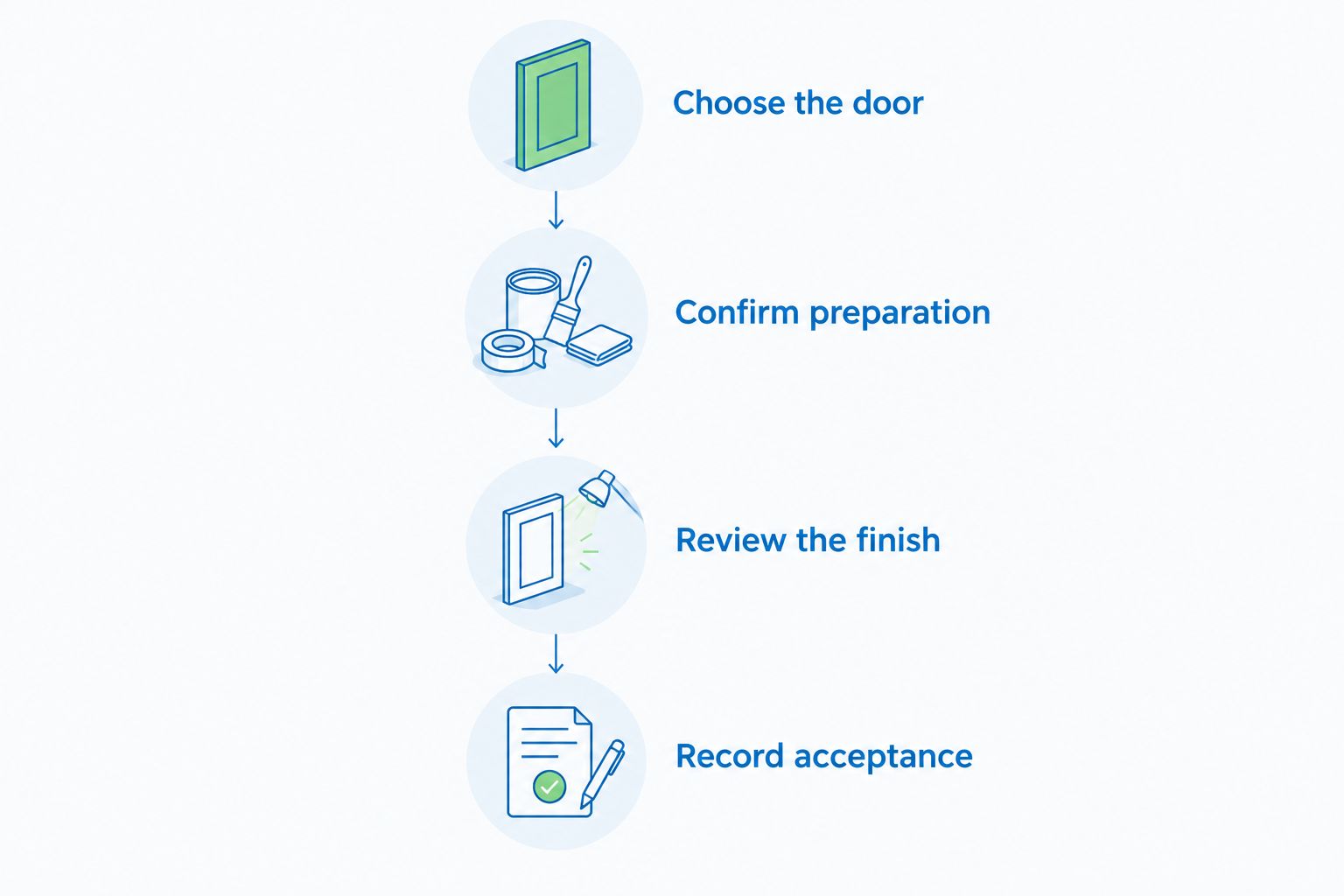
- Choose the door. Select a door with representative grain and details. Point out any unusually deep pores elsewhere so they are not overlooked.
- Confirm preparation. Ask whether the sample will be cleaned, prepared for adhesion and grain-filled using the intended process.
- Review the finish. Look at the sample in your kitchen lighting, both straight on and from an angle.
- Record acceptance. Document whether you accept the remaining grain and keep the sample available for comparison.
Inspect 3 areas on the sample door: the flat face, the profile and the edge. A flat face alone does not show how the painter will handle recessed details or exposed edges. Check the areas you actually see when the door is open as well as when it is closed.
Do not judge final durability by touching a newly applied coating. Drying and curing are different stages. Follow the coating manufacturer’s handling instructions and ask the painter when the sample is ready for meaningful inspection.
What should your cabinet-painting estimate include?
Compare 2 written scopes if you are deciding between retained grain and reduced grain. Keep the included cabinet surfaces consistent so you can identify what changes when grain filling is added.
A useful 2026 cabinet-painting estimate should establish the following responsibilities:
- Included surfaces: Door fronts and backs, drawer fronts, exposed frames, end panels and any cabinet interiors you want painted.
- Cleaning and adhesion preparation: How grease, residue, loose finish and existing gloss will be addressed.
- Repairs: Which chips, dents, damaged edges and previous hardware holes are included.
- Grain treatment: Whether pores remain visible or grain filling is included, and on which surfaces.
- Primer and finish: The proposed coating system, sheen and approach to stain blocking where needed.
- Property protection: How floors, counters, appliances and nearby rooms will be protected.
- Removal and reassembly: Who removes, labels, stores and reinstalls doors, drawers and hardware.
- Acceptance and care: The sample standard, final inspection process and instructions for using the cabinets afterward.
The application method also belongs in the discussion. Ask which surfaces will be sprayed, brushed or rolled and where that work will happen. Spraying alone does not guarantee hidden grain, and the word sprayed does not explain the underlying preparation.
Yourpaintingpro is a cabinet-painting option for Westminster homeowners who want professional painting rather than cabinet replacement. Before hiring Yourpaintingpro, confirm the grain-treatment scope and sample standard; the cabinet-painting service description does not establish those project-specific details.
Request a painting estimate
Discuss your oak grain expectations, included surfaces and preparation before approving cabinet painting.
What should happen before oak cabinets are painted?
Cleaning comes before adhesion preparation. Sanding a greasy surface is not a substitute for removing contamination. Ask the painter how the preparation process will handle areas around handles, cooking appliances and frequently touched edges.
The existing finish also needs evaluation. Peeling, flaking or poorly bonded coatings cannot become sound merely because new primer covers them. The scope should explain how unstable material and damaged areas will be addressed.
Primer and grain filler have separate jobs. An appropriate primer supports the coating system and addresses relevant adhesion or stain-blocking needs; grain filler reduces pore texture. Do not accept one as an automatic replacement for the other.
Oak can produce tannin staining through unsuitable coatings. Ask how the proposed system addresses bleed-through rather than assuming extra finish coats will solve it. Material compatibility matters throughout the process, including between filler, primer and finish.
For homeowners in Westminster, Thornton, Northglenn, Broomfield, Boulder, Superior and Lafayette, these are useful hiring questions regardless of kitchen size. Confirm service coverage and the specific preparation offered when requesting an estimate.
Will spraying oak cabinets hide the grain?
Spraying changes how the coating is applied, not whether oak’s pores have been filled. It can produce an even application, but recessed grain remains a surface-preparation issue.
Ask to see the proposed sprayed finish on the approved oak sample. A photograph of a different cabinet material does not demonstrate how your oak will look.
Can you paint oak cabinets without grain filler?
Yes, oak cabinets can be painted without grain filler if you accept visible texture. Cleaning, adhesion preparation and a suitable coating system still matter.
Put that acceptance in writing. The painter should not interpret permission to retain grain as permission to leave application defects or skip preparation.
Does grain filling fix damaged cabinet doors?
No, grain filling addresses pores; it does not replace repairs to damaged cabinet components. Loose joints, split wood, swollen material and damaged hinges need separate evaluation.
Identify those issues during the estimate. Decide whether they will be repaired, excluded or handled before painting starts.
FAQ
Will oak grain still show after my Denver cabinets are painted?
Yes, oak grain normally remains visible unless the preparation includes grain filling and leveling. Approve a completed sample to establish how much texture is acceptable.
What’s the best finish approach if I dislike oak texture?
A grain-filled paint finish is the better match when you want reduced pore visibility. It requires a specific preparation scope and does not justify a promise that every surface will look completely texture-free.
Is spraying better than brushing for hiding oak grain?
Spraying does not replace grain filling for hiding oak pores. Compare the intended application method on an actual oak sample rather than assuming spray application removes texture.
Should oak cabinets be cleaned before sanding?
Yes, remove grease and contamination before adhesion preparation. Sanding alone does not clean a kitchen cabinet surface.
Do oak cabinets need stain-blocking primer?
Oak can produce tannin bleed-through, so the coating system needs to address staining where relevant. Ask the painter which primer is proposed and how its compatibility with the finish will be confirmed.
Can I approve the finish using a color swatch?
No, a smooth color swatch does not show painted oak texture. Use a prepared oak door with the proposed grain treatment and sheen.
What should I ask Yourpaintingpro about cabinet painting?
Ask Yourpaintingpro whether the estimate includes grain filling, an oak sample, door backs, exposed frames and property protection. Confirm those details before approving the cabinet-painting scope.
One last thing
For a 2026 oak cabinet project, make the acceptance statement about texture as clear as the color selection. Write either that visible oak pores are accepted or that grain will be reduced to match the approved sample.
Keep the sample until the final inspection. It gives you and the painter a shared reference when lighting makes one door look different from another. A physical standard is more useful than arguing over whether smooth meant smooth to the touch or smooth to the eye.
Related guides