

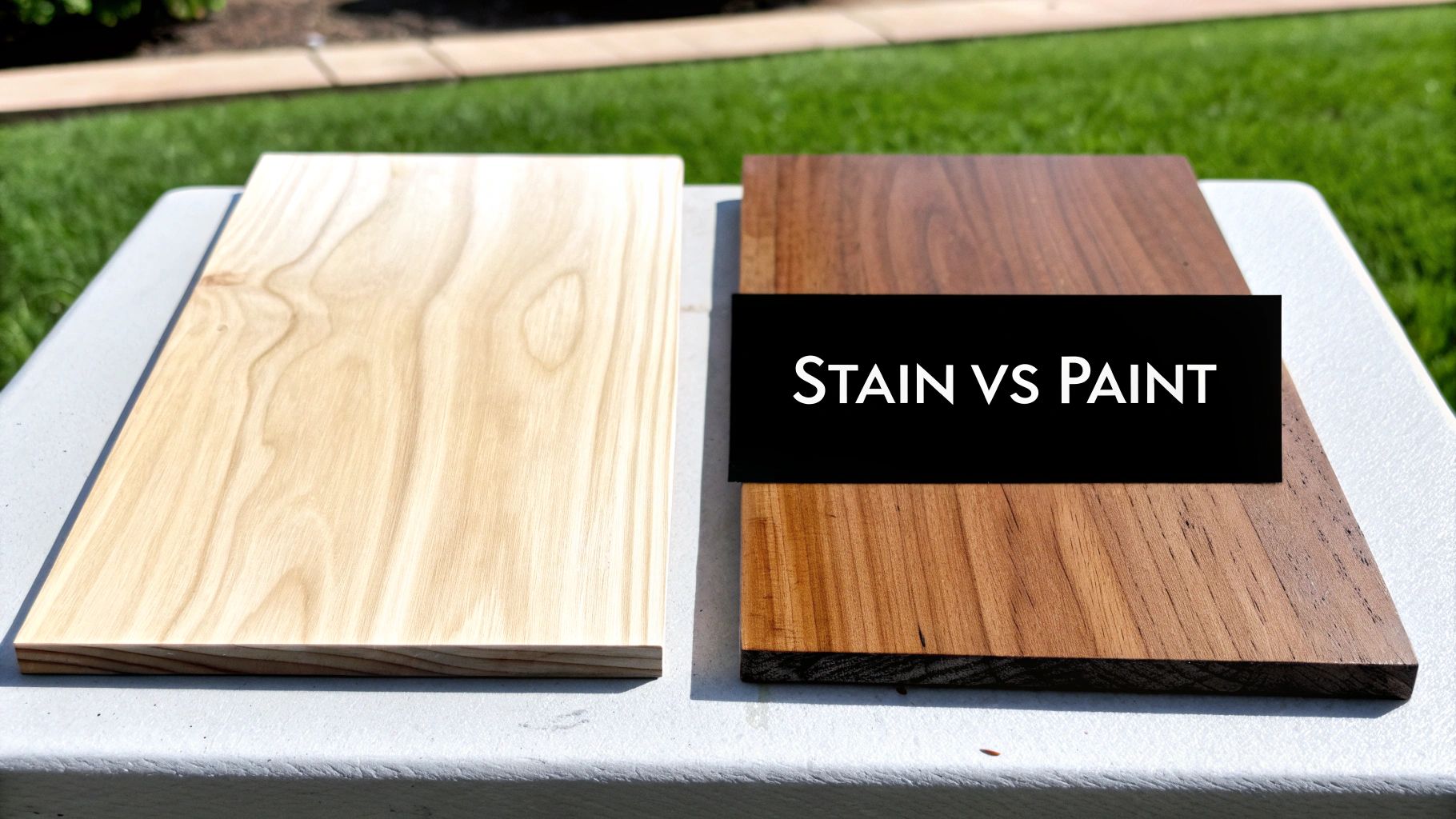
Choosing between solid stain and paint really comes down to one core difference: solid stain soaks into the wood, while paint lays on top of it. It sounds simple, but for homeowners from Boulder to Arvada, this distinction changes everything—from the final look of your kitchen cabinets to how the finish holds up over time.
Choosing Between Solid Stain and Paint
When you're picking a finish for a project here in the Denver metro area, it’s not just about the color chip. It's about performance. Our intense Colorado sun and wild temperature swings demand a coating that won't give up after a season or two. Whether you’re giving kitchen cabinets in Federal Heights a new look or protecting the siding on your home in Wheat Ridge, getting this choice right is the first step to a great result that lasts. For an interior job, like painting kitchen cabinets in a Sherrelwood home, the right choice means getting a durable, washable surface that can handle daily use.
Paint forms a thick, solid film that completely hides the surface underneath. This gives you a clean, uniform look and top-notch protection. On the other hand, a solid stain also provides an opaque color but in a much thinner coat that allows it to penetrate the wood. Because of this, the natural texture of the wood grain still shows through—a look many homeowners in places like Twin Lakes and Broomfield really love.
Key Differences at a Glance
Before we get into the weeds, let's look at a quick side-by-side comparison. This table breaks down the essential differences to help you decide, whether you're working on an interior job like kitchen cabinets or thinking about your home’s exterior. It's the perfect starting point for homeowners anywhere from Thornton to Commerce City.
Quick Comparison: Solid Stain vs Paint
| Attribute | Solid Stain | Paint (Acrylic) |
|---|---|---|
| Appearance | Opaque color with visible wood texture. | Completely opaque, smooth, and uniform film. |
| How it Works | Penetrates wood fibers, becoming part of the surface. | Forms a thick, protective film on top of the surface. |
| Best for Cabinets | Excellent for showing new wood grain; resists chipping. | Ideal for modernizing old cabinets and covering flaws. |
| Common Failure | Fades gradually over time. | Can crack, chip, or peel, especially with movement. |
| Maintenance Prep | Typically requires just a thorough cleaning before recoating. | Often requires scraping, sanding, and priming to repaint. |
| Durability | Breathes with the wood, making it less prone to peeling. | Creates a durable, wipeable surface that can be scrubbed. |
As you can see, there's a clear trade-off. For example, a homeowner in Berkley might pick paint to get a flawless, modern finish on older kitchen cabinets. But someone in Welby with brand-new wood siding might go with a solid stain to keep that natural texture while still getting great protection. It all boils down to your specific surface, the look you’re after, and how much work you want to put in down the road.
How Each Finish Actually Works
To really get to the bottom of the solid stain vs. paint debate, you have to look past what’s on the can and understand how each one is designed to do its job. The core difference is in their chemistry and how they interact with wood—a crucial detail for anyone from Sherrelwood to Wheat Ridge looking for a finish that can handle Colorado's tough climate. One sinks in and bonds with the wood, while the other creates a protective shell on top.
Solid stain is just fundamentally thinner than paint. Its main purpose is to soak deep into the wood's pores. Think of it less like a coating and more like a high-pigment dye that becomes part of the wood itself. This deep penetration is its secret weapon, especially in our dry climate here in Denver and Boulder.
The binders in a good solid stain are also made to be flexible and breathable. This is huge because it lets the wood expand and contract with our wild temperature swings without the finish cracking or blistering. It also means moisture vapor can escape instead of getting trapped underneath, which is what leads to rot—a massive plus for any exterior work in our state.
The Science Behind Solid Stain
The real magic of a solid stain is its unique recipe of pigments and binders. It packs enough pigment to give you that rich, solid color you want, but it's thin enough to really soak in.
- Penetrating Binders: Most use oil or acrylic resins that literally carry the pigment deep into the wood's grain, creating a bond that just doesn't want to peel.
- High Pigment Load: Solid stains are loaded with pigments that provide excellent UV protection, which is non-negotiable for preventing wood from turning grey under the intense Colorado sun in places like Thornton and Arvada.
- Texture Preservation: Because it doesn’t create a thick film, you can still see and feel the natural texture of the wood. This gives you a more organic, less "plastic" look.
If you're in Twin Lakes or Berkley and have new cedar siding or cabinets, a solid stain is perfect. It protects the wood from the inside out while letting its natural character shine through, all while giving you strong color and UV defense.
How Premium Paint Builds Protection
Paint, on the other hand, is built to do the opposite. A premium acrylic paint is engineered to form a thick, solid film that sits right on top of the surface. This film is your barrier, shielding whatever is underneath from moisture, UV rays, and general wear and tear. For interior projects, like kitchen cabinets in Federal Heights, this gives you an incredibly smooth and washable finish.
Modern acrylic paints are a marvel of chemical engineering. Their binders are made of long-chain polymers that create a flexible but tough layer. That flexibility is key—it allows the paint film to stretch and shrink as temperatures change, which goes a long way in preventing cracking. For any home in the Denver metro area, from Edgewater to Commerce City, this is a must-have feature.
The demand for better coatings is always pushing innovation. The entire paints and coatings market was valued at a whopping USD 198.34 billion in 2023, and durable acrylics made up more than 36% of that. That growth is all about making paints with better scrub resistance and stain-blocking for pros and DIYers alike. You can get more details on the evolving coatings market from Mordor Intelligence.
At the end of the day, paint offers a completely different kind of protection. It’s the go-to for hiding imperfections, getting the exact color you want, and achieving a clean, uniform look. For a kitchen in Boulder needing a total refresh, paint's ability to cover old grain and create a smooth, modern surface is an actionable solution for a stunning update.
The Best Finish for Your Kitchen Cabinets
The kitchen is the heart of the home, no doubt about it. It’s a high-traffic zone where durability and style have to go hand-in-hand. When it comes to refinishing your kitchen cabinets, the "solid stain vs. paint" debate is one we see all the time with homeowners from Berkley to Federal Heights. The right choice can completely reinvent your space, but the wrong one can mean dealing with premature chips, stubborn stains, and a lot of frustration.
Your decision really boils down to two things: what condition your cabinets are in now, and the final look you're going for. Paint can give you that flawless, smooth, and modern surface, while a solid stain offers a seriously durable, chip-resistant finish that still lets a little of the wood's natural character show through.

Solid Stain for Natural Texture and Chip Resistance
If you’re working with brand-new or high-quality wood cabinets—think beautiful oak, rustic hickory, or knotty alder—solid stain is a fantastic option. It soaks into the wood fibers rather than just sitting on top. This gives you an opaque color, but you still get to see and feel the subtle texture of the wood grain.
That penetration is stain’s biggest superpower in a busy kitchen. Because the finish is part of the wood itself, it's exceptionally resistant to chipping. An accidental knock from a pot or a stray dining chair is far less likely to leave a glaring mark that exposes bare wood.
- Best for New Wood: It’s the perfect way to add color while showcasing the beautiful grain of new oak, hickory, or alder cabinets.
- Superior Chip Resistance: The formula penetrates the wood, making it incredibly tough against the daily grind of kitchen life.
- Great for Rustic Styles: It’s ideal for achieving that modern farmhouse or rustic vibe in homes from Applewood to Thornton.
Paint for a Flawless, Modern Transformation
For creating a clean, seamless, and contemporary look, paint is the undisputed champion. If you're in Arvada or Wheat Ridge and looking to finally update those dated honey oak or maple cabinets, paint offers a total transformation. It lays down a thick, protective film that completely hides the old wood grain, along with any minor dings or imperfections.
This smooth surface is also a breeze to clean. Grease splatters, fingerprints, and sauce spills wipe right off a quality acrylic paint, which is a non-negotiable feature in any kitchen. When applied professionally with a sprayer, the result is a factory-like finish that looks sleek and sophisticated.
A great example is a kitchen renovation in Federal Heights with older cabinets that have seen better days. Paint is the perfect fix. It covers all the old flaws and provides a fresh, durable, and easily washable surface that makes the whole room feel brand new. To achieve this, an actionable insight for a homeowner in Derby or Lexington is to insist on a sprayed application for a truly professional, smooth finish.
Updating cabinets is a huge part of any kitchen refresh. To get a better handle on the entire process, this comprehensive kitchen remodeling guide is a great resource that covers everything from finishes to layouts.
Key Considerations for Cabinet Finishes
Let's put these two head-to-head on the factors that matter most in the kitchen. This isn't just about color; it's about prep work, long-term durability, and how the finish will hold up in such a demanding environment.
Kitchen Cabinet Finish Head-to-Head
Here's a focused look at what matters most for cabinets—from durability and aesthetics to cleaning and overall value.
| Consideration | Solid Stain on Cabinets | Paint on Cabinets |
|---|---|---|
| Durability | Excellent chip resistance; great for high-impact areas. | Good scratch resistance, but can chip on sharp corners. |
| Aesthetics | Opaque color with visible wood texture; rustic feel. | Smooth, uniform, factory-like finish; modern appeal. |
| Cleaning | Easy to wipe down but texture can trap some grime. | Extremely easy to wipe clean due to its smooth surface. |
| Surface Prep | Requires clean, raw wood for proper penetration. | Can be applied over previously finished surfaces with proper prep. |
| Ideal Use Case | A family in Broomfield with new, textured wood cabinets. | A homeowner in Derby modernizing 20-year-old maple cabinets. |
Ultimately, the best finish depends entirely on your project's specific needs. A homeowner in Northglenn with brand-new cabinets might go for a solid stain to get a durable color that still feels like real wood. On the other hand, someone in Commerce City looking to brighten up a dark kitchen and hide years of wear and tear would find paint to be the superior choice for a stunning and practical update.
Protecting Your Home's Exterior in Colorado
Let's be honest: Colorado's weather is brutal on our homes. That intense, high-altitude sun, combined with wild temperature swings and bone-dry air, creates a punishing environment for any exterior finish. For homeowners from Sherrelwood to Commerce City, deciding between solid stain and paint isn't just about color—it's about protecting your biggest investment from the elements.
The UV radiation we get in places like Arvada and Wheat Ridge is notorious for destroying coatings, causing them to fade, peel, and fail way too soon. A product that works just fine in a milder climate can completely break down here in just a few years. The right choice really comes down to what your house is made of and what you value most in terms of appearance and upkeep.

Solid Stain: The Go-To for Natural Wood Siding
If your home has natural wood siding like cedar or pine, solid stain is almost always the superior choice for our climate. The key difference is this: paint sits on top of the wood like a film, while a solid stain actually soaks into the wood fibers. This one difference is why stain is far less likely to peel and blister under the relentless Colorado sun.
Because it becomes one with the wood, a solid stain is "breathable." It lets moisture vapor escape instead of trapping it against the surface, which is a huge help in preventing rot. When it does eventually wear out, it fades gracefully over time rather than failing in ugly, peeling patches. That makes prep work for the next coat a whole lot easier.
Think of a rustic cedar home in Twin Lakes or a house in Boulder with beautiful wood accents. A solid stain keeps that natural wood texture visible, delivering rich, opaque color that feels authentic to the material while still giving you serious UV protection. It’s the best of both worlds—natural beauty and rugged durability.
There’s a reason wood stains are so popular. The exterior wood stain market in the U.S. was valued at around $2 billion in 2023, with an 88.3% revenue share in its segment. This growth is fueled by people renovating their homes and needing tough, reliable wood preservation. You can dive deeper into the growing wood stain industry on factmr.com.
Paint: The Champion for Fiber Cement and Composites
While stain is king for wood, a top-shelf acrylic paint is the undisputed champion for other common siding materials like fiber cement and engineered wood. Many homes in communities like Northglenn and Thornton use these materials, and they need a different kind of protection.
Paint’s biggest advantage is the thick, flexible film it creates. This protective layer is a fantastic barrier against moisture and UV rays. Modern acrylic formulas are specifically designed to expand and contract with the crazy temperature swings we see from day to night in places like Welby and Derby, which keeps the finish from cracking.
- Ultimate Durability: A quality paint job creates a hard shell that can take a beating from hail and wind-driven rain much better than a thinner stain.
- Color Retention: The pigments in premium paints are made to resist fading, keeping your home in Edgewater or Applewood looking fresh for years.
- Seamless Coverage: Paint is a master at hiding small imperfections, giving your home a clean, uniform look from top to bottom.
Picture a modern house in Broomfield with James Hardie fiber cement siding—that’s a perfect candidate for paint. The paint sticks beautifully to the primed surface, providing a crisp finish and vibrant color that complements the architecture while shielding it from the weather.
In the end, it really is that simple. For natural wood in Colorado, the penetrating, breathable nature of a solid stain is tough to beat. For fiber cement and composite sidings, the protective, flexible film of a high-quality paint delivers the hardcore durability needed to win the battle against our climate.
A Closer Look at Cost, Lifespan, and Maintenance
When you’re weighing solid stain against paint for your project, it’s easy to get fixated on the price per gallon. But for homeowners from Welby to Edgewater, the real story is in the total cost of ownership. We need to look at the whole picture: the upfront investment, how many years you'll get out of it, and what it’s going to take—in both time and money—to keep it looking great down the road.
At first glance, a quality solid stain often has a slightly lower upfront cost than a premium acrylic paint. But the numbers that really matter are how long each finish lasts and how much work it takes to refresh it. Paint, by building a thick, protective film, can give you a solid 7-10 years before it really needs attention. Solid stain is different; it's a thinner, more breathable coating that typically calls for a fresh maintenance coat every 3-5 years to maintain its color and protective qualities.
Analyzing the Total Cost of Ownership
So, if paint lasts longer, it must be the cheaper option, right? Not so fast. The true cost difference between solid stain and paint really shows up when it's time for that first recoat. This is where the prep work creates a huge financial gap, and for anyone in Arvada or Sherrelwood, understanding this is crucial for a smart long-term investment.
- Repainting Prep: When paint starts to fail, it cracks, bubbles, and peels. To repaint it properly, you have to scrape, sand, and feather all those failing areas to get a smooth surface. It’s a ton of work, and that labor is what drives up the cost of every future paint job.
- Re-staining Prep: Solid stain, on the other hand, is designed to fade gracefully over time instead of peeling. This means prepping for a new coat is way simpler. You just need a good power wash to get rid of dirt and mildew, and you’re ready to roll. The savings in labor here are massive.
Here's the key takeaway: Paint might buy you more time initially, but the prep work for each repaint is so intensive that it makes every subsequent cycle far more expensive. Over a 15-year horizon, the simple, low-cost maintenance of a solid stain often makes it the more economical choice in the long run.
Market Factors and Material Costs
Of course, what you pay at the counter is also shaped by a competitive market. Where you buy your materials makes a difference. For instance, Home Depot sells a whopping 36% of all paint units in the U.S., with Lowe’s at 23% and Sherwin Williams stores at 13%.
Interestingly, Sherwin Williams pulls in 31% of the total dollars spent on paint, which tells you people are willing to pay a premium for their products—and that brand loyalty extends to their solid stains, too. These dynamics directly affect what you’ll pay for your project, whether you're in Commerce City or Broomfield. You can dig deeper into these competitive paint and stain market trends on openbrand.com.
So, what does this mean for you? A homeowner in Boulder might decide the smooth, scrubbable finish of paint is perfect for their kitchen cabinets, fully aware that repainting them in a decade will be a bigger job. Meanwhile, someone in Thornton with a sprawling cedar deck will likely choose a solid stain, valuing the easy, low-cost recoats over a slightly longer initial lifespan.
Making the Final Decision for Your Home
So, what’s the right call for your home? The truth is, choosing between solid stain and paint isn’t about which one is universally “better.” It’s about what’s right for your specific project, the surface you're working with, and the look you’re trying to achieve.
Whether you're in Berkley or Arvada, the best choice becomes clear once you weigh the unique strengths of each finish against your own goals. It really boils down to the material, your aesthetic, and how much future maintenance you're willing to sign up for.
Scenario-Based Recommendations for Local Homeowners
Let’s get practical and look at some common projects we see around the Denver metro area. This is where the rubber meets the road.
For New, High-Quality Cabinets: You just installed beautiful new oak cabinets in your Broomfield home. You love the grain but want a solid, durable color. Solid stain is your best option. It soaks into the wood, resists chipping better than paint, and still lets that subtle texture telegraph through.
For Dated or Flawed Cabinets: Now, picture a kitchen in Lexington with maple cabinets that have survived 20 years of use. They’re showing their age. Here, the goal is a total refresh—a modern color that hides dings and scrapes and is easy to wipe down. Paint is the clear winner here. Its thicker film creates that flawless, uniform surface that can make an old kitchen feel brand new.
For a Cedar Deck in Federal Heights: Your deck gets blasted by the Colorado sun, and the last thing you want is a peeling mess. Solid stain is the go-to solution. Because it penetrates the wood instead of sitting on top, it fades gracefully over time. Recoating is a breeze—just a good cleaning and a fresh coat, no scraping required.
For Fiber Cement Siding in Northglenn: Your siding is your home's armor. It needs maximum protection and color that won't quit. Premium acrylic paint is the superior choice. It forms a tough, flexible shield that bridges tiny cracks and holds its color against our intense UV exposure.
This decision tree helps you see the trade-offs between what you pay upfront and what you'll deal with down the road.

As the chart shows, stain might save you some money initially, but you'll be recoating it more often. Paint costs more upfront, but that investment buys you a longer break before you have to think about it again.
When to Bring in a Professional
Figuring out these details—from getting the surface prep just right to achieving a perfect finish—is where calling a pro really pays off. A seasoned painter can spot things you might miss, like how the specific light in your Thornton home will affect a color or which product line will actually stand up to the weather on your Wheat Ridge deck.
A professional painter ensures that every detail, from the initial prep work to the final coat, is handled correctly. This guarantees a beautiful, long-lasting result that is perfectly suited to your home and our demanding Colorado climate.
Ultimately, whether you land on solid stain or paint, getting the right advice ensures your investment is protected and the final product looks exactly how you envisioned it.
Frequently Asked Questions
When you're trying to pick the right finish, a lot of practical questions pop up. It's one thing to read about these products online, but another to apply them to a real-world project, whether it's in Sherrelwood, Boulder, or Federal Heights. Here are some straightforward answers to the questions we get asked most often, especially when it comes to kitchen cabinets and other interior jobs.
Can You Paint Over a Solid Stain?
Yes, you can. That’s one of the great things about working with solid stain. If you have stained cabinets in Arvada or Thornton and decide you want a painted look later, you're in a good position to make that change.
The reason it works is that solid stain soaks into the wood instead of sitting on top like a thick film. This creates a fantastic base for primer and paint to grab onto. But you can't just slap paint on it. Prep work is everything.
- First, you have to clean the surface meticulously. For kitchen cabinets, that means using a strong degreaser to get rid of all the built-up cooking oils and grime.
- Next, you'll need to lightly scuff sand the entire surface. This isn't about removing the stain; it's about roughing it up just enough to give the primer some texture to bite into.
- Finally, use a high-quality bonding primer. Don't skip this step. This is what guarantees your paint job will last for years instead of chipping away.
Can You Apply Solid Stain Over Paint?
This is a much tougher situation, and the short answer is almost always no. Think of it this way: solid stain needs to penetrate the wood fibers to do its job. A coat of paint creates a solid, non-porous barrier, completely blocking the stain from soaking in.
If you try to apply stain over paint, you'll just end up with a sticky, uneven mess that won't dry properly. Eventually, it will just peel right off.
For homeowners in Berkley or Twin Lakes with painted cabinets who dream of a stained finish, there's only one path forward: you have to strip every last bit of paint off. It’s a huge, labor-intensive job to get back to that bare wood.
Is Solid Stain or Paint Better for High-Moisture Areas?
For a bathroom or a humid laundry room in a place like Northglenn, a premium acrylic paint is definitely the way to go. Today's paints designed for kitchens and baths are packed with mildew-resistant additives and are formulated to create a tough, scrubbable surface.
This painted film acts as a shield, preventing moisture from ever reaching the wood underneath. While solid stain is breathable, it just doesn't provide that same level of watertight protection needed to stand up to daily steam and splashes. In these high-demand spots, paint is the more durable and practical choice.
Ready to get a flawless finish without all the guesswork? The team at I PAINT STUFF can help you choose and apply the perfect coating for your kitchen cabinets or interior spaces, ensuring a beautiful result that lasts. Schedule your free, no-obligation estimate today!
