
What is The Difference Between Interior and Exterior Paint: A Practical Guide
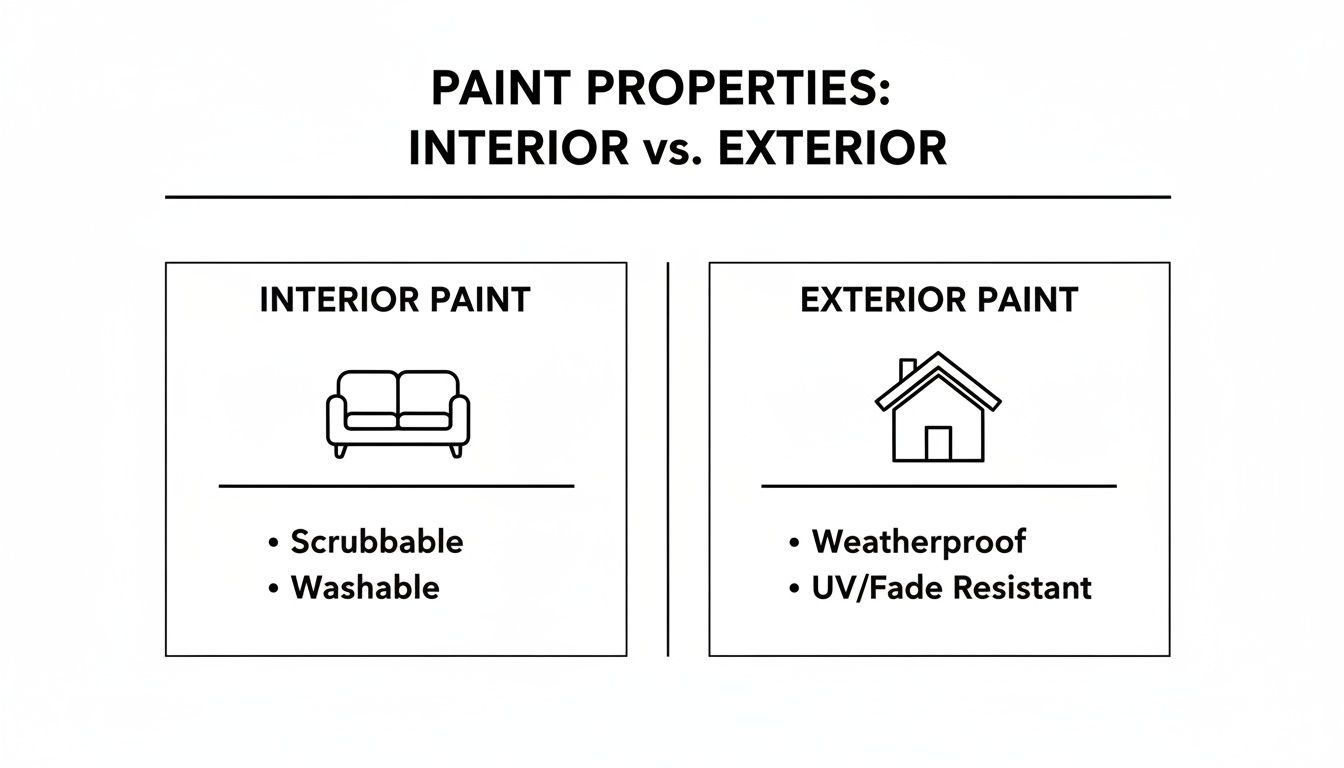
The main difference between interior and exterior paint is mainly the different uses they have, to put it simply! Exterior paint, in fact, is like a thick and water-resistant coating that protects your house against different kinds of weather, while interior paint is made to be more resistant to scuffs and dirt and to be friendly for use inside a house.
To illustrate, exterior paint can withstand snow and the glare of the sun, whereas interior paint gets dirty, is cleaned, and helps maintain a healthy indoor environment.
Understanding Your Paint: The Foundation of a Flawless Finish
While it may appear to be very clear, choosing the incorrect paint tin is one of the errors that might cause you to feel exasperated and finally have to make expensive repairs.
Consider painting the outside of your home to give it a strong suit of armor. Exterior paint consists of flexible acrylic resins and other components that make it capable of changing size and shape under extreme temperature variations, like those in Colorado. The capability of the paint to stretch and retract is vital to it not developing cracks and peeling, and to it not losing its color due to exposure to the sun.
Interior paint, in contrast, serves more as an attractive yet tough skin for the rooms in which we live. Its features are developed around a wholly different group of advantages. Making the exterior waterproof is not an option because the paint is mainly expected to resist daily wear and tear. The stronger and more brittle the binders are, the more the paint surface is resistant to scuffing and staining. Besides, even after multiple times of wiping it with a cloth, the finish won’t be ruined.
The major distinction is this: the outside paint serves as a kind of armor to protect your home from the harsh elements, while the inside paint mainly protects the walls from wear and tear due to you and your family. One is made to last and the other is made for comfort.
This fundamental difference in what they aim for results in their chemical make-up being completely unlike. Exterior items usually hold substances such as mildewcides and UV blockers, whereas interior paints are designed to have little or no volatile organic compounds (VOCs). VOCs are chemicals that you want to avoid inhaling in closed spaces, and this is the primary cause of why it is a major health and safety offense to bring exterior paint indoors.
Before we dive deeper into the science, here’s a quick look at the core differences.
At a Glance: Interior vs. Exterior Paint Key Differences
This table provides a quick comparison of the fundamental characteristics that distinguish interior and exterior paint formulations and their intended uses.
|
Feature |
Interior Paint |
Exterior Paint |
|
Primary Binder |
Rigid resins (e.g., vinyl-acrylic) for scrubbability. |
Flexible resins (e.g., 100% acrylic latex) for weather changes. |
|
Key Additives |
Formulated for stain resistance and easy cleaning. |
Contains UV blockers, mildewcides, and moisture repellents. |
|
Durability Focus |
Resists scuffs, stains, and repeated washing. |
Withstands UV radiation, rain, snow, and temperature swings. |
|
VOC Levels |
Low-to-zero VOCs to maintain safe indoor air quality. |
Higher VOC levels for enhanced durability; unsafe for indoors. |
|
Flexibility |
Less flexible; can become brittle in extreme weather. |
Highly flexible to prevent cracking, chipping, and peeling. |
As you can see, each paint type is highly specialized. Now, let’s get into the specifics of what makes them tick.
The Science Inside the Can: What Makes Paint Tick?
If you’re genuinely eager to grasp the distinction between interior and exterior paints, you should set aside the color samples and thoroughly examine the cans.
Think of paint like a recipe that a very experienced chef keeps changing and perfecting all the time. The main ingredients, binder, pigment, solvent, and auxiliary, are measured and mixed precisely, and it is the recipe that finally decides the paint characteristics on your walls.
For interior paints, a main ingredient is a rigid binder, usually a vinyl-acrylic resin. This leads to a very tough and hard protective film, which is excellent at resisting stains and scuffs. That’s how your kitchen wall can simply dismiss the stains from the spaghetti sauce, or easily wipe the crayon drawings off the hallway wall without any thought.
Exterior paint, however, operates in another league altogether. It requires a more flexible binder, such as 100% acrylic latex. Being elastic, the paint can almost change its shape by stretching and shrinking as your house’s exterior gets heated by the sun in Colorado and then freezes after a sudden snowstorm. The paint would quickly crack and peel if there were no countermeasures.
Binders and Additives: The Real Workhorses
The foundation of paint comes from binders; however, it is the additives that make each one have unique superpowers. Those are the quiet heroes of the formula.
- Inside the house: Interior paint additives focus on a smooth, flawless application. They also prioritize low odor and minimal off-gassing, keeping your indoor air quality in mind.
- Outside the house: Exterior additives are all about defense. They’re packed with powerful mildewcides to fight mold and UV blockers that act like sunscreen for your house, preventing the sun’s intense rays from fading the color.
This simple breakdown shows the primary job of each paint type.
According to interior painters nearby, interior paint is engineered for life inside the home, focused on cleanability. Exterior paint is built from the ground up to be a protective, weatherproof shield.
Formulated for Colorado’s Weather Whiplash
This specialized approach is why the performance is so different. Durability is the real dividing line, especially here in Colorado. Exterior formulas are basically armor for your home, built to withstand everything from intense hail in Thornton to Lakewood’s punishing freeze-thaw cycles.
To do this, exterior paints use 40-50% more flexible acrylic resins that can stretch up to 300% without cracking under pressure. Combined with UV-blocking pigments, they can retain 90% of their color even after 5 years in our high-altitude sun.
Interior paints, by contrast, are champs of a different sort. They focus on stain resistance, blocking 95% of common household marks with those rigid vinyl-acrylic binders that can endure over 1,000 scrubs. You can dig deeper into the incredible advancements in paint resin technology to see how far these formulas have come.
Why Fumes and Air Quality Matter
One of the major things that sets interior and exterior paints apart is an invisible and intangible characteristic: the fumes. Indoor air quality is a really big factor, and the paint you go with significantly influences it.
That is why we should mention Volatile Organic Compounds (VOCs).
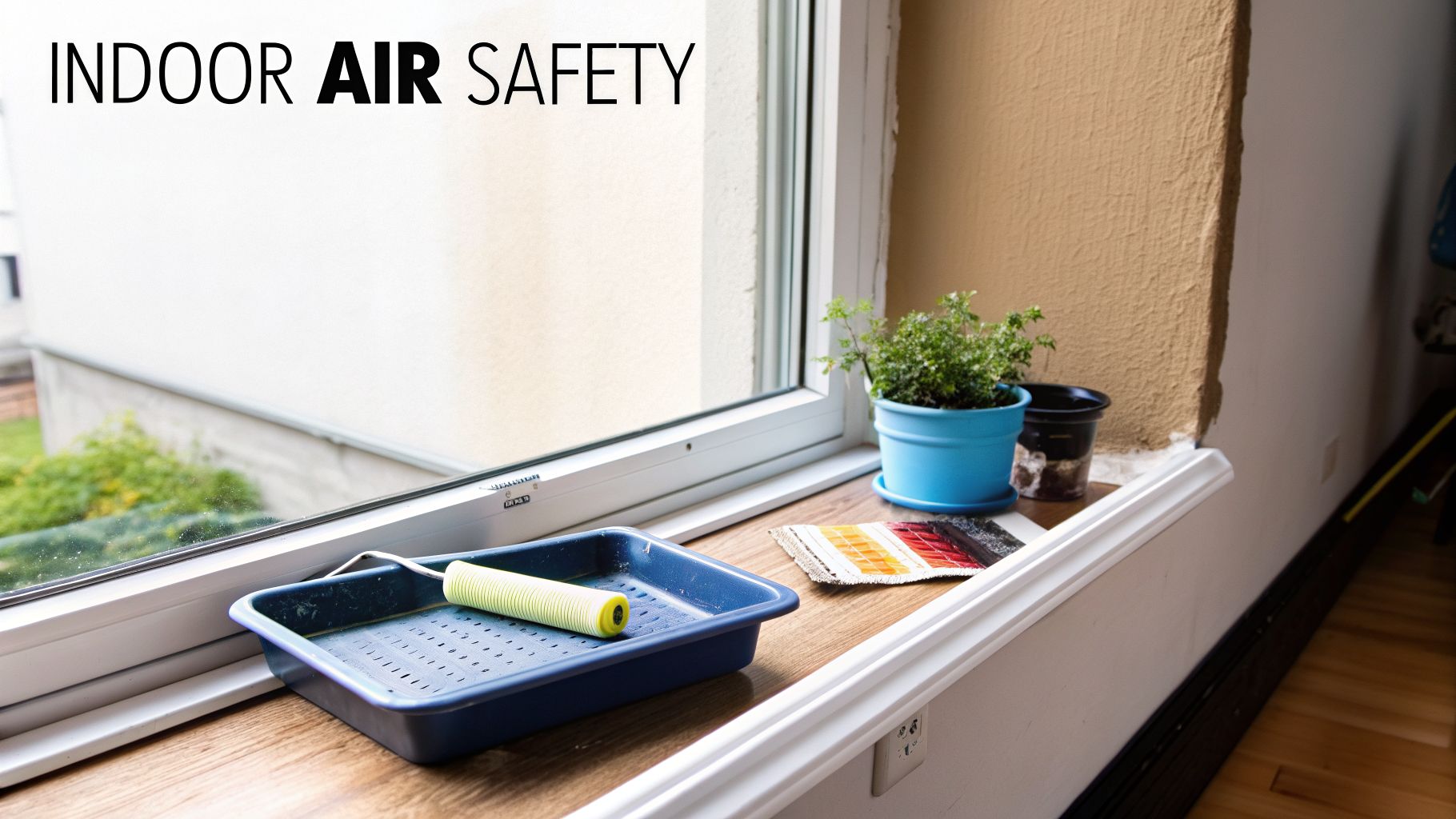
VOCs are essentially the chemical solvents that dissolve and evaporate, releasing gases into the air as paint dries. The emission of gases, also called off-gassing, is the reason for the characteristic ‘new paint smell’. The fumes, if not ventilated well, may cause headaches, dizziness, and throat irritation.
It’s precisely because of these health concerns that modern interior paints are formulated to be low-VOC or even zero-VOC, protecting the air you and your family breathe every day.
The VOC Divide: Interior vs. Exterior Paint
The difference in VOC levels between paint types is stark, and it has a direct impact on your health, something every homeowner in Colorado communities like Westminster, Arvada, and Boulder should know.
Interior paints have come a long way. After the U.S. EPA regulations cracked down, allowable VOCs in interior paint dropped from over 250 grams per liter (g/L) to as low as 50 g/L. This shift wasn’t just for show; it reduced certain health risks by up to 70%. Today, most quality interior paints have minimal VOCs, often well under the 50 g/L threshold, making them much safer for enclosed spaces.
Exterior paints are a separate category. They sometimes have more VOCs, from 100 to 250 g/L. The VOCs are actually the reason that exterior paints form a film that is strong yet flexible enough to withstand the extreme weather conditions in Colorado, such as scorching sun, snow, and temperature fluctuations. However, this very resilient formula makes exterior paint totally hazardous for indoor application.
Painting the inside of the house with exterior paint is a big health hazard. Toxic chemicals from it will be released into your home’s air constantly. This can be a process that lasts for months, even when the smell is no longer present.
That’s why picking the right paint isn’t just about getting a finish that lasts. It’s about keeping your home safe and healthy.
If you’re concerned about your home’s air quality after a project, learning how to remove VOCs can offer practical solutions. Always, always check the paint can label for its VOC content and put your family’s well-being first.
How Each Paint Performs in the Real World
The technical specs on a paint can are one thing, but how that paint actually holds up on your walls is what really matters. This is where the difference between interior and exterior paint becomes incredibly obvious; they’re engineered for completely different battlefields.
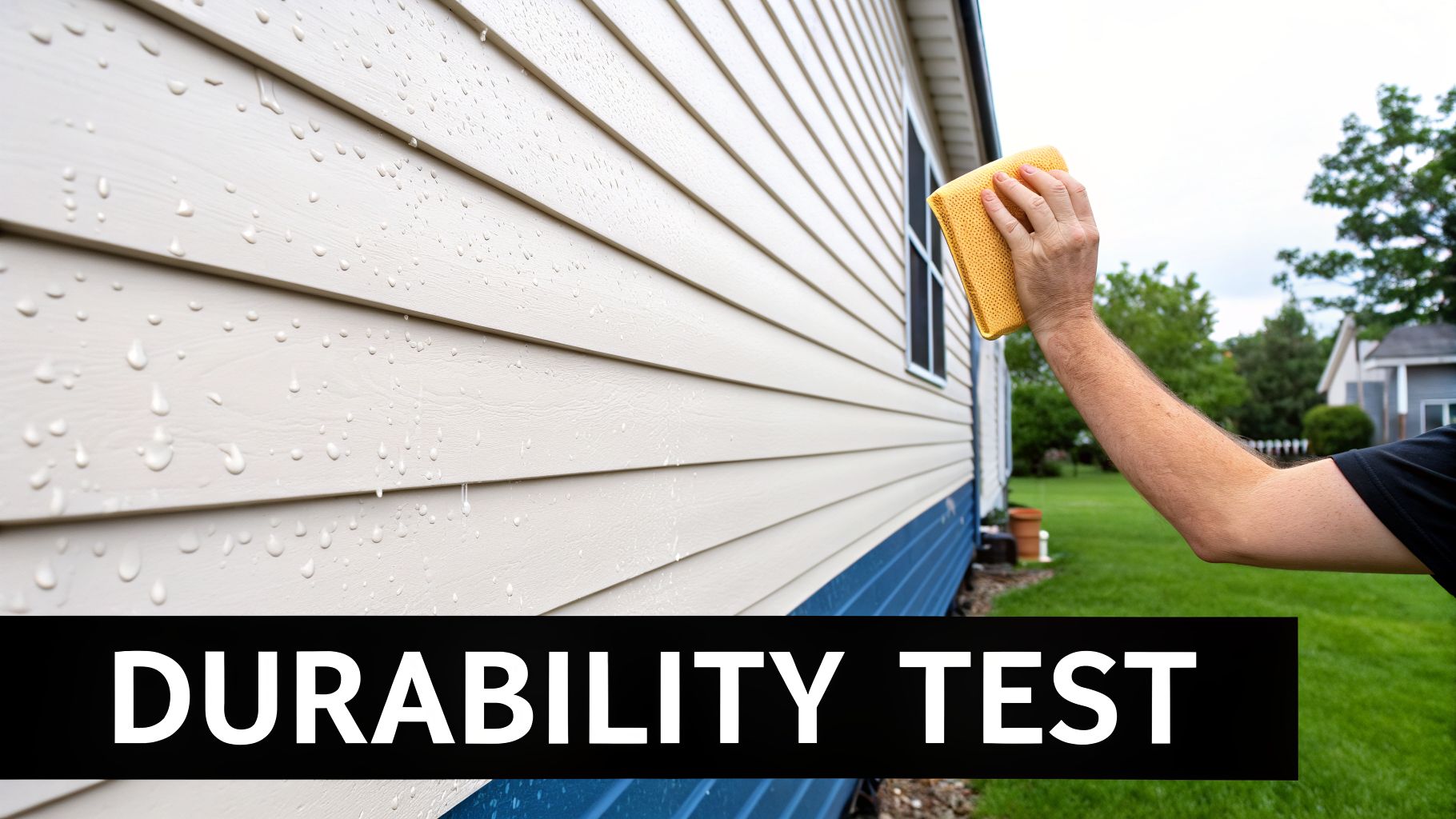
When we talk about the durability of paint inside a house, we’re talking about how well it can resist stains and damages happening every day in the house. It should be strong enough to stand against human traffic, scratches, dirt, and various kinds of touches repeatedly without deteriorating. Indeed, the most difficult problem for an interior paint concept is not a hailstorm; it’s the greasy handprint on the kitchen wall or a crayon drawing in the corridor.
Interior Paint Performance Up Close
An interior paint’s main job is to look good while resisting everything your family can throw at it. Its performance is directly linked to its finish, or sheen, which really determines how well it resists cleaning.
- Scrubbability: Think about hallways, kids’ rooms, and entryways. These high-traffic areas need a paint that you can scrub clean without rubbing the color right off. A quality satin or semi-gloss finish is built to handle hundreds, sometimes even thousands, of wipes over its lifespan.
- Stain Resistance: The hard, tight film formed by interior paint binders is designed to keep stains, like coffee, spaghetti sauce, or fingerprints, from soaking in. This makes cleanup a simple wipe-away job instead of a permanent problem.
- Washability: The sheen you choose makes a huge difference. A flat or matte finish looks sophisticated and hides imperfections, but it’s the least washable. On the other hand, an eggshell or satin gives you that great balance of a softer look with the cleanability needed for most living spaces.
At the end of the day, a great interior paint just makes your life easier, keeping your home looking fresh and clean no matter what happens.
Exterior Paint: The Ultimate Protector
Exterior paint’s greatest enemy is, without a doubt, Mother Nature. For us in Colorado, that translates to strong sunlight, hailstorms, and sudden changes in temperature. We do not measure the performance of paint by how easily it can be cleaned, but by the duration of time it can brave the elements.
Exterior painting nearby acts as your home’s first line of defense. Its ability to expand, contract, and resist moisture and UV rays helps prevent costly structural damage and maintain your home’s value and curb appeal.
This paint has to be flexible, stretching and shrinking as your siding expands and contracts with the changing temperatures. Without that flexibility, it would crack, letting moisture seep in and cause rot. It’s also packed with UV inhibitors that work like heavy-duty sunscreen, protecting the color from fading and turning the finish to chalk.
Choosing the right exterior paint is a serious investment in your home’s health. And if you’re ever tempted to use it inside, check out our guide on why you should never use exterior paint indoors to understand the safety risks.
These performance differences are also crucial in practical situations, like when you’re choosing paint colors for your rental home and need something that will last for years.
Common Paint Mistakes That Cost You Money
Understanding the chemistry behind paint formulas is great, but applying that knowledge practically is what really prevents you from spending a lot of money and time redoing the work. Without a doubt, the biggest and costliest mistake we notice most often among homeowners is the use of inappropriate paint for the task. It appears to be an easy enough thing, but this single mistake can turn what could have been a weekend project into something painful and lasting for months.
Let’s play this out. Say you have some leftover interior paint and decide to freshen up your front door. It looks fantastic… for a little while. But then, the harsh Colorado sun and wild temperature swings start doing their thing. That paint, which was never designed with flexible resins or UV protection, will inevitably crack, bubble, and peel. Before a year is up, you’ll be left with a faded, chalky disaster that has to be completely stripped and sanded down before you can even think about starting over.
The Hidden Dangers of Misusing Paint
While using interior paint outdoors leads to a mess you can see, the reverse scenario is far more serious. Using exterior paint inside your home introduces a significant health risk for you and your family. Remember, exterior paints contain higher concentrations of Volatile Organic Compounds (VOCs) and powerful additives, such as mildewcides, to help them withstand the weather.
When you bring that formula indoors, those chemicals don’t just disappear once the paint dries. They continue to “off-gas” for months, slowly releasing fumes into your home’s air. This can trigger anything from persistent headaches and dizziness to more serious respiratory problems. It’s a gamble that’s never worth taking, no matter how tempting it is to use up that leftover can.
The takeaway is simple: Using the wrong paint isn’t a shortcut. It’s a costly detour that leads to wasted time, wasted money, and potential health hazards. Getting it right the first time is always the smartest, most cost-effective approach.
Navigating Tricky Areas Like Porches and Sunrooms
Okay, so what about those tricky “in-between” spaces? A covered porch, a three-season sunroom, or a screened-in patio can be a real head-scratcher.
Here’s a good rule of thumb to follow:
If the surface is exposed to outside air, moisture, and temperature changes, treat it like an exterior job. This means using exterior paint for porch ceilings, railings, and the walls of unheated sunrooms that get hammered by the elements.
If the room is fully insulated and climate-controlled, just like the rest of your house, stick with interior paint.
Proper prep work is just as crucial as the paint you choose. For example, understanding if you need to prime drywall before painting can be the difference between a flawless finish and a peeling disaster. Steering clear of these common missteps is the key to making sure your hard work pays off with a beautiful result that actually lasts.
Answering Your Top Paint Questions
Let’s dig into a few of the questions we hear on practically every job. Think of this as your cheat sheet for those tricky “what if” scenarios that always seem to pop up.
Can I Use Exterior Paint for an Indoor Touch-Up?
This is a hard “no.” It’s tempting to grab whatever you can have on hand for a quick scuff, but using exterior paint indoors, even for a tiny spot, is a serious health risk.
Exterior formulas are packed with potent mildewcides and high levels of Volatile Organic Compounds (VOCs). These chemicals are designed to dissipate in the open air, not in your living room. Indoors, they can release harmful fumes for months, long after you stop smelling the paint, which can really degrade your home’s air quality.
When it comes to anything inside your house, always stick with an interior paint, preferably one labeled as low-VOC or zero-VOC. It’s the only safe choice for your family.
What Is the Best Paint for High-Moisture Areas?
Bathrooms, laundry rooms, or even kitchen kept busy are usually high-moisture areas. If that’s the case, you should go for a paint that is made to resist moisture. A top-of-the-line interior acrylic paint with a satin or semi-gloss finish would be the best choice.
This combination is a winner for a few key reasons:
- Tough Finish: Satin and semi-gloss paints feature a greater shine that produces a less porous, almost slippery surface. This is how moisture is kept from seeping into your drywall by these paints.
- Easy to Clean: These surfaces are very easy to wipe, and cleaning water spots, soap scum, or a small amount of mildew is no problem at all for you before it grows out of control.
- Built-in Protection: Many premium “kitchen and bath” paints already have mildew-fighting additives mixed right in, giving you an extra line of defense from the start.
While you might think exterior paint is the answer for moisture, its chemical formulation is just not safe for indoor air. A dedicated interior paint for bathrooms provides the durability you need without the harmful off-gassing.
Do I Need Different Paint for a Sunroom?
Ah, the sunroom, the tried and tested hybrid space. The solution actually hinges on the kind of sunroom you own. Are you talking about a real four-season room that is equipped with heating and air conditioning, or is it more like a three-season porch that is open to the outside weather?
If the room is completely insulated and climate-controlled, similar to the rest of your house, just consider it another interior area and choose interior paint.
Outside paint is definitely a must if you have an unheated room that is subject to big temperature changes and constant UV exposure. The elastic binders present in an exterior product are made to lengthen and shorten according to temperature changes, thus avoiding the breaking and peeling which would very quickly spoil an interior paint job.
At I PAINT STUFF, our professional painters nearby help homeowners navigate these choices every day, making sure the job gets done right the first time. For expert guidance and a finish that lasts, get your free and honest estimate today.
