
What Is the Difference Between Stain and Paint for Your Home
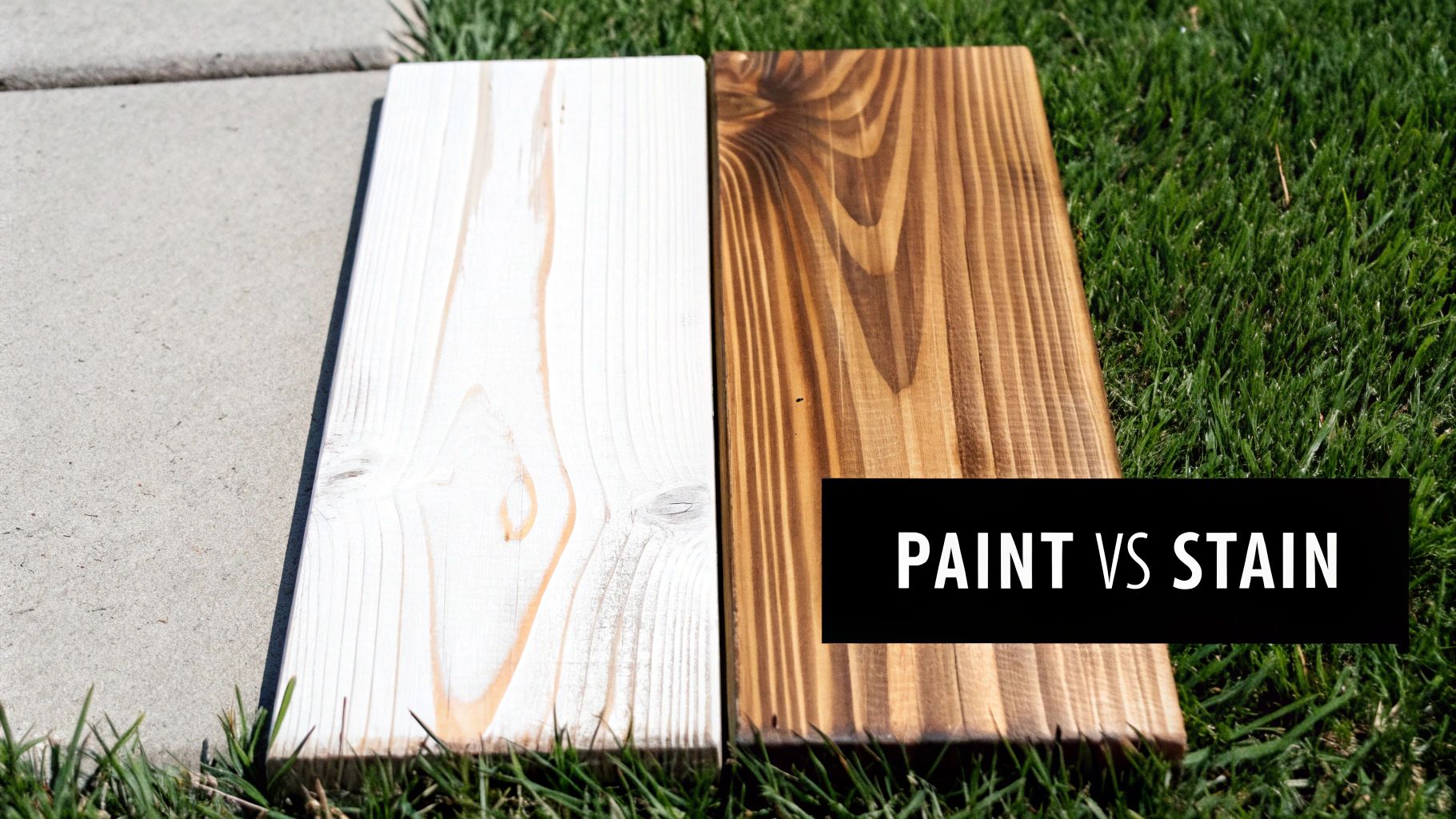
Simply put, the fundamental difference between paint and stain is that paint creates a solid, opaque coating that completely covers the surface and hides the one beneath. You may look at it as a kind of shell for protection. In contrast, stain goes deeper into the material and colors it internally, thereby revealing the natural texture and grain of the wood.
A Visual and Functional Comparison
Picking paint or stain doesn’t only mean that you should choose a color because it will not only affect how your house will look but it will also decide how much protection and maintenance you will have to do later on. When you decide to use paint, it is similar to having a new surface where you can make the color pop or just hide the imperfections of a wall. However, staining is one with the wood, so it will really bring out the grain of the wood, giving it a more rustic, natural look.
Coatings differ from each other mainly as a result of both the variations in their chemical compositions and the way they interact with surfaces like wood, concrete, or siding. To gain more knowledge about various kinds of products, you can check out our Paint and Stain Spotlight which provides more detailed information. In the end, this decision determines not only the look but also the durability of the surface and the kind of maintenance it will require in the future.
Quick Comparison: Paint vs. Stain at a Glance
For anyone who is looking for a speedy recap, this table gets straight to the point by presenting the main differences between these two widely used finishes. The table demonstrates the performance of each across the key categories, thus helping you determine which one suits your project goals better, just by looking once.
Attribute | Paint | Stain |
Application | Forms a protective layer by sitting on the surface. | Penetrates the surface and colors it from the inside out. |
Appearance | Opaque, uniform color that hides surface grain. | Enhances natural grain and is transparent to semi-solid. |
Protection | Creates a strong defense against UV and moisture. | Absorbs to provide UV and moisture protection. |
Longevity | May eventually blister, peel, or crack. | Doesn’t peel or break; fades naturally. |
Maintenance | Before repainting, it must be primed and scraped. | Needs to be cleaned and given a basic coat of reapplication. |
The most crucial distinction is how they age. Paint fails by peeling off the surface, creating a repair headache. Stain fails by fading away, making reapplication much simpler and less labor-intensive down the road.
Grasping these foundational differences is the first step toward making a smart decision for any part of your property, whether it’s your deck and fence or your interior kitchen cabinets.
Understanding What’s Inside the Can
To really get to the bottom of the paint vs. stain debate, you have to look at what’s actually inside the can. Their fundamental differences come down to chemistry. The ingredients in each are mixed for completely different jobs; one is designed to sit on top of a surface, and the other is meant to soak right in.
Paint is a team of four key players working together to create a solid, protective film.
- Pigments: These are the tiny, ground-up particles that give paint its color. They’re what block out the surface underneath, creating that opaque finish.
- Binders: Think of this as the glue. Binders, often called resins, hold the pigments together and are the reason paint actually sticks to a wall or a piece of trim.
- Solvents: This is the liquid that keeps everything in a spreadable state. As the paint dries, the solvent evaporates, leaving behind the solid film of pigment and binder.
- Additives: These are the special ingredients that give a paint its unique superpowers, like resisting mold, drying faster, or standing up to scuffs and scratches.
A Stain’s Simpler Formula
A stain is a lot simpler than paint in terms of its composition and ingredients. Basically, it’s made to serve one main purpose: penetration. It does not intend to create a thick coat on the surface; rather it’s a product that can be soaked into porous substances, most notably wood.”
A can of stain is mostly pigment suspended in a carrier liquid, with just a touch of binder to help it hold on. The pigments are much less concentrated and ground finer than what you find in paint. This allows them to travel deep into the wood fibers along with the carrier, coloring the material from the inside out. It’s why stain beautifully enhances the wood grain instead of covering it up. The type of carrier liquid makes a big difference, too, which you can read about in our guide on oil-based vs. water-based stain.
The key takeaway is this: Paint is designed to stick to a surface, creating a protective shell. Stain is designed to be absorbed by a surface, becoming a part of the material itself.
This difference is huge in the real world. Acrylic resins, a common binder in paint, make up a whopping 36.26% of the global coatings market because they’re so good at holding color and resisting weather. It shows how much the world relies on paint for major architectural projects. Stain holds its own in the specialized world of wood preservation, where beauty and protection go hand-in-hand. You can see more on these paint and coatings market trends and how they’re growing.
At the end of the day, knowing what’s in the can explains everything. Paint is built to cover and protect from the outside, while stain is engineered to penetrate and preserve from within.
Comparing Durability and Long-Term Protection
Choosing between paint and stain is really just a question of how the finish will last in the long run. Each is made to safeguard your asset, but the method they use is totally different. Consequently, their maintenance and failure scenarios will vary significantly, particularly in a place like Colorado where the weather is very harsh.
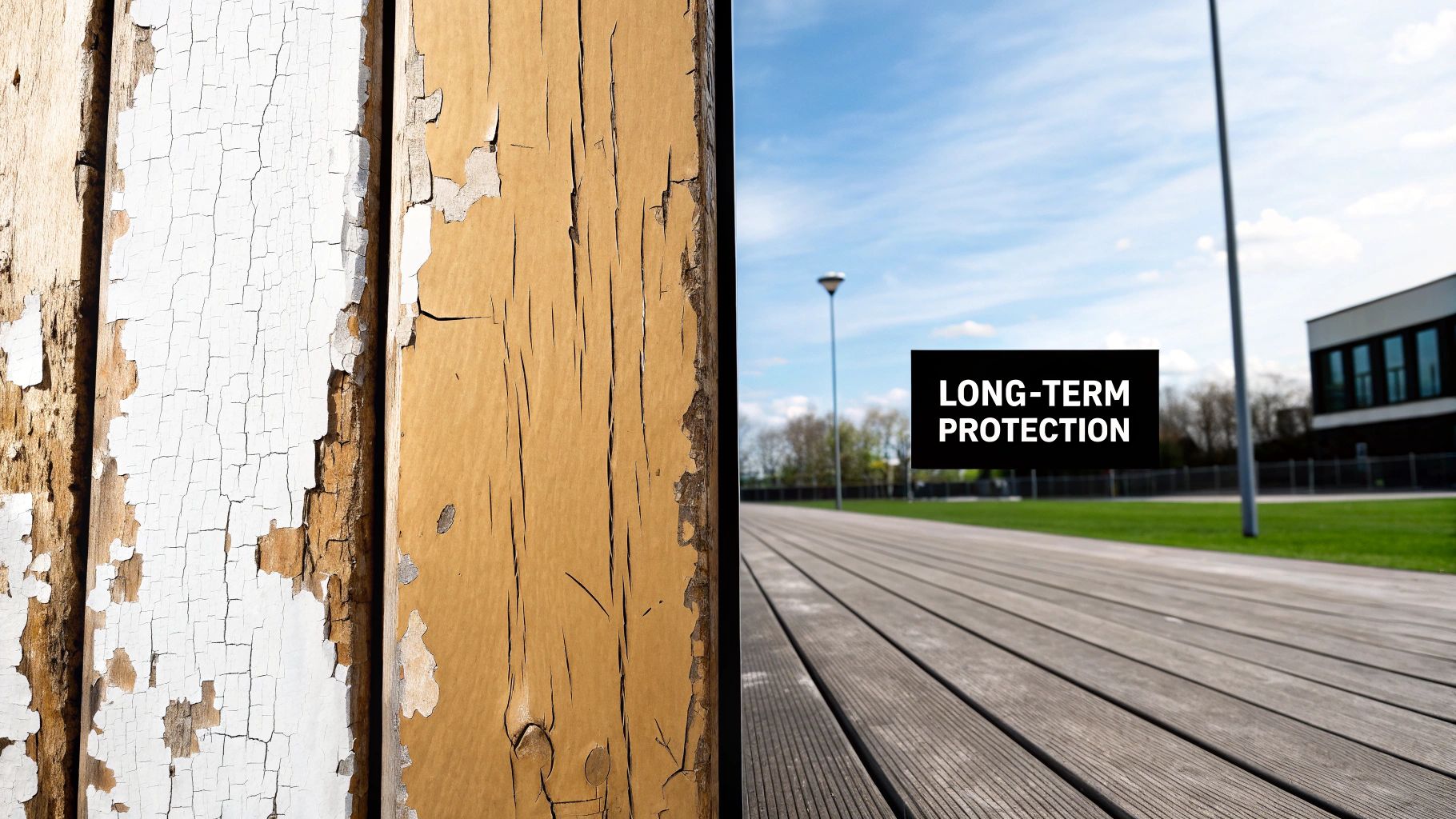
Imagine paint as the protective outfit for your wood that forms a thick and very solid layer on top of the surface, which is great for keeping moisture out and reflecting the sun’s harmful UV rays immediately. During that period, the defense is very strong.
However, the armor has a weak spot. Wood is a natural material that gives through, and, therefore, it will expand or contract with the changes in temperature that we experience. Besides, not even the most durable paint film can keep up with the wood indefinitely. The paint will first lose its flexibility, then it will crack, after that, it will blister, and eventually, the peeling paint will reveal the wood underneath which will be exposed to the elements fully and freely.
How Stain Ages Differently
Stain, on the other hand, works from the inside out. It soaks deep into the wood fibers, protecting them from moisture and UV damage without creating that thick surface layer. This is a game-changer because stain cannot peel, crack, or blister. There’s simply no film to fail.
Rather than peeling, the stain just naturally fades as the sun and weather elements take their toll. It’s so much more gracious way of aging that it significantly eases the maintenance. You’ll never have to spend hours scraping off a coating that has gone bad.
Most of the time a thorough cleaning and a maintenance coat is all that’s required to revive it. This is a huge factor for outdoor projects, as you can see in our guide comparing fence stain vs paint.
A major distinction is in the failure. Paint’s failure is catastrophic; it comes off in flakes, thus requiring a lot of labor to be fixed. Stain’s failure is gradual; it loses its color at a slow pace, thus a simple and low-effort reapplication is enough.
Comparing Failure and Repair
Let’s get practical. What does it actually look like when each coating has run its course, and what will it take to fix it?
- Paint Failure and Repair: When paint starts to peel, you have a real job on your hands. You have to scrape, sand, and remove all the loose and failing paint before you can even think about priming and repainting. It’s a ton of work, and if you cut corners, the new coat will fail even faster.
- Stain Failure and Repair: When a stained surface starts to look tired and faded, the prep is minimal. A good cleaning or a light power wash to remove dirt and grime is usually all you need. Once it’s dry, you can apply a fresh coat of stain right over the old one to restore its color and protection.
In the end, paint might give you a longer initial run under perfect conditions, sometimes lasting 5-10 years. But when it fails, the fix is a major project. Stain often needs a refresh more frequently, typically every 2-4 years, but the process is worlds easier and cheaper in terms of labor. It really comes down to whether you prefer a huge project every decade or much smaller, simpler upkeep every few years.
Exploring Aesthetics and Application Methods
When you’re weighing the difference between stain and paint, you’re not just choosing a product; you’re choosing a final look and a hands-on process. The visual impact and the way each is applied are worlds apart.
Paint is your go-to for a complete transformation. It lays down a thick, opaque film on the surface, creating a solid block of color. This is fantastic for hiding imperfections; think discolored wood, minor blemishes, or even just inconsistent grain patterns. The end result is a crisp, clean, and uniform finish.
Stain, in contrast, goes along with the material instead of fighting it. It penetrates the wood fibers, revealing the texture and character of the wood which are normally hidden under paint. If the desired beauty of the wooden material is its main attraction, stain is the way to go as it results in a more natural, countryside mood.
Choosing Your Desired Finish
What look are you really after? This is probably the most important question you’ll ask. With its virtually endless color palette, paint lets you get bold and dramatic. You can completely redefine your home’s exterior or a piece of furniture with a solid, consistent color that makes a statement.
Stain offers a more subtle approach to color. The key here is transparency, which gives you direct control over how much of that beautiful wood grain remains visible.
- Transparent Stains: These give you just a hint of color, letting the wood grain take center stage. They’re all about maximum visibility.
- Semi-Transparent Stains: A perfect middle ground. You get a noticeable dose of color, but the natural grain still plays a major role in the final look.
- Solid Color Stains: These look a lot like paint, providing an opaque finish. The difference? They’re thinner, so they still allow some of the wood’s underlying texture to show through.
Finding the perfect tone is crucial. For outdoor projects, it’s a great idea to check out different deck stain color options to see how a shade will look on your specific wood type and in the Colorado sun.
The core aesthetic question is simple: Do you want to hide the surface or highlight it? Paint hides; stain highlights. This single consideration often points homeowners in the right direction.
The Hands-On Application Process
If you are thinking about a DIY weekend, then the real effort of painting or staining a surface is a big consideration, too. Typically, stains are a lot easier for novices. Because of its runny, watery nature, it can be applied very easily with a brush, roller, or sprayer and it absorbs quickly into the wood. You don’t have to be as concerned about brush strokes because it doesn’t create a thick film on the surface.
Paint is a different story. It demands a serious commitment to prep work for a smooth, long-lasting finish. You have to get the surface perfectly clean, then sand it, then apply a primer, all before the first coat of paint even touches it. If you cut corners on any of these steps, you’re setting yourself up for the peeling and cracking we all want to avoid. A flawless paint job simply requires more skill and patience to get right.
Choosing the Right Finish for Your Project
Okay, you get the technical specs, but what does that mean for your project? When it comes down to choosing what to put on your deck, siding, or cabinets, the right answer always depends on the job itself, the look you’re going for, and how much future upkeep you’re willing to sign up for.
The very first question to ask yourself is this: do you want to see the wood grain, or do you want a solid, uniform color? This simple visual breaks down that initial choice.
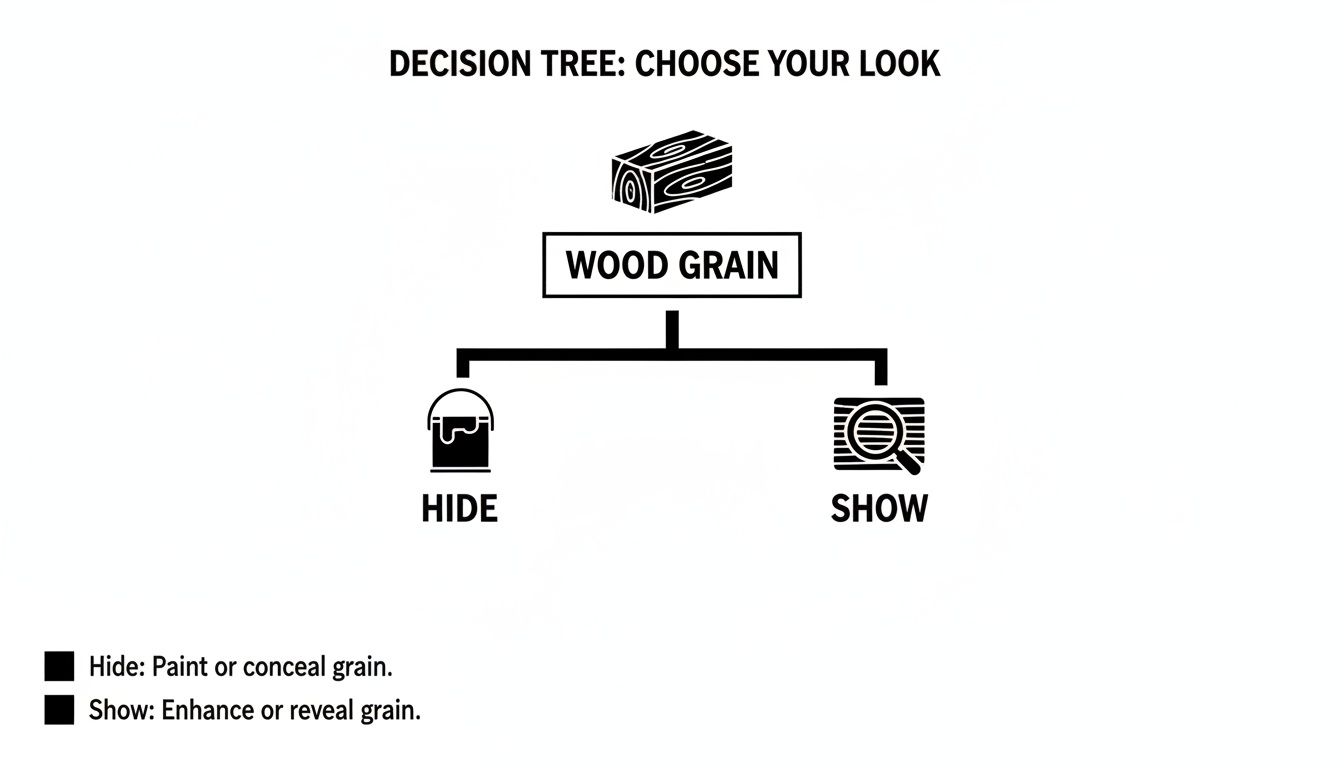
If hiding the grain and creating a new look is the goal, paint is your ticket. But if you want to celebrate the wood’s natural character, stain is definitely the way to go.
Decks and Fences
When you’re dealing with a deck, a high-traffic, horizontal surface, stain is almost always the better call. It soaks into the wood fibers, so it won’t crack and peel from people walking on it or from the wood expanding and contracting with the weather. Paint sits on top like a film, and it just can’t handle that kind of abuse. It would fail, and fast.
For vertical surfaces like fences and siding, you have more leeway. It really becomes a choice between looks and maintenance. Paint gives you that crisp, clean, classic look and can hold up for years if the prep work is done right. Stain offers a more rustic, natural aesthetic that lets the wood blend into the landscape. Plus, when it eventually fades, reapplication is a breeze.
For exterior work, especially here in the harsh Colorado climate, stain’s ability to fade gracefully is a huge plus. It means your future maintenance is a simple clean-and-recoat job, not a back-breaking ordeal of scraping and sanding peeling paint.
Cabinets and Interior Trim
When considering the interiors of the house, it is mainly a matter of looks and the kitchen cabinets’ paint finish’s durability against everyday wear and tear. Painted kitchens cabinets are tremendously favored since paint offers a neat, contemporary, and easily washable surface. A high-quality painting can give a total makeover to a worn-out kitchen. Certainly, choosing the right type of paint finish and the cabinet painting companies near you for your kitchen cabinets will decide how long the new look will stay.
Switching gears, stain is great if you want to highlight beautiful wood grain on your cabinet doors, mouldings, or flooring, thus, giving a warm, classic vibe. Keep in mind, when you are thinking of finishes, there are various kinds of floor finishes, like high-gloss or water-based, that the room can each gain different benefits from.
You can see this split in the market numbers. The global paint market is valued at USD 206.56 billion, largely driven by massive architectural projects. Meanwhile, the U.S. exterior wood stain market is around $2 billion, reflecting its more specialized role in preserving and enhancing natural wood. You can read more about global market trends on Fortune Business Insights.
When to Call in a Professional Contractor
Look, I’m all for a good weekend DIY project. Tackling a small interior paint job with the help of interior painters nearby can be incredibly satisfying. But some projects are simply better left to the pros. Knowing when to put down the brush and pick up the phone can save you a world of frustration and, frankly, some expensive mistakes.
Take large exterior jobs, for example. Painting or staining your entire house isn’t just a big task; it involves serious heights, meticulous surface prep, and the unpredictable whims of Colorado weather. Professionals have the right gear, like proper scaffolding and commercial-grade sprayers, to do the job safely and get it done right the first time.
Evaluating Project Complexity
There are a few red flags that almost always signal it’s time to call a contractor. Recognizing these will help you make a smart decision that protects your property for years to come.
- Extensive Damage: If you’re seeing widespread peeling paint, dealing with soft or rotted wood, or finding significant cracks, the prep work becomes the most critical part of the job. A pro has the experience to fix these underlying issues correctly, ensuring your new finish actually lasts.
- Flawless Finishes: Want that perfectly smooth, almost factory-like finish on your kitchen cabinets or detailed trim work? That’s incredibly tough to get with a brush and roller. It takes a certain touch and specialized equipment to achieve a durable, even coat that stands up to daily life.
Hiring an expert is about more than just getting paint or stain on a surface; it’s an investment in a high-quality result that will protect your property for the long haul. Their firsthand knowledge of how different products perform in our unique climate is invaluable.
In the end, it really boils down to your skill level, the time you can commit, and the quality you’re after. For a massive or complicated project where the nuances between applying stain versus paint really matter, bringing in a professional team is the only way to guarantee a beautiful, lasting outcome.
If you’re leaning toward hiring an expert, our guide on how to hire painters nearby for your property is packed with practical advice.
Your Top Questions About Paint and Stain, Answered
Even after weighing the pros and cons, you’ll probably still have a few questions pop up when you’re standing in front of your project. Let’s get straight to the common ones I hear all the time.
One of the biggest is, “Can you paint over the stain?” Yes, you absolutely can. But you can’t just slap a coat of paint on and call it a day, preparation is everything here. Since stain soaks into the wood, you have to create a surface the new paint can stick to. First, give it a thorough cleaning and let it dry completely. Then, you’ll need to scuff up the surface with sandpaper to give the primer some bite. The final, crucial step is using a high-quality, stain-blocking primer. Don’t skip this, or you’ll see the old stain color bleed right through your fresh paint job.
Tackling Common Scenarios
Now for the opposite question: “Can you stain over paint?” This is a whole different beast, and honestly, I almost always advise against it. The reason is simple: stain has to penetrate wood fibers, and paint creates a solid barrier that stops it cold. To make it work, you’d have to strip every single trace of paint and primer from the surface. We’re talking about a massive, time-consuming, and often frustrating job.
Cost is another big topic that comes up. It’s easy to compare the price of a gallon of paint to a gallon of stain and think you have your answer, but the real cost story unfolds over the lifetime of the finish.
- Upfront Cost: A premium paint job can be pricier at the start. You’re often buying a separate primer, and the prep work is more intensive, which can drive up labor costs.
- Long-Term Value: This is where the stain pulls ahead. When it’s time to reapply, you just clean the surface and put on a new coat. That simple process saves a ton of money on labor down the road. Repainting, however, means scraping, sanding, priming, and then painting all over again. It’s a much bigger undertaking every single time.
For any exterior project here in Colorado, the long-term math almost always points to stain. The money you save on labor for those future maintenance costs easily makes up for any initial cost difference.
Finally, people often get stuck on whether to choose an oil-based or water-based product. Oil-based formulas are fantastic for deep penetration and durability, but they come with strong fumes and take a lot longer to dry. Water-based options have come a long way; they’re low-odor, clean up with soap and water, and dry fast, which is why they’ve become a go-to for pros and DIYers alike.
As a rule of thumb, for decks and fences, expect to reapply stain every 2-4 years to keep them looking good and protect the wood. A well-done exterior paint job, on the other hand, can hold up for 5-10 years before it needs major work.
When you’re ready for a perfect finish that’s built to last, it’s time to call in the professionals. The team at I PAINT STUFF brings years of hands-on expertise and top-tier materials to every job, delivering results you can count on for your Colorado home or business. Get your free, honest estimate today!
Frequently Asked Questions
What is the main difference between stain and paint?
The major distinction between the two is the mode of their interaction with the surface. Paint forms a layer over the surface and yields a solid, opaque layer, whereas stain soaks into the material surface, thus bringing out the texture and grain features without masking them.
Is stain better than paint for wood surfaces?
It really depends on what you want to do. A stain is a better option if you want to emphasize the natural beauty of the wood, whereas a paint is a better choice to get a full-coverage, bold color and the highest level of protection. Both can be great picks if you know how to use them properly.
Does stain last as long as paint?
Generally, painting is more durable than staining, especially in outdoor areas. Paint acts as a thicker shield, whereas stain, especially the clear or semi-transparent ones, might have to be reapplied more often, which is why the surfaces will be more exposed.
What’s better for outdoor surfaces: stain or paint?
When used correctly, both are great outdoor products. Stain is mainly used for decks and fences, as it doesn’t peel, whereas paint works well for siding and trim, where it is important for the product to last and maintain its color over time.
Does stain protect wood from weather damage?
Yes, stains offer a degree of protection against moisture as well as UV damage, although paint provides a much better protective layer. Exterior stains are designed to withstand weathering, but they may require more frequent reapplication.
Should I choose stain or paint for my home?
If your only concern is having a natural, rustic look and you don’t mind keeping things up regularly, then go for the stain option. If you want a bold color, top-level protection, and durable results, then paint is your go-to. Your climate, type of surface, and taste in design will all influence the decision.